
Kite
Milvus
Description
How to identify
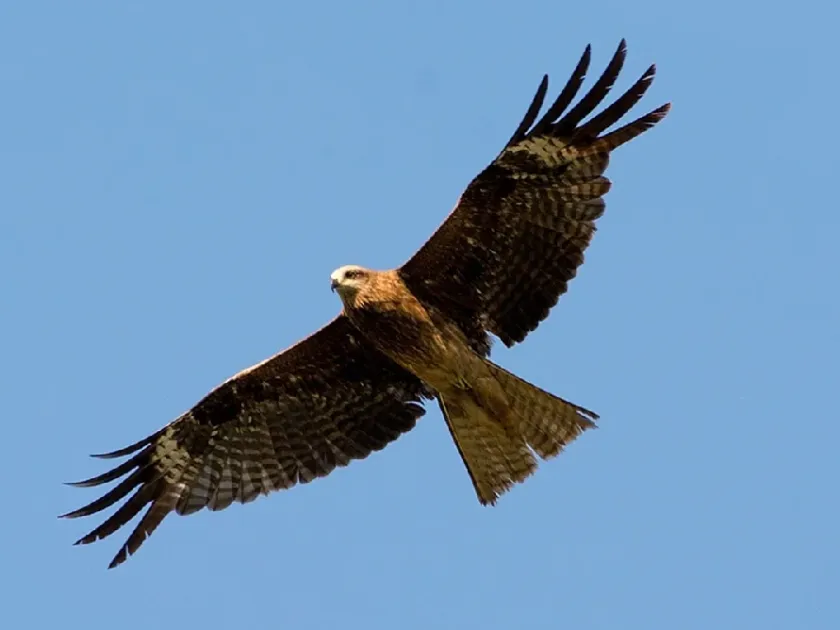
Kites (genus Milvus) are birds of prey in the Accipitridae family. They are well-known for their graceful flight and distinctive appearance in the air.
The most iconic feature of the kite is its forked tail, which distinguishes it from other raptors like hawks or eagles.
These birds have long, broad wings and a buoyant flight style, often hovering or circling over fields with little effort.
Their plumage is typically brown or rufous, providing effective camouflage against the backdrop of agricultural landscapes.
It is scientifically incorrect to classify kites as plant pests, as they lack the biological mechanism to feed on vegetation or seeds.
What it damages
Kites cause zero damage to agricultural crops. They are obligate carnivores and do not consume seeds, fruits, or green tissues of any plants.
In the farming context, they are considered beneficial allies because they actively prey on small mammals and large insects.
Their diet consists primarily of field mice, voles, and occasionally larger insects, which are known to be significant agricultural pests.
By consuming these pests, kites provide a valuable ecosystem service, helping to regulate populations that might otherwise destroy crops.
Farmers are encouraged to view kites as natural guardians of the fields rather than as a nuisance or threat.
When it appears
Kites are most frequently observed in fields during the spring and summer months when they are establishing territories and raising their young.
After the harvest season, when the ground cover is low, kites often visit fields to hunt because the exposed prey is easier to catch.
These birds follow migratory patterns, typically moving to warmer regions during the winter when food sources become scarce in northern areas.
Their arrival at the start of the growing season coincides with the emergence of many rodent species, making them timely natural predators.
Tracking the local presence of these raptors can help farmers understand the natural pest pressure in their specific area.
Control measures
No control measures are needed for kites; in fact, they are protected species in many jurisdictions around the world.
Farmers can enhance the effectiveness of these natural predators by maintaining windbreaks and old trees suitable for nesting.
The installation of elevated perches (T-posts) in open fields provides kites with excellent vantage points for hunting rodents.
Avoid the misuse of secondary poisoning through rodenticides, as this can lead to the accidental death of kites that consume poisoned rodents.
Promoting a healthy environment for birds of prey is a core component of sustainable, biological pest management practices in modern agriculture.
Taxonomy
- Latin name
- Milvus
- Family
- Accipitridae
- EPPO code
- MLVSSP
Discussion
No discussions yet — be the first.