
Microtermes
Microtermes
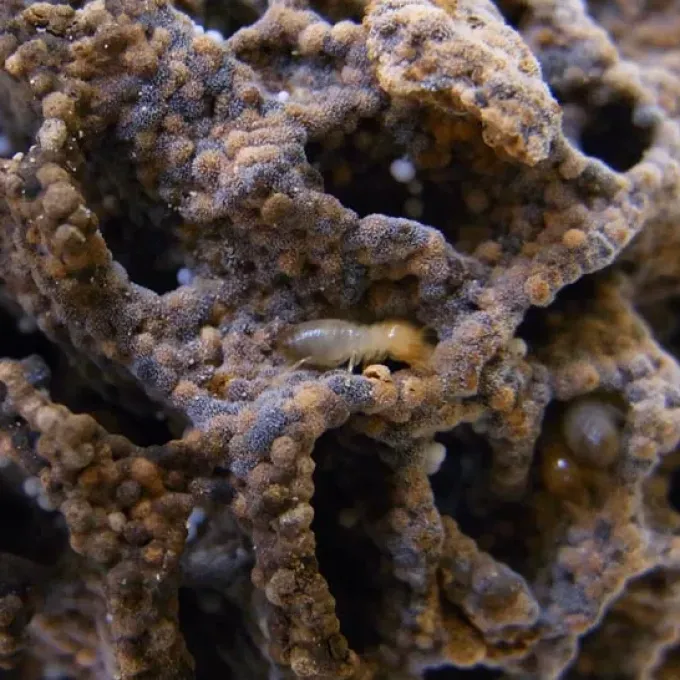
Description
How to identify
Microtermes is a genus of termites belonging to the Termitidae family, well-known in tropical and subtropical regions for their role as major agricultural pests.
They operate in complex social colonies characterized by a division of labor between workers, soldiers, and reproductive individuals (alates).
Workers are small, pale, and blind, possessing powerful mandibles that allow them to consume tough cellulose-based plant materials and crop tissues.
Soldiers have hardened, oversized heads and formidable jaws, specialized for defending the nest and tunnel networks against invaders, particularly predatory ants.
These insects are highly secretive, avoiding sunlight and preferring to work within soil galleries or under protective mud-plastered coverings that they build over food sources.
What it damages
Microtermes species are voracious polyphagous pests capable of attacking a wide range of economically important crops including cereals, legumes, and cash crops.
Cereals such as wheat, maize, and rice are frequently destroyed as termites girdle the stems at the soil level or completely prune the root system.
They are particularly problematic for crops like groundnuts and sugarcane, where they bore into the roots, tubers, or pods, significantly reducing yield and marketability.
In orchards and timber plantations, these termites can penetrate the bark of young trees, feeding on the cambium layer and leading to tree death from water stress.
The damage often goes unnoticed until the plant wilts and collapses, by which time the crop loss in that specific patch is already severe and often irreversible.
When it appears
The activity of Microtermes is highly correlated with soil moisture levels; during dry periods, they typically retreat to deeper, cooler soil layers.
Swarming events, where winged reproductives emerge to establish new colonies, are usually triggered by the first heavy rainfalls of the wet season.
While they can remain active year-round in warm climates, their feeding intensity increases during the peak growing season when succulent roots are abundant.
Temperature serves as a key factor in their development; they thrive in soil temperatures between 25°C and 35°C, where colony growth is most rapid.
Crop vulnerability is highest during the establishment phase, as young seedlings lack the robust root systems necessary to withstand even minor feeding damage.
Signs of infestation
The most distinctive sign of Microtermes infestation is the presence of earthen tunnels or mud sheeting on the stalks and stems of growing plants.
Plants may suddenly yellow, wilt, and die without apparent reason, often revealing a hollowed-out stem base or a severed root system when pulled from the soil.
In infested fields, one may find groups of dying plants that lack anchorage in the soil because the root system has been almost entirely consumed by workers.
Dissecting damaged stems often reveals spongy, dark fungal gardens constructed from termite excreta, which the colony maintains for nutritional support.
Small mounds or soil particles appearing on the surface, especially after irrigation or rain, can indicate the presence of extensive underground galleries nearby.
Control measures
Effective management begins with deep tillage, which disrupts the underground tunnel networks and exposes the colony to predators and environmental stress.
The removal of crop residues and woody debris from the field significantly reduces the alternative food sources that termites rely on during fallow periods.
Chemical control involving systemic soil insecticides or seed treatments provides a necessary defensive barrier for young plants during their vulnerable initial weeks.
Biological control methods are gaining traction, specifically the use of entomopathogenic fungi like Metarhizium anisopliae to naturally suppress colony populations.
Integrated Pest Management (IPM) strategies, combining cultural practices with targeted baiting systems, are the most sustainable approach to long-term population suppression.
Taxonomy
- Latin name
- Microtermes
- Family
- Termitidae
- EPPO code
- MICTSP
Discussion
No discussions yet — be the first.