
Salamandra grasshopper
Micropodisma salamandra
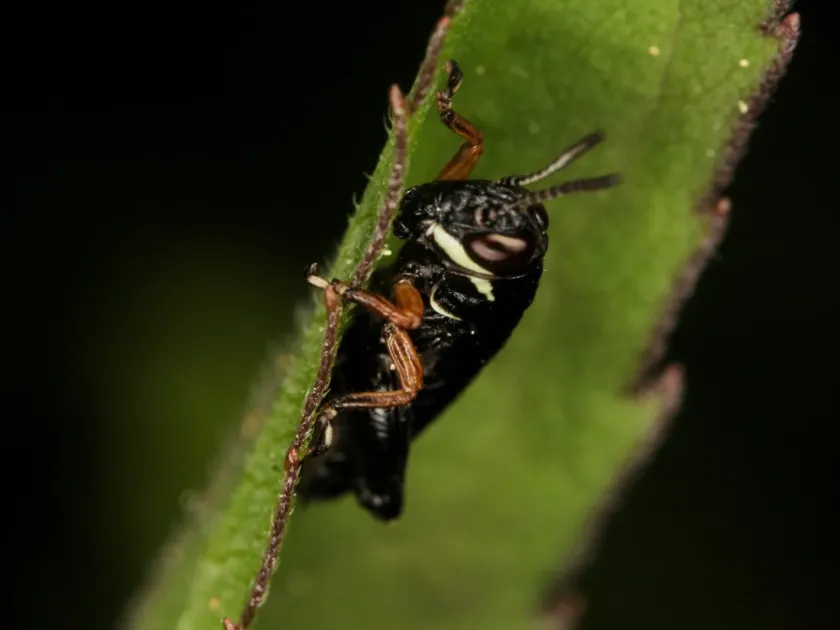
Description
How to identify
The Salamandra grasshopper (Micropodisma salamandra) belongs to the order Orthoptera and the family Acrididae. This species is characterized by reduced wings, which significantly restricts its active flying ability compared to migratory locusts.
Adult insects usually have a protective coloration ranging from brownish to olive green. This camouflage allows them to remain almost invisible in grassy environments, making early detection quite difficult for farmers.
They are primarily found in specific habitats where environmental conditions, such as temperature and humidity, support their development. They prefer dense vegetation and border areas between fields and natural pastures.
The life cycle follows a hemimetabolous pattern: egg, nymph, and adult. Eggs are laid in the soil, forming specialized pods that protect the embryos against harsh environmental conditions during the winter months.
Correct identification is crucial for effective management. Because they are often confused with other grasshopper species, entomological inspection of wing length and genital structure is sometimes necessary for absolute confirmation.
What it damages
The Salamandra grasshopper is a polyphagous pest, meaning it feeds on a wide variety of plants. Crops like cereals, legumes, and various pasture grasses are particularly susceptible to its feeding habits.
Both nymphs and adults consume leaf tissue, often starting from the edges. In cases of high infestation, they can skeletonize leaves, leaving only the primary veins, which significantly disrupts the plant's photosynthetic process.
In addition to direct damage, grasshoppers cause systemic stress to the plants. This stress makes the crops more vulnerable to secondary infections, such as bacterial or fungal diseases that enter through the damaged leaf edges.
In cereal crops, damage to the flag leaf can be particularly devastating for grain yield. By reducing the surface area of the leaves, the grasshopper limits the plant's ability to accumulate nutrients for grain development.
In forage areas, high populations can significantly reduce the nutritional value and biomass of hay. This results in direct economic loss for livestock farmers who rely on high-quality pasture and forage crops.
When it appears
The development of this pest is highly dependent on spring temperatures. When the soil warms sufficiently, the eggs undergo embryonic development, leading to the hatching of nymphs in late spring.
The peak of their feeding activity occurs throughout the summer months. As the nymphs grow through several stages, their consumption rate increases significantly, posing the greatest threat to mid-season crop growth.
Adults remain active throughout the summer, with their lifespan determined by local weather conditions and food availability. Hot, dry summers can often lead to a population surge, as these conditions favor faster development.
By late autumn, the female grasshoppers deposit their eggs back into the soil. These eggs remain dormant through the winter, effectively resetting the cycle and ensuring the survival of the species for the next season.
A single generation is typical for this species in temperate zones. However, if conditions remain favorable for an extended period, the survival rate of the nymphs is much higher, resulting in a larger population the following year.
Signs of infestation
The first signs of infestation are ragged leaf edges on various crops. Unlike caterpillars that might leave circular holes, grasshoppers typically start from the edge and work their way inward.
Small, cylindrical fecal pellets are often found on the soil surface under the plants or resting on the leaf axils. This is a clear indicator of grasshopper presence and active feeding in the immediate area.
In many cases, the most obvious sign is visual: noticing the insects jumping away when you walk through the fields. In dense grass, you might hear the rustling sounds of them moving among the plants.
Stunted plant growth and patches of yellowing vegetation are often noticed after an intense attack. This usually signifies that the pests have been feeding in that specific location for a sustained period.
- Ragged, irregular leaf margins.
- Small, pellet-like insect droppings.
- Sudden rustling noises in the vegetation when approached.
- Thinning of the stand density in pasture or cereal fields.
Control measures
Cultural control is the first line of defense. Fall plowing of the fields can destroy egg pods in the soil, burying them or exposing them to natural predators and freezing temperatures, which significantly reduces the population.
Maintaining clean field borders is also essential. By removing weeds and tall grass around the edges of fields, farmers can eliminate the breeding grounds where grasshoppers congregate before moving onto the main crops.
Chemical control should be applied when the economic threshold is reached. Insecticides targeting younger nymphal stages are more effective and easier to manage, as the insects have less mobility and are more susceptible to treatment.
Biological control using entomopathogenic fungi is a sustainable option. These biological agents target the grasshoppers specifically, causing a natural decline in the population without harming beneficial insects or the surrounding ecosystem.
Regular field scouting is critical. By monitoring the edges of the fields and observing the number of grasshoppers per square meter, farmers can identify the exact time to apply control measures before the damage becomes widespread.
Taxonomy
- Latin name
- Micropodisma salamandra
- Order
- Orthoptera (locusts)
- Family
- Acrididae
- EPPO code
- PODMSL
Discussion
No discussions yet — be the first.