
Fig scale
Microparlatoria fici
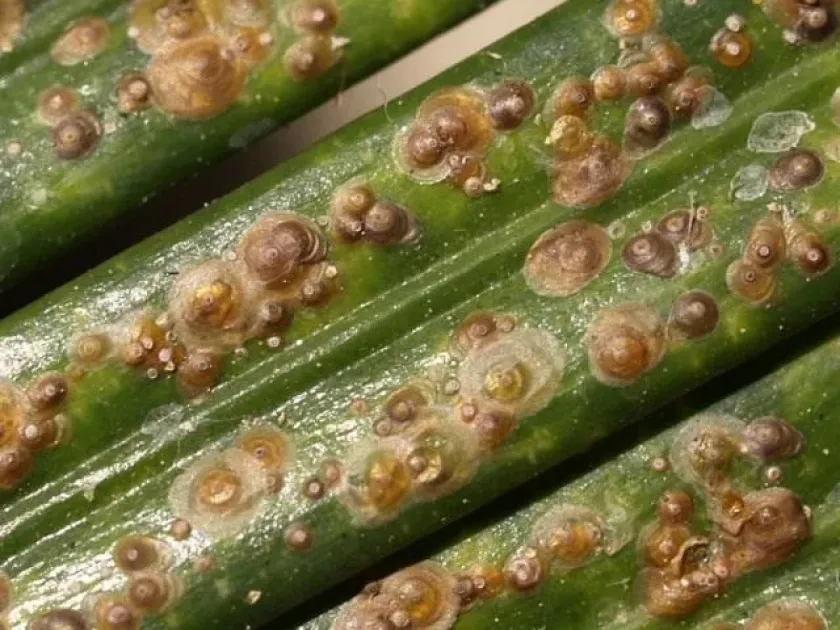
Description
How to identify
Fig scale (Microparlatoria fici) is a member of the Diaspididae family, order Hemiptera. This pest is characterized by a small, hard, pear-shaped or oval scale that covers the adult female, typically ranging in color from light brown to grey.
The adult female is immobile and lacks functional legs or eyes, spending its entire life beneath the scale, feeding on plant sap and producing eggs to ensure the next generation.
In contrast, the adult male is winged and possesses a short life span; its primary function is to locate and fertilize females, which often occurs during peak activity periods.
Development includes a mobile stage known as the "crawler" (first-instar nymph), which actively disperses across the plant surface before settling down to form its own protective cover.
Because the scale color closely matches the bark of the host plant, early detection requires careful inspection, as the pest often goes unnoticed until the population density becomes high.
What it damages
The primary host for this insect is the fig tree (Ficus carica). In favorable climates, it may also infest other ornamental or fruit-bearing species of the Ficus genus.
The insects predominantly cluster on branches, twigs, and trunks. In cases of heavy infestation, they may also migrate to the fruit stems and the fruit itself, leading to significant crop devaluation.
By constantly extracting plant sap, the scale weakens the tree's vascular system. This process results in cracked bark, stunted growth, and a significant reduction in the tree's overall vigor.
Severe infestations often cause premature leaf drop and can lead to the necrosis of young twigs, which significantly impacts future yield potential.
Weakened trees become susceptible to secondary infections and opportunistic fungal diseases, further compromising the longevity and health of the orchard.
When it appears
The life cycle of the fig scale is heavily dictated by temperature and humidity levels, with warmer climates allowing for continuous reproduction throughout the year.
Crawler activity typically peaks during the spring and early summer, coinciding with the tree's active growth phase. This is the optimal window for applying control measures.
Depending on the region, this pest can produce multiple generations per season, allowing population numbers to escalate rapidly if conditions are favorable.
Overwintering usually occurs in the form of fertilized females or late-stage nymphs sheltered within the crevices of the tree bark, protecting them from harsh weather.
Effective monitoring should begin as soon as bud break occurs, with scouts checking the undersides of branches and trunks for early signs of crawler dispersal.
Signs of infestation
The most visible sign of infestation is the presence of small, scaly growths firmly attached to the bark, which may resemble a fine crust or patch.
Infested areas often develop a secondary black sooty mold, which grows on the honeydew excreted by the insects, further blocking light and gas exchange for the leaves.
- Wilting or yellowing of foliage despite adequate watering.
- Noticeable dieback of small twigs and branches.
- Bark fissuring or splitting in areas of high insect density.
- Overall decline in tree health and fruit production.
By carefully scraping off a scale, one can reveal the soft body of the female or her eggs beneath, which is a definitive confirmation of an active infestation.
Control measures
Chemical control is most effective during the crawler stage, as the hard shell of the adult provides significant protection against most standard contact insecticides.
Cultural practices, such as the systematic pruning and burning of infested wood, are essential for physically reducing the pest load in an orchard setting.
Maintaining optimal tree vigor through balanced fertilization and appropriate irrigation helps the plant develop a better natural defense against scale colonization.
Dormant oil or mineral oil treatments can be applied during the off-season to smother the overwintering pests without leaving toxic residues in the environment.
Biological control, utilizing natural predators and parasitoids, provides a sustainable approach to keeping the fig scale population below damaging economic thresholds.
Taxonomy
- Latin name
- Microparlatoria fici
- Order
- Hemiptera (bugs, aphids, leafhoppers)
- Family
- Diaspididae
- EPPO code
- MPARFI
Discussion
No discussions yet — be the first.