
European pine sawfly
Microdiprion
Description
How to identify
The European pine sawfly (Microdiprion pallipes) is a member of the Diprionidae family within the order Hymenoptera. Adult insects are relatively small, typically measuring 8–10 mm in length, with females being larger and more robust than males.
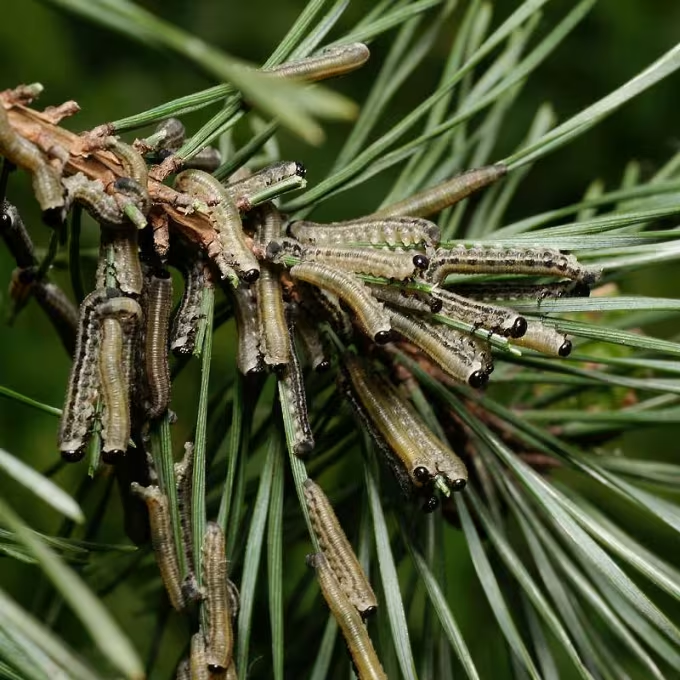
The larvae, often mistaken for moth caterpillars, can be identified by the presence of 7–8 pairs of abdominal prolegs. Their heads are usually dark, shiny, and clearly defined, which is a key trait when observing them on needles.
Females are highly prolific, laying eggs in small rows within slits made in the pine needles. This method protects the eggs from environmental stressors and helps ensure a high survival rate for the emerging larvae.
The life cycle undergoes complete metamorphosis, including egg, larva, pupal, and adult stages. The insect spends the winter as a prepupa within a tough, parchment-like cocoon located in leaf litter or on the tree itself.
These pests are highly sensitive to temperature and light, which dictates their emergence timing and the number of generations per year in different geographic regions.
What it damages
The primary hosts for the European pine sawfly are various species of pine, with Pinus sylvestris being particularly susceptible. Both young nurseries and mature forests can suffer significant damage from heavy infestations.
Larvae consume pine needles, often starting with older needles before moving to fresh growth. In high populations, they can defoliate entire trees, leading to severe stress and loss of photosynthetic capacity.
Defoliation reduces the tree's vigor and growth rate, making it susceptible to secondary pest attacks from wood-boring insects. Repeated defoliation over several consecutive years frequently causes tree death.
In addition to economic timber losses, the pest poses a major threat to ornamental pine trees in parks and urban landscapes, ruining their aesthetic value and requiring costly intervention.
The damage is cumulative, and early detection is crucial to prevent the population from reaching the "outbreak" stage, where traditional control methods become less effective.
When it appears
Adult emergence typically occurs in the spring, coinciding with the flushing of new pine shoots. This timing allows the female to lay eggs on the optimal food source for the forthcoming larvae.
Larval activity reaches its peak in early to mid-summer. During this phase, they feed voraciously, often found in colonial groups that make them stand out on the pine branches.
Depending on local climate, the sawfly may exhibit one or two generations per year. The timing of these life stages is tightly regulated by seasonal temperature variations.
By late summer or autumn, most larvae drop to the ground or seek sheltered spots to spin their cocoons. They remain in the prepupal stage throughout the winter months, awaiting the return of favorable spring conditions.
Monitoring the climate and local temperature data is essential for forestry managers to predict the exact time frame for potential larval outbreaks and to prepare control measures accordingly.
Signs of infestation
The most evident sign of a sawfly infestation is the presence of needles that have been eaten down to the central vein. These damaged needles turn yellow or brown and eventually drop off.
Colonies of larvae feeding in groups on the branches are the most reliable indicator of an active infestation. They can be seen stripped along the needles, often moving in synchronization.
Fine, dark granular frass (excrement) scattered beneath the canopy is a strong indicator of high larval activity. This "sawdust" often appears much earlier than the actual damage to the foliage becomes obvious.
Egg-laying sites on the needles appear as small, brownish, scalloped markings. Finding these marks before the larvae hatch can provide a window of opportunity for early intervention.
The presence of empty or filled cocoons in the bark crevices or in the soil layer beneath the pine tree confirms that a population has successfully completed its cycle in that specific area.
Control measures
Integrated Pest Management (IPM) is the most effective approach to control the European pine sawfly. This involves combining cultural, biological, and chemical methods to minimize damage.
Biological control using viral pathogens or naturally occurring predators is preferred to protect the local ecosystem. Enhancing the presence of natural enemies like parasitic wasps or predatory bugs is highly recommended.
For large-scale infestations, the use of selective insecticides that target sawfly larvae specifically can prevent catastrophic defoliation while sparing beneficial insects and pollinators.
Cultural practices, such as removing heavily infested branches or using pheromone traps to monitor population density, help foresters make informed decisions about whether intervention is necessary.
- Monitor pheromone traps to track adult population spikes.
- Use microbial insecticides (like viruses) during the early larval stages.
- Encourage bird habitats to naturally reduce the larval population.
- Perform selective pruning of heavily infested limbs in nurseries.
- Apply systemic insecticides only as a last resort in severe outbreaks.
Taxonomy
- Latin name
- Microdiprion
- Order
- Hymenoptera
- Family
- Diprionidae
- EPPO code
- MCDISP
Discussion
No discussions yet — be the first.