
Microcerotermes termites
Microcerotermes
Description
How to identify
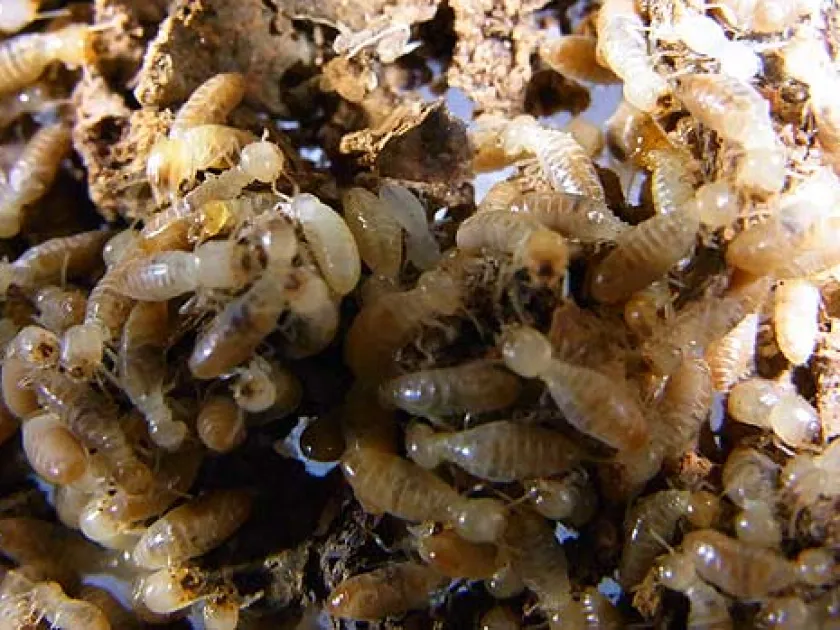
The Microcerotermes genus belongs to the order Isoptera, family Termitidae. These social insects maintain highly organized colonies with specialized castes including workers, soldiers, and reproductives.
Soldiers of this genus are identified by their elongated rectangular heads and prominent, serrated mandibles, which are essential for structural defense and colony protection.
Worker termites are pale, blind, and spend their entire lives within enclosed, dark galleries to avoid exposure to light and desiccation, making them difficult to detect.
Colonies build nests typically attached to tree trunks, fence posts, or subterranean structures, often composed of carton material — a mixture of chewed wood, soil, and excrement.
The reproductive cycle involves swarming events where alates (winged termites) emerge during humid conditions to establish new colonies, which is the primary mode of dispersal for the species.
What it damages
This pest infests a wide range of agricultural crops, including tropical fruit trees, coconut palms, cocoa, and sugarcane, causing substantial economic loss to farmers.
Termites target the root systems and the base of the stems, consuming internal tissues, which impairs water and nutrient uptake, leading to plant collapse and death.
Beyond live crops, Microcerotermes cause severe damage to farm infrastructure, including wooden supports, irrigation pipes, and stored agricultural equipment.
In nurseries, they can destroy thousands of young seedlings by tunneling through the stem, often resulting in total crop failure before the plants reach maturity.
The damage is cumulative and often progresses slowly, making it particularly dangerous because plants may appear healthy until structural integrity is compromised.
Signs of infestation
The most visible sign of infestation is the presence of mud tubes (shelter tubes) constructed on soil surfaces or the bark of trees, allowing termites to move protected from predators.
Visual inspection of the root crown often reveals internal hollows packed with soil particles and waste matter, replacing the structural wood of the plant.
Plants affected by Microcerotermes exhibit symptoms of severe water stress, such as leaf yellowing, wilting, and eventually total necrosis of the foliage.
A hollow sound upon tapping the trunk or stems of a plant is a strong indicator of internal damage caused by colony foraging activities.
Mass emergence of winged reproductives around agricultural fields is a clear indicator that established colonies are present and active in the vicinity.
Control measures
Effective management of Microcerotermes involves an integrated pest management (IPM) approach combining mechanical, chemical, and biological strategies.
Removing potential nesting sites, such as old stumps, dead wood, and debris from the field, is crucial to reduce the primary food sources and colonization sites for the pests.
Applying systemic soil insecticides, such as fipronil or imidacloprid, around the root zone creates a protective barrier that eliminates termites upon contact or ingestion.
Monitoring with bait stations containing slow-acting toxins can effectively reduce the overall colony population by exploiting the social foraging behavior of the termites.
Biological control agents, particularly entomopathogenic fungi, are being increasingly used to manage populations in an environmentally sustainable manner without chemical residues.
Taxonomy
- Latin name
- Microcerotermes
- Family
- Termitidae
- EPPO code
- MCRTSP
Discussion
No discussions yet — be the first.