
Aspen flat bug
Mezira tremulae
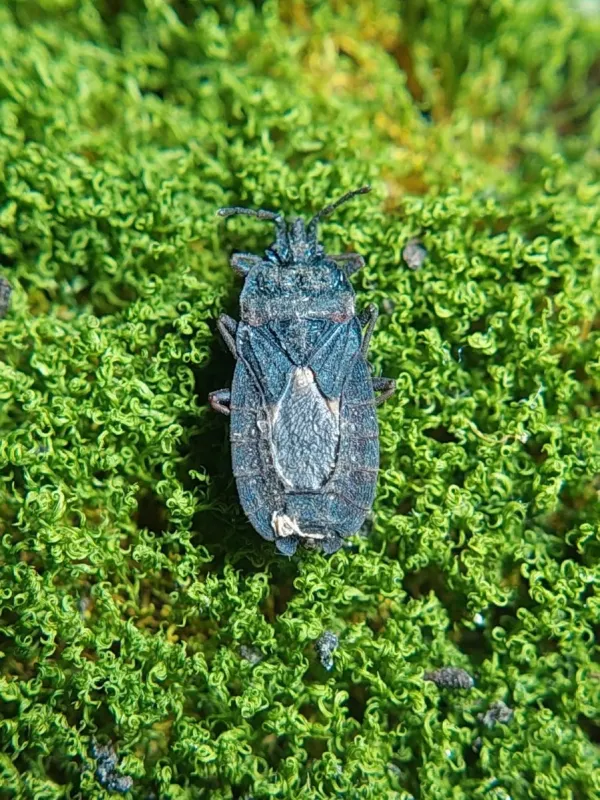
Description
How to identify
The aspen flat bug (Mezira tremulae) is a member of the Aradidae family, often referred to as flat bugs due to their extremely compressed bodies.
These insects are small, typically measuring 7 to 9 mm in length, which allows them to live in the narrow spaces between the bark and the wood.
Their color ranges from dark brown to black, providing excellent camouflage against the bark of aspen and poplar trees.
The adults have well-developed antennae and legs suited for moving through tight crevices in tree trunks.
Larvae closely resemble the adults in structure but are smaller and lack fully functional wings, as they spend their entire life cycle in the subcortical habitat.
What it damages
The primary host for Mezira tremulae is the aspen tree (Populus tremula), though they are occasionally found on other Populus species.
These bugs primarily target trees that are stressed, decaying, or have already been compromised by other factors such as drought or fungal diseases.
By feeding on the sap and inner bark tissue, they disrupt the normal flow of nutrients and moisture, weakening the host tree significantly.
Severe infestations can lead to the necrosis of large patches of bark, which often results in the premature death of branches or the entire tree.
Their feeding activities often facilitate the entry of secondary pathogens, including wood-decaying fungi, which further degrade the wood quality.
When it appears
The activity of the aspen flat bug begins in early spring, as temperatures rise and the insects emerge from their wintering sites.
The reproductive phase occurs in late spring and early summer, with egg-laying taking place deep within the bark crevices.
Throughout the summer months, nymphs continuously feed on the cambium and inner bark, progressing through several developmental stages.
As autumn approaches and temperatures drop, both adults and nymphs seek shelter in deeper cracks to hibernate during the winter.
Environmental factors, specifically humidity and bark thickness, play a crucial role in the survival rate and developmental speed of each generation.
Signs of infestation
The presence of the bug is most easily identified by peeling back loose or dead sections of bark on the trunks of aspen trees.
Adults and larvae can be observed clustered together in the dark, narrow crevices of the bark, often motionless until disturbed.
Visible signs of damage include discolored or necrotic patches of tissue beneath the bark, which indicate sustained feeding by the colony.
The tree may show general symptoms of decline, such as thinning foliage or dieback of smaller branches, even before the infestation is confirmed.
Bark surfaces may become brittle or detached in areas heavily colonized by the insects, signaling a compromised tree structure.
Control measures
Effective management focuses on forest hygiene, specifically the prompt removal of infested, weakened, or dead trees through sanitary logging.
Reducing the volume of logging debris left in the forest is essential to prevent the buildup of pest populations in managed timber areas.
Promoting tree health through appropriate silvicultural practices makes the stands more resilient to infestations by subcortical insects.
Chemical control is generally impractical due to the cryptic nature of the insects living under the bark, making manual removal and silviculture the preferred methods.
- Regular sanitary thinning of forest stands.
- Removal of storm-damaged and weakened trees.
- Monitoring of young plantations for early signs.
Taxonomy
- Latin name
- Mezira tremulae
- Order
- Hemiptera (bugs, aphids, leafhoppers)
- Family
- Aradidae
- EPPO code
- MEZRTR
Discussion
No discussions yet — be the first.