
Aradus
Aradus
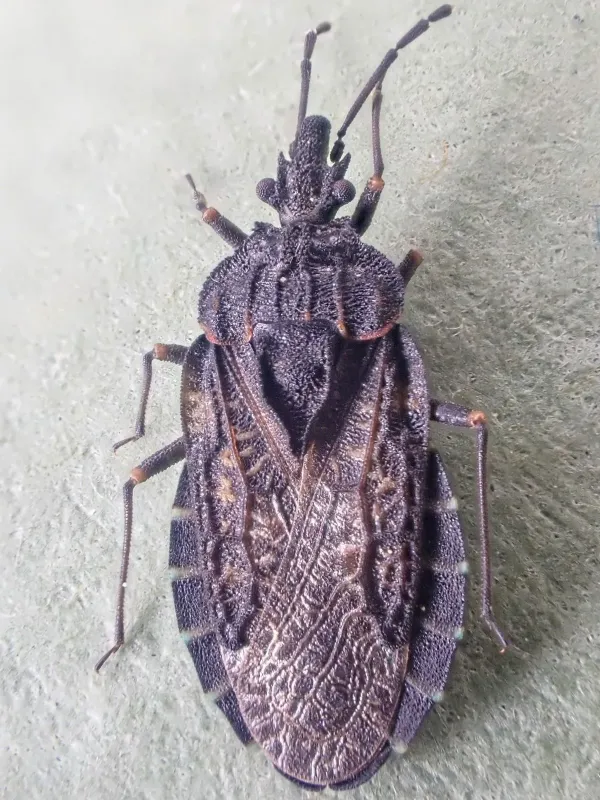
Description
How to identify
Aradus is a genus of insects in the family Aradidae, commonly known as flat bugs. They are highly specialized insects that have evolved to live in narrow gaps under bark.
The body of these insects is exceptionally flat, which allows them to navigate deep crevices in the bark of both living and dead trees.
They typically exhibit cryptic coloration, ranging from light brown to black, which helps them blend in with the bark texture and remain unnoticed.
The head is small with characteristic projections, and the antennae consist of four segments. The scutellum is prominent, and the hemelytra often feature a reticulated, net-like pattern.
Adults usually measure between 4 and 10 mm in length, and their larvae look like miniatures of the adults but lack developed wings.
What it damages
Aradus bugs primarily feed on the sap of weakened or dying trees, inserting their piercing-sucking mouthparts into the phloem and cambium layers.
While they are rarely the primary cause of tree death, their feeding further weakens the tree, making it more susceptible to pathogens and other pests.
They are frequently found under the bark of coniferous and deciduous trees, where the bark has begun to peel or separate from the wood.
Feeding disrupts the normal sap flow, which can accelerate the necrosis of bark tissues and lead to localized drying of branches.
In forest management, they are often considered secondary pests that colonize trees already stressed by drought, fungal infections, or wood-boring beetles.
When it appears
The lifecycle of Aradus is linked to seasonal temperature changes, with adults being the primary overwintering stage.
They typically overwinter in sheltered locations beneath the bark, emerging when the temperature rises in the spring to initiate mating.
The breeding season lasts through the warm months, with multiple generations possible depending on the climate and host availability.
During the summer, the insects remain active within their subcortical habitats, constantly feeding and reproducing.
As autumn approaches, the bugs search for suitable wintering sites under the bark to survive the cold months.
Signs of infestation
The presence of Aradus is often revealed by the condition of the bark rather than the insects themselves, which stay hidden.
Look for bark that separates easily from the trunk, revealing dense clusters of flat bugs underneath the layers.
Necrotic patches on the tree trunk or branches, often accompanied by sap flow or gumming, can indicate that the tree is being attacked.
- loose, peeling bark on the trunk or branches;
- accumulation of dark, spot-like frass on the inner side of the bark;
- presence of exuviae (cast-off skins) left by larvae;
- gradual dieback of the tree canopy.
Regular visual inspection of the bark is necessary, especially on trees that show signs of previous damage or stress.
Control measures
Sanitation is the most effective control method, involving the removal and destruction of heavily infested trees or branches.
Maintaining tree health through proper fertilization, adequate watering, and mulch application reduces the risk of Aradus colonization.
In commercial nurseries or orchards, systemic insecticides may be applied if a significant population build-up threatens the trees.
Mechanical removal of old or loose bark during the winter can eliminate the overwintering sites, significantly reducing the local population.
Encouraging natural predators and maintaining healthy forest/garden ecosystems help to keep the population of these bugs in check naturally.
Taxonomy
- Latin name
- Aradus
- Order
- Hemiptera (bugs, aphids, leafhoppers)
- Family
- Aradidae
- EPPO code
- ARADSP
Discussion
No discussions yet — be the first.