
Pine bark bug
Aradus cinnamomeus
Description
How to identify
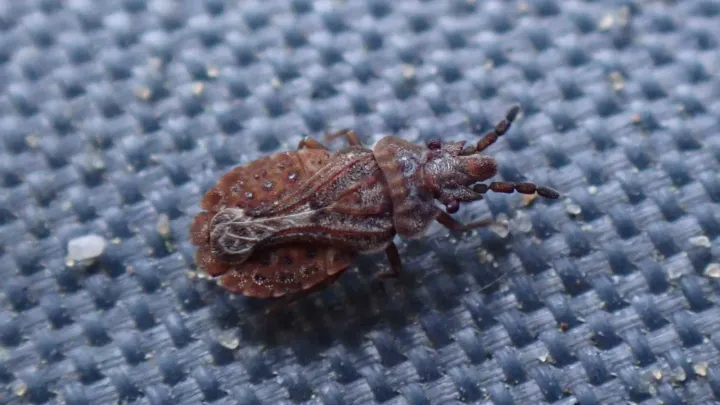
The Pine bark bug (Aradus cinnamomeus) is a member of the Aradidae family, known for their distinctively flattened bodies that allow them to live in the narrow spaces between tree bark scales.
Adult insects are typically 3–5 mm long, with a reddish-brown to almost black color, which provides excellent camouflage against the bark of pine trees.
Sexual dimorphism is present, with females generally larger than males. Their morphology is perfectly adapted to a subcortical lifestyle, minimizing exposure to environmental threats.
The life cycle varies between one and two years depending on the climatic zone, which significantly impacts the population dynamics and the speed at which infestations spread.
Both nymphs and adults exhibit the same flattened morphology, remaining concealed throughout their entire development within the bark crevices.
What it damages
The primary host is the Scots pine, although the bug can infest other pine species. Young forest stands, typically between 10 and 30 years old, are the most susceptible to attacks.
These insects feed by sucking sap from the cambium and phloem layers. This feeding activity disrupts the tree's vascular system, leading to severe nutrient deprivation and stunted growth.
Stands located on poor, sandy soils are particularly vulnerable, as the trees are already stressed by environmental factors, making them less able to resist bug colonization.
Heavy infestations can lead to the widespread mortality of young pine trees, causing significant economic losses in commercial forestry and timber production.
Continuous feeding by large populations weakens the tree, eventually making it a target for secondary pests and various wood-boring insects.
When it appears
Activity begins in early spring as temperatures rise, signaling the emergence of adults from their wintering sites under the bark.
Mating and egg-laying occur during the spring months, primarily in April and May, as the insects move to find suitable sites for the next generation.
Nymphs emerge in early summer and begin feeding immediately, progressing through several developmental stages before the onset of autumn.
The peak of feeding activity occurs during mid-summer, when the population density reaches its maximum and the impact on host trees is most visible.
As temperatures drop in autumn, both adults and late-stage nymphs seek refuge in the lower trunk crevices to overwinter until the following season.
Signs of infestation
The first external signs of infestation include the yellowing and premature shedding of needles, starting from the lower branches of the crown.
Careful inspection of the tree trunk reveals clusters of the small, flattened bugs hiding beneath the loose scales of the bark.
A noticeable decrease in annual height and diameter growth is a common indicator of a chronic infestation that has been present for several seasons.
The presence of resin flow on the trunk is often a response to the mechanical damage caused by the bugs' feeding, further indicating a tree under stress.
- Yellowing of needles in the lower crown
- Presence of bugs in bark crevices
- Reduced annual growth increments
- Resin bleeding on the tree trunk
- Overall thinning of the canopy
Control measures
Silvicultural practices, such as maintaining optimal stand density and species diversity, are the most effective long-term strategies for preventing outbreaks.
Sanitation cuttings, involving the prompt removal and disposal of heavily infested trees, are essential to reduce the bug population in affected areas.
Encouraging natural predators, such as bark-dwelling beetles and insectivorous birds, plays a vital role in maintaining the insect population at manageable levels.
Chemical control is generally reserved for high-value seedlings in forest nurseries and must be conducted by professionals to minimize environmental impact.
Regular forest monitoring and the use of pheromone-based traps help in early detection, allowing for rapid intervention before the population reaches an uncontrollable level.
Taxonomy
- Latin name
- Aradus cinnamomeus
- Order
- Hemiptera (bugs, aphids, leafhoppers)
- Family
- Aradidae
- EPPO code
- ARADCI
Discussion
No discussions yet — be the first.