
Mezira
Mezira
Description
How to identify
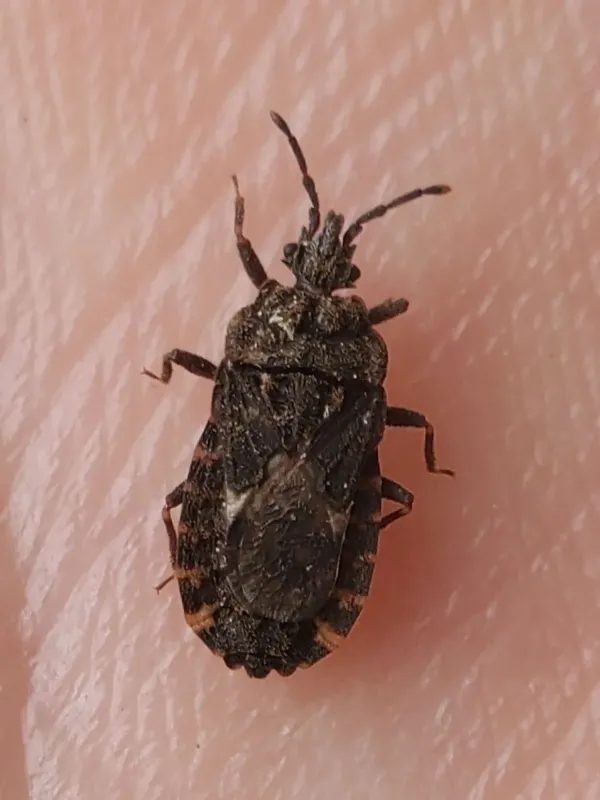
The genus Mezira belongs to the family Aradidae (flat bugs) within the order Hemiptera. These insects are characterized by a highly flattened body, which allows them to thrive in the tight spaces beneath the bark of trees.
Their coloration is typically dark brown or black, serving as excellent camouflage against the bark substrate. The body surface is often rough, covered with minute granules or scales that mimic the texture of decaying wood.
The head is elongated, and the rostrum is specialized for feeding on fungal mycelium or the tissues of dying bark. The antennae are four-segmented, which is a key diagnostic feature for entomological identification.
While adults have fully developed wings, they are rarely seen flying and prefer to remain stationary, pressed tightly against the bark. This lethargic behavior is a survival strategy in their micro-habitat.
Nymphs resemble smaller versions of the adults. They also maintain a cryptic lifestyle, rarely venturing outside the protective layers of the tree bark throughout their development.
##damage##Mezira species are primarily associated with weakened or dying trees that have been colonized by wood-decaying fungi. They are not primary pests of healthy trees but significantly accelerate the decomposition process.
They damage various deciduous and coniferous species, feeding on bark cells and fungal structures. The damage is particularly problematic in tree nurseries and forest stands that are under physiological stress.
By piercing the bark, these insects facilitate the entry of secondary pathogens, such as rot-causing fungi. This leads to bark shedding, drying of branches, and, in severe cases, the death of the entire tree.
Their economic impact increases in timber storage areas where they can infest logs and wood stacks, reducing the quality of the harvested forest products.
During periods of drought or environmental stress, trees become more vulnerable to colonization by these insects, leading to widespread bark damage across the forest stand.
##season##The active development of Mezira begins with the arrival of spring, as adults emerge from overwintering sites to find suitable host trees for egg-laying.
Population peaks typically occur during mid-summer when nymphs are actively feeding under the bark. The rate of development is highly dependent on ambient temperature and humidity.
Overwintering occurs in the adult stage or as late-instar nymphs, hidden deep within bark crevices or in the leaf litter at the base of the tree to escape cold temperatures.
The life cycle is relatively slow, often spanning up to a year, which is a common adaptation for insects living in nutrient-limited bark micro-habitats.
In temperate climates, the phenology of Mezira is synchronized with the sap flow of the host trees and the growth phase of the fungi they depend on for nutrition.
##signs##The most reliable sign of Mezira presence is finding the insects themselves when carefully lifting loose bark. Exuviae (cast-off skins) are also common indicators of their activity.
Signs of infestation include localized bark discoloration, slight swelling or lifting of the bark, and small feeding punctures created by the rostrum of the bug.
The presence of fungal growth often coincides with Mezira colonies, as the bugs and fungi share a symbiotic nutritional relationship. Dark spots on the bark may indicate concentrated feeding areas.
In advanced cases, one might observe fine, dark granular frass under the bark, which is a sign of long-term occupation by a thriving insect colony.
Increased brittleness of the bark and its tendency to peel away easily from the tree trunk are strong indicators that the area has been severely affected by these flat bugs.
##control##The primary control method is good forest hygiene. Removing dead, dying, or wind-fallen trees reduces the available habitat for these pests and helps maintain forest health.
It is crucial to promptly clear logging residues and wood stacks from the forest floor, as these materials provide ideal conditions for Mezira populations to expand.
Chemical control is rarely effective due to the insects' cryptic lifestyle beneath the bark, which makes contact insecticides difficult to apply successfully.
In nurseries, maintaining optimal tree vigor through proper irrigation and soil management is the best preventive measure to discourage colonization.
- Regular monitoring of tree trunks for signs of bark damage.
- Mechanical removal of infested bark in small, isolated patches.
- Promoting tree immunity through proper silvicultural practices.
Taxonomy
- Latin name
- Mezira
- Order
- Hemiptera (bugs, aphids, leafhoppers)
- Family
- Aradidae
- EPPO code
- MEZRSP
Discussion
No discussions yet — be the first.