
Flat bark bug
Aneurus laevis
Description
How to identify
The flat bark bug (scientific name: Aneurus laevis) is a small insect belonging to the family Aradidae (flat bugs). These insects are highly adapted to life in narrow, confined spaces beneath the bark of decaying or weakened trees.
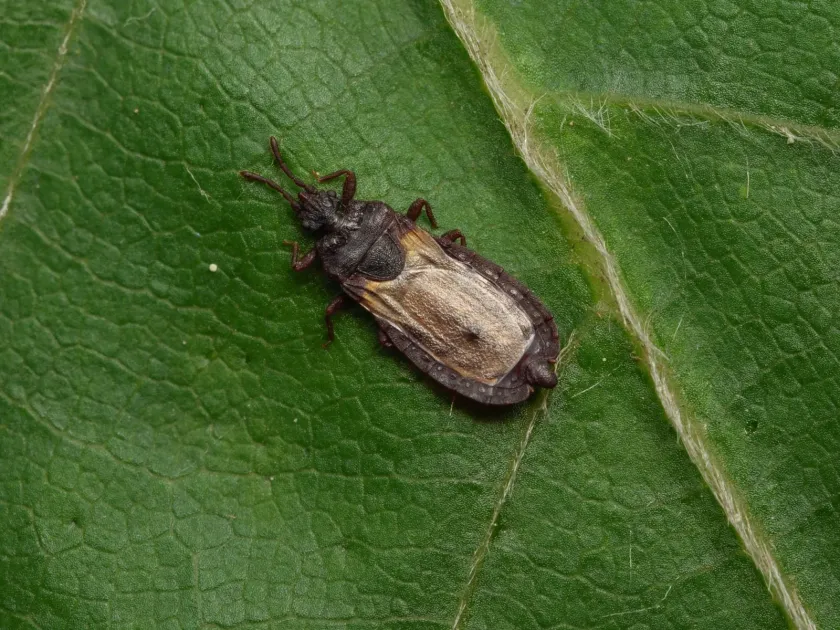
Adult bugs typically measure between 4 and 5 millimeters in length. Their bodies are extremely flattened, which is an evolutionary trait that allows them to remain concealed within the deep fissures of tree bark, protected from external predators.
The coloration of the flat bark bug ranges from deep reddish-brown to dark brown or black. The surface of their body is generally smooth, lacking the dense hair coverage found in many other hemipteran species.
The head is relatively small and features a long, specialized proboscis used for piercing and sucking fluids. Both the pronotum and the abdomen are flattened, giving the insect an appearance that blends perfectly with its dark, woody environment.
Nymphs of this species resemble the adults but are smaller and lack fully developed wings. They remain in the same habitat as adults, feeding under the bark throughout their development cycle.
What it damages
Aneurus laevis primarily targets deciduous tree species. Common hosts include alder, birch, and aspen, particularly trees that are already stressed by environmental factors, age, or previous damage to the bark layers.
The damage is caused by the insect using its proboscis to tap into the cambium layer. By consuming the plant juices, the bugs cause localized necrosis, which disrupts the tree’s nutrient transport system and significantly weakens its vitality.
High population densities on a single tree can lead to large areas of dead tissue under the bark. This condition weakens the tree further, making it significantly more susceptible to secondary infestations by bark beetles or wood-decaying fungi.
While healthy, vigorous trees are usually resistant to significant damage, ornamental plantings or forest saplings undergoing stress are at a higher risk of being compromised by these pests.
The feeding activity often results in discoloration of the inner bark and, in extreme cases, can contribute to the dieback of individual branches or even the death of the entire tree if the infestation is severe.
When it appears
The activity of the flat bark bug begins early in the spring as temperatures rise, signaling the end of the winter diapause. Reproduction and egg-laying occur during the late spring and early summer months.
The life cycle typically spans one year, making the species relatively stable in terms of its population development. Both adults and nymphs overwinter by sheltering deep within the bark crevices.
Feeding activity peaks during the summer, coinciding with the active sap flow in trees, which provides an abundant food source for the bugs. During this time, adults may move locally to find fresh hosts if their current tree is dying.
As autumn approaches and temperatures drop, the metabolic processes of the bugs slow down. They move to overwintering sites, often staying within the same or adjacent trees that provided their summer shelter.
Environmental conditions, particularly humidity levels under the bark, play a critical role in the survival rate of the nymphs. Prolonged dry spells can adversely affect the population density.
Signs of infestation
The most reliable sign of an infestation is the presence of exuviae (cast-off skins from molting) found in the crevices of the tree bark. Removing a loose piece of bark often reveals a colony of these insects tucked away.
Visual indicators on the tree include dark, damp spots on the inner bark or cambium surface. These spots are the direct result of the insects' feeding sites, where the tree has reacted to the physical damage.
The general health of the tree often declines, showing signs such as thinning foliage, yellowing of leaves (chlorosis), and slowed annual growth. If the tree is heavily infested, it may show signs of branch dieback.
The presence of sooty mold or fungal discoloration on the trunk can be a secondary sign, as these fungi often thrive in the moisture-rich areas impacted by the feeding bugs.
- Clusters of flat insects hidden in bark layers.
- Necrotic spots on the cambium layer.
- Premature leaf drop and thin crown density.
- Accumulation of insect molts in bark cracks.
Control measures
Good silvicultural practices are the primary method of management. Removing deadwood and thinning out highly stressed trees helps prevent the buildup of Aneurus laevis populations in the forest or nursery.
For ornamental trees, maintaining proper hydration and nutrition is essential. A tree that is kept in optimal health will have a stronger defense system, allowing it to naturally repel or contain minor infestations.
Chemical control should be reserved for high-value specimens or severe outbreaks. Systemic insecticides can be applied to reach the insects feeding beneath the bark, though application must be targeted to avoid environmental harm.
Regular inspections in the spring allow for the early detection of localized infestations. Removing infested bark or the entire tree if necessary can prevent the spread of the bugs to surrounding healthy trees.
Promoting a diverse ecosystem that supports natural predators—such as small birds and beneficial predatory insects—helps maintain the balance and naturally regulates the population of flat bark bugs.
Taxonomy
- Latin name
- Aneurus laevis
- Order
- Hemiptera (bugs, aphids, leafhoppers)
- Family
- Aradidae
- EPPO code
- ANEULA
Discussion
No discussions yet — be the first.