
McGregor mite
Metaseiulus mcgregori
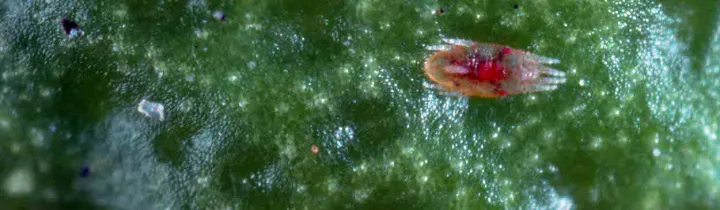
Description
How to identify
The McGregor mite, scientifically known as Metaseiulus mcgregori, belongs to the family Phytoseiidae. While many mites in this family are beneficial predators, this specific species is recognized as a damaging phytophagous pest.
These mites are microscopic, making them difficult to identify without a magnifying lens or microscope. Their appearance changes with their developmental stages, typically ranging from translucent yellow to brownish colors.
Their life cycle consists of the egg, larva, protonymph, deutonymph, and adult stages. In warm and dry conditions, the population can explode, as the life cycle completes in just a few days.
They are highly mobile, spreading across plant tissues rapidly and often being dispersed by wind or farm workers' tools. This mobility facilitates quick colonization of entire greenhouse sections or orchards.
Identification often requires careful inspection of the underside of leaves where these mites congregate. A professional entomological analysis is necessary to distinguish them from other mite species.
What it damages
This pest attacks a wide variety of crops, including citrus, grapes, apples, and numerous vegetable crops. Greenhouse environments are particularly susceptible to severe infestations throughout the year.
The mites pierce the plant's epidermis to feed on cell sap, which disrupts the photosynthetic process. As a result, the plant loses its ability to produce energy, leading to stunted growth and reduced vigor.
Symptoms initially appear as small stippling marks on the foliage, which eventually enlarge into necrotic patches. Persistent feeding leads to leaf chlorosis, curling, and eventually premature abscission.
The economic impact includes not only decreased biomass but also lowered fruit quality and yields. Severely infested plants become stressed and are more prone to secondary diseases and environmental damage.
The damage is cumulative, and without intervention, it can lead to the total decline of the plant’s health, especially in younger or highly productive greenhouse crops.
When it appears
The McGregor mite's activity peaks during periods of high temperature and low humidity. In open fields, this typically occurs from late spring through the heat of the summer months.
In controlled environments like greenhouses, the pest can remain active throughout the year. The lack of seasonal fluctuations makes continuous monitoring absolutely essential.
During colder months, the mites may enter a dormant state, hiding in cracks, crevices, or underneath leaf litter. This allows the population to survive the winter and re-emerge in spring.
Agricultural planning must account for these seasonal patterns to implement preventative treatments before the mite population reaches economic thresholds.
Regular scouting during transitions in temperature is vital, as early detection allows for the application of less invasive, biological control measures.
Signs of infestation
The most common sign of infestation is the appearance of tiny, light-colored dots on the leaves. These dots represent the initial feeding sites where cells have been emptied of their contents.
The presence of fine webbing on the undersides of leaves or between stems is a clear indicator of a well-established colony. While not present in all stages, it is a hallmark of severe infestation.
Leaves often turn yellow or bronzed, becoming brittle to the touch. The plant may appear wilted even if the soil moisture levels are adequate, indicating deep stress within the plant tissues.
Deformation of young leaves and flower buds is common, leading to poor fruit set. The overall appearance of the plant becomes lackluster, with significant loss of the green canopy.
- Stippling or necrotic spots on leaves.
- Thin, silky webbing across infested parts.
- Yellowing or bronzing of the leaf foliage.
- Deformation and curling of new shoots.
- Significant drop in fruit and vegetable quality.
Control measures
Successful control requires an integrated pest management (IPM) approach. Clearing weeds and debris from the vicinity of crops is a critical first step to eliminate alternative hosts.
Chemical control using acaricides should be used cautiously. Rotating between different chemical classes is necessary to prevent the development of pesticide resistance in the mite population.
Maintaining appropriate humidity levels in greenhouses can help discourage mite proliferation. Regular overhead misting or irrigation may disrupt their life cycle and reduce population density.
Biological control, including the introduction of predatory mites that consume McGregor mites, is highly recommended as a sustainable and effective strategy for organic and standard operations.
Strict hygiene protocols, including disinfecting tools and inspecting new plants for symptoms, are essential to preventing the introduction and spread of the pest within commercial operations.
Taxonomy
- Latin name
- Metaseiulus mcgregori
- Order
- Mites
- Family
- Phytoseiidae
- EPPO code
- TYPLMC
Discussion
No discussions yet — be the first.