
Metaseiulus
Metaseiulus
Description
How to identify
The genus Metaseiulus belongs to the family Phytoseiidae, order Mesostigmata. These mites are primarily known as predators, but they can act as pests under specific environmental conditions when their food source is depleted.
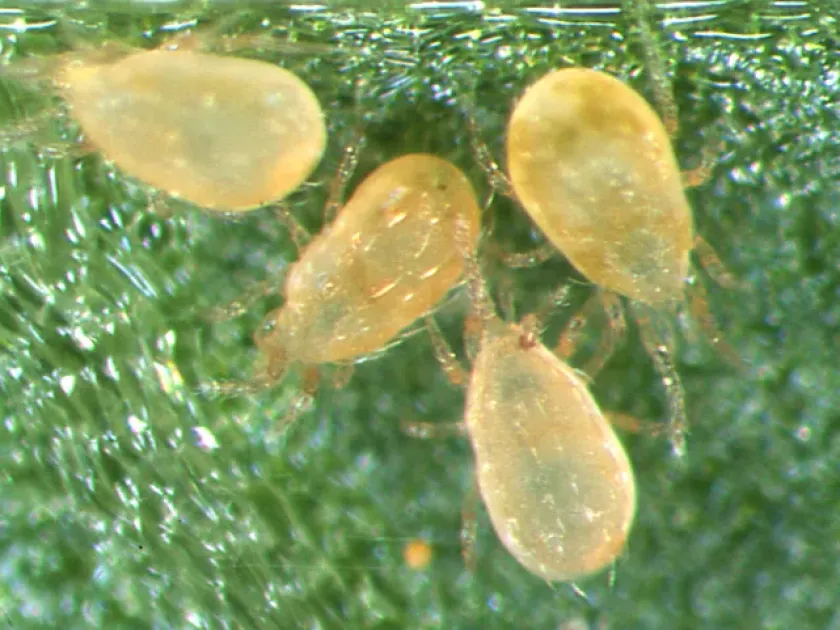
They are microscopic, typically measuring between 0.3 and 0.5 mm in length. Their bodies are light-colored or yellowish, allowing them to blend in with the leaf surface while they move quickly.
Accurate identification to the species level requires professional laboratory analysis, focusing on the dorsal shield patterns and setal arrangements. This is crucial for distinguishing them from other beneficial predatory mites.
The life cycle encompasses egg, larva, protonymph, deutonymph, and adult stages. Rapid development allows for high population turnover, especially in greenhouse conditions where constant temperatures persist.
They are highly adaptable to various environmental parameters, which makes them resilient in many agricultural settings, both indoors and outdoors.
What it damages
Although they often hunt other mites, they can cause physical damage to plant tissues by piercing cells with their mouthparts to extract fluids. This behavior is triggered when the population density of their prey is too low.
Affected crops include a wide range of fruit-bearing plants, strawberries, grapes, and various ornamental species. Damage can also occur in vegetable greenhouses.
Feeding results in chlorosis, stunting, and reduced vigor of the host plant. The destruction of leaf tissue interferes with photosynthesis, which is critical for biomass production.
High infestation levels lead to localized yellowing and, eventually, tissue death. Unlike spider mites, they do not produce massive amounts of webbing, which can lead to misdiagnosis.
Repeated feeding cycles weaken the plant's immune system, making it more susceptible to secondary infections by fungi or bacterial pathogens.
When it appears
Activity usually begins in the spring, once temperatures consistently exceed +15 to +18 degrees Celsius. They emerge from their overwintering sites to colonize new growth.
The summer season provides the most favorable conditions for rapid population explosions. Prolonged heat and moderate humidity support multiple generations within a short timeframe.
As autumn approaches and day length decreases, individuals seek sheltered areas such as bark crevices or soil debris to enter diapause for the winter.
Their appearance is often tied to the activity of primary prey species. If a spider mite infestation occurs, the Metaseiulus population typically grows alongside it.
In greenhouses, where temperatures are stable year-round, there is no distinct seasonal dormancy, leading to a constant risk of pest pressure throughout the production cycle.
Signs of infestation
The first signs of infestation include the appearance of small, irregular yellow spots on the leaves. These spots are the result of cell destruction during the feeding process.
A magnifying glass will reveal tiny, fast-moving mites located primarily along the veins on the underside of the leaves. This movement is a key indicator of their presence.
Leaf curling, premature wilting, and overall stunted growth are clear signals that the mite population has reached a level that interferes with plant development.
If the infestation is severe, the leaves may become discolored and brittle. Unlike other pests, the lack of extensive silk webs is characteristic of this genus.
The presence of shed skins and waste products on the leaf surface provides further evidence of a established and active mite colony requiring attention.
Control measures
Integrated Pest Management (IPM) is the most effective approach. Promoting natural predator-prey balance prevents sudden spikes in populations that lead to crop damage.
Use of highly selective acaricides is recommended to control populations while minimizing the impact on non-target beneficial organisms in the ecosystem.
Cultural practices, such as removing weeds that serve as alternative hosts, are essential for reducing the spread of mites throughout the field or greenhouse.
Monitoring programs using scouting techniques allow for early detection. Spot treatments can often contain the infestation before it requires broad-spectrum intervention.
Biological control agents, when used correctly in protected agriculture, can naturally maintain mite populations below the economic injury level without chemical residues.
Taxonomy
- Latin name
- Metaseiulus
- Order
- Mites
- Family
- Phytoseiidae
- EPPO code
- METSSP
Discussion
No discussions yet — be the first.