
Mesopsis laticornis
Mesopsis laticornis
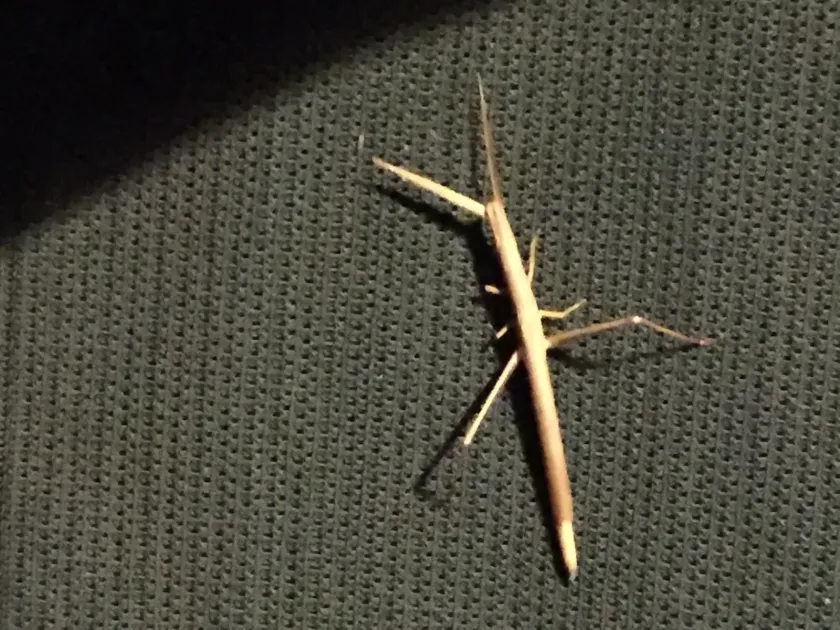
Description
How to identify
Mesopsis laticornis belongs to the order Orthoptera and the family Acrididae (grasshoppers). It is characterized by its elongated pronotum and well-developed wings, which are adapted for flight.
Adult individuals have a moderate size, with a body color ranging from brownish-grey to greenish-yellow, providing camouflage in dry vegetation. The head is noticeably wide, which is reflected in the species name.
Sexual dimorphism is present, with females generally being larger than males. Like other Acrididae, they possess tympanal organs located on the sides of the first abdominal segment for sound reception.
The life cycle includes egg, nymph, and adult stages. This species prefers open areas and grassy habitats where it finds sufficient food resources and favorable microclimate conditions.
Species identification often requires expert microscopic examination of male genitalia or specific wing venation patterns to distinguish it from closely related grasshopper species.
What it damages
Both nymphs and adults feed on the vegetative parts of plants. They primarily target various species of wild and cultivated grasses, causing significant agricultural concern.
The pest can cause economic damage to wheat, barley, and millet crops, particularly during outbreaks when population density exceeds the damage threshold for the area.
In arid environments, this grasshopper often migrates to pasture lands, reducing the productivity of grazing areas and consuming the tender green parts of forage crops.
Damage involves the consumption of leaf tissue, which reduces the photosynthetic area of the plant, weakens the host, and eventually leads to significant grain yield losses.
During severe infestations, the pest is capable of completely denuding areas of a field, posing a direct threat to the agricultural output of the affected region.
When it appears
Activity is highly dependent on temperature and humidity, which dictate the speed of development and the timing of emergence for each generation throughout the year.
Nymphs emerge from overwintered eggs in the spring as the soil warms up. This is the crucial time for field monitoring to detect early population clusters.
Peak damage is typically observed during the summer months when insects reach the adult stage and require maximum food intake to support their reproductive cycles.
Migration typically increases in the latter half of the summer, as adult populations expand their territory into neighboring fields in search of fresh food sources.
Autumn marks the period of egg-laying. Eggs are deposited in soil clutches, where they remain throughout the winter, protected from cold temperatures by the insulating properties of the earth.
Signs of infestation
A primary sign of Mesopsis laticornis presence is the appearance of jagged, uneven leaf edges on cereal plants caused by the insect's feeding behavior.
Visual inspection in the early morning often reveals the insects themselves, which are active in the canopy and jump away when disturbed by human movement.
Large amounts of frass (excrement) deposited on the leaves and at the base of the plants are a clear indicator of a significant infestation level in the area.
Wilting, yellowing leaf tips, and premature drying of stems are secondary symptoms indicating that the plant's vascular and nutrient systems have been compromised.
In cases of extremely high density, large patches of the crop may appear sparse or stripped, indicating severe consumption and the need for immediate intervention.
Control measures
Effective management begins with routine phytosanitary scouting of fields to identify early-stage nymph emergence and prevent the establishment of localized hot spots.
Agrotechnical practices include autumn plowing to disrupt egg clutches in the soil, which helps mechanical destruction and exposes them to harsh winter conditions.
Chemical control should focus on contact-stomach insecticides applied when the nymphs are in early stages, as they are most vulnerable to these treatments before reaching maturity.
Managing weed growth along field edges is essential, as these areas often serve as primary reservoirs and breeding grounds for the pest before it moves into the crops.
Integrated Pest Management (IPM) strategies may incorporate biological controls, such as entomopathogenic fungi, to reduce populations while minimizing the impact on non-target species.
Taxonomy
- Latin name
- Mesopsis laticornis
- Order
- Orthoptera (locusts)
- Family
- Acrididae
- EPPO code
- MSOPLC
Discussion
No discussions yet — be the first.