
Meromyza
Meromyza
Description
How to identify
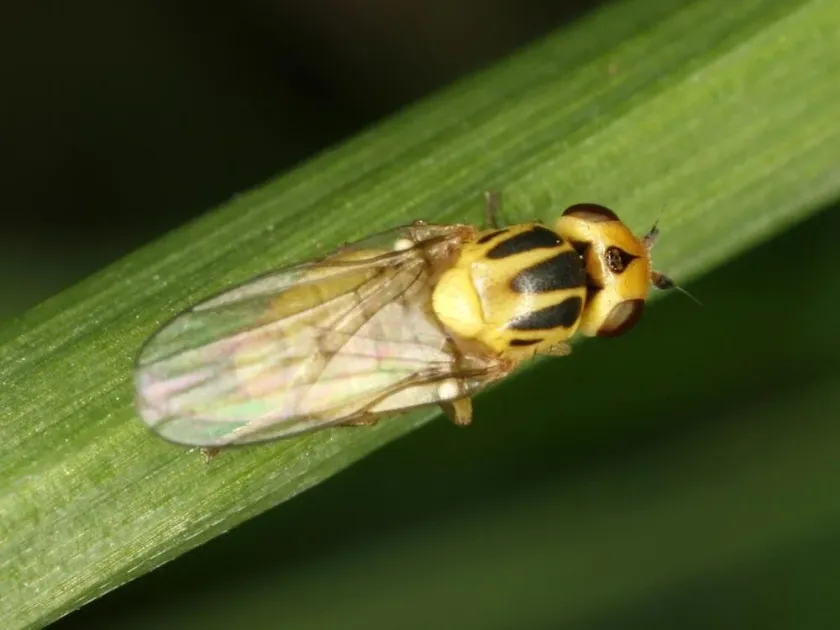
Meromyza is a genus of small flies within the family Chloropidae (grass flies), belonging to the order Diptera. These insects typically measure between 3 and 5 mm in length and are easily recognized by their yellowish-green body with three distinct dark stripes on the thorax.
The most defining characteristic of these flies is their bright green eyes, which serve as the primary visual marker. Their wings are transparent and rest horizontally along the abdomen. The hind femora are notably thickened and equipped with small tooth-like structures.
The larvae are spindle-shaped, measuring 5–8 mm when fully mature. Their color ranges from translucent white to pale green. They possess two black mouth hooks used for feeding on the inner tissues of host plant stems.
Eggs are very small, white, and ribbed. They are typically laid singly on the leaves or stems of host plants. The hatching period is heavily influenced by ambient temperature and humidity levels.
As phytophagous insects, various species of Meromyza have adapted to thrive in temperate climates, making them persistent pests in global cereal production systems.
What it damages
Meromyza primarily targets major cereal crops, including wheat, barley, rye, and oats. They also frequently infest wild grass species like couch grass (Elymus repens), which serve as significant natural reservoirs for the population.
The damage is caused exclusively by the larvae. After hatching, they tunnel into the stem, feeding on the inner tissues and severing the main shoot or the developing ear. This disrupts the plant's vascular system and nutrient transport.
Infestation during the tillering stage leads to the yellowing and death of the central leaf. This often forces the plant to produce excess side tillers, which are typically weak, underdeveloped, and fail to contribute to the final yield.
If the plant is infested during the booting or heading stage, the larvae consume the tissues just below the ear. This causes the ear to turn white and sterile—a condition known as "whitehead." These ears contain either shriveled grain or no grain at all.
The overall reduction in crop yield can be significant, sometimes reaching 20–30% in heavily infested fields, particularly when favorable weather conditions support high pest densities.
When it appears
The larvae overwinter within the stems of winter cereals or wild grasses. As temperatures rise in early spring, they resume feeding until they reach the pupal stage, usually hidden within the plant sheath.
The emergence of the first generation of adults typically coincides with the tillering stage of spring cereals. This period of activity lasts for several weeks, depending on the geographical region and local weather patterns.
The lifecycle of one generation lasts between 30 and 45 days. Depending on the climate, the pest can produce up to three generations per season, with subsequent generations shifting to late-planted crops or volunteer grain.
In autumn, adults lay eggs on emerging winter crops. The resulting larvae feed throughout the mild periods of late autumn and eventually hibernate, remaining within the stems until the following spring.
Weather plays a critical role in fly activity. Calm, sunny mornings and evenings are peak times for movement. Conversely, extreme heat or prolonged drought can significantly reduce the activity and reproductive success of the adults.
Signs of infestation
The most obvious visual sign of a Meromyza infestation is the appearance of bleached, white ears scattered throughout a green crop. These whiteheads stand out sharply against the healthy, grain-filled ears.
Early-stage infestations are marked by a withered central leaf. When pulled, this leaf usually detaches easily, and upon splitting the stem, one can often find the larvae or the debris left behind by their feeding.
Plants damaged early in development exhibit stunted, twisted stems and irregular growth. The crop may appear uneven, with varied plant heights that complicate harvest operations.
During peak flight, adult flies are easily disturbed by movement through the field. Observing the crop on a windless day can reveal the presence of small, jumping flies moving between the stems.
Secondary infections are common in stems weakened by larval feeding. Decay caused by saprophytic fungi often follows, leading to a foul odor and further deterioration of the stem's structural integrity.
Control measures
Cultural control is the most effective approach to managing Meromyza. Avoiding extremely late spring planting or extremely early winter planting helps break the synchronization between the fly's emergence and the crop's susceptible growth stages.
Good field hygiene is essential. Deep plowing of stubble post-harvest helps destroy the overwintering sites, while the systematic control of wild grasses along field margins significantly reduces the local population.
Chemical control is required if threshold levels are exceeded. Insecticides should be applied during the adult flight period, before egg-laying occurs, to prevent the establishment of the current generation.
The use of systemic seed treatments acts as a preventative measure, protecting the seedlings from larval feeding during the critical early growth phases.
- Maintain a strict crop rotation schedule.
- Control volunteer plants in the field.
- Utilize cereal varieties with high vigor and rapid development.
- Use yellow sticky traps for monitoring pest population levels.
- Optimize nitrogen fertilization to ensure robust plant immunity and rapid growth.
Taxonomy
- Latin name
- Meromyza
- Order
- Diptera (flies)
- Family
- Chloropidae
- EPPO code
- MEROSP
Discussion
No discussions yet — be the first.