
Menida
Menida
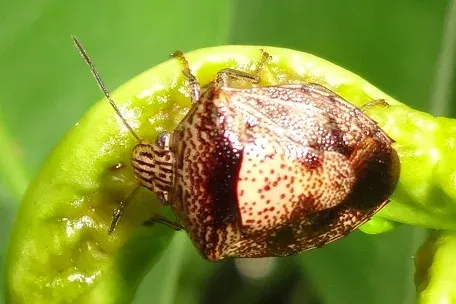
Description
How to identify
Menida is a genus of insects belonging to the family Pentatomidae, commonly known as stink bugs. These insects are characterized by their shield-shaped bodies, typically measuring between 8 and 12 mm in length.
The coloration of adults is variable, ranging from yellowish-brown to dark brown, often featuring intricate patterns that help them blend into their surroundings on host plants.
They possess a triangular head and five-segmented antennae. Their mouthparts are of the piercing-sucking type, which they use to feed on plant sap and fluids from fruits and seeds.
The eggs are typically barrel-shaped and are laid in clusters on the undersides of leaves, making them difficult to detect during standard field inspections.
Nymphs resemble smaller, wingless versions of the adults. Throughout several developmental stages (instars), they gradually increase in size and change their color patterns before reaching adulthood.
What it damages
Menida species are polyphagous, meaning they feed on a wide variety of host plants, causing significant economic damage to vegetable, grain, and fruit crops.
They are particularly problematic for Solanaceous crops, including tomatoes and peppers, where their feeding activities lead to internal tissue damage and external blemishes.
In grain crops, Menida bugs feed on developing kernels, which negatively impacts both the quantity and quality of the yield, often resulting in shriveled grains.
Feeding on fruit-bearing trees causes deformation of fruits and reduces their marketability, as the spots where the bugs feed often become susceptible to pathogens.
Beyond the direct physical damage caused by sap-sucking, the insects can introduce various plant pathogens through their feeding wounds, facilitating the spread of secondary infections.
When it appears
The seasonal activity of Menida is closely tied to local climatic conditions and the availability of suitable host plants throughout the growing season.
Adults overwinter in protected environments, such as leaf litter, plant debris, or soil crevices, waiting for the arrival of warmer temperatures to emerge.
Emergence typically occurs in the spring, at which point the adults begin feeding on weeds or early-season crops to build up energy for reproduction.
During the summer months, the pest undergoes rapid population growth, often producing multiple generations if environmental conditions remain favorable.
As autumn approaches and temperatures drop, adults begin their search for secure overwintering sites, often congregating in large numbers in agricultural field borders.
Signs of infestation
Signs of infestation include the appearance of small, pale, or necrotic spots on leaves and stems, which are created by the bugs' piercing-sucking mouthparts.
Fruits often show localized deformation or pitting, and in some cases, the internal tissue may become soft or necrotic, rendering the product unmarketable.
Field scouting often reveals the presence of the bugs themselves or their characteristic egg masses, which are deposited in regular, symmetrical patterns under the leaves.
Plants may exhibit symptoms of general decline, such as stunted growth, wilting, or premature shedding of flowers and developing fruit pods.
- Yellowing and necrosis on foliage.
- Pitted, bumpy surface texture on harvested fruit.
- Unpleasant, musky odor near large infestations.
- Reduced vigor and delayed plant maturation.
Control measures
Cultural control is essential: removing crop residues and weeds after the harvest minimizes the available overwintering sites for the next season.
Deep plowing of the soil in late autumn can effectively destroy a significant portion of the overwintering population that resides in the upper soil layers.
For smaller agricultural or garden plots, hand-picking the bugs and removing their egg masses are effective, environmentally friendly methods of suppression.
When infestation levels exceed economic thresholds, the application of registered insecticides is necessary, ensuring strict adherence to pre-harvest intervals.
The use of biological control agents, particularly egg parasitoids, is a promising strategy for long-term population management within integrated pest management programs.
Taxonomy
- Latin name
- Menida
- Order
- Hemiptera (bugs, aphids, leafhoppers)
- Family
- Pentatomidae
- EPPO code
- MENISP
Discussion
No discussions yet — be the first.