
Two-striped grasshopper
Melanoplus bivittatus
Description
How to identify
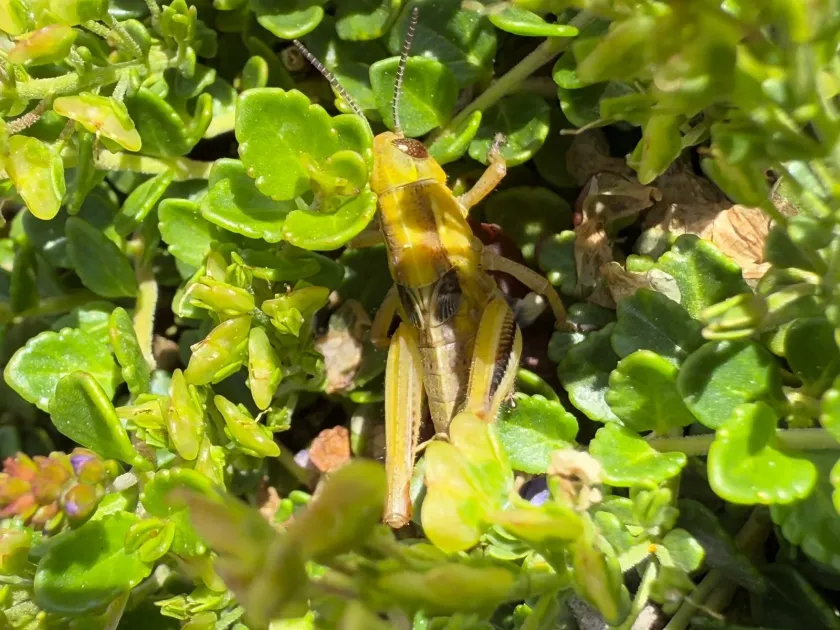
The two-striped grasshopper is a large, robust orthopteran insect, reaching lengths of 25–40 mm. Its common name is derived from the two distinctive light-colored longitudinal stripes that extend from the eyes across the thorax and along the abdomen.
Belonging to the Acrididae family, these insects possess powerful hind legs designed for jumping and well-developed wings for flight. They are highly mobile and capable of moving between fields in search of food or suitable breeding sites.
The coloration of these grasshoppers can vary from olive-green to brown, often blending in with their surroundings. Females are generally larger than males, a typical trait for many grasshopper species found throughout North America.
Adults exhibit sexual dimorphism, which can be observed in their body size and abdominal anatomy. Accurate identification of this species is essential for agronomists, as its population dynamics differ from other grasshopper species.
Nymphs, or immature stages, resemble smaller versions of the adults but lack fully developed wings. They undergo several molting stages, gradually growing and acquiring the characteristic stripes of their adult phase.
What it damages
This species is a highly voracious polyphagous pest, meaning it feeds on a wide range of plants. Key agricultural targets include wheat, corn, barley, alfalfa, soybeans, and a variety of garden vegetables.
Beyond cultivated crops, these grasshoppers thrive on roadside weeds and grassy field margins. These non-crop habitats serve as primary breeding grounds where populations build up before invading adjacent commercial fields.
Damage is most severe during hot, dry summers when natural vegetation dries up. In these conditions, the grasshoppers migrate to lush crop fields, potentially devastating large sections of a harvest within a short timeframe.
Feeding typically starts at the edges of leaves, causing ragged margins and, in severe cases, total defoliation. Young seedlings can be completely decimated, leading to significant stand loss and the need for replanting.
Beyond leaf tissue, these pests attack reproductive structures, including tassels in corn and developing grains in small cereals, which directly impacts yield and reduces the quality of the harvested grain.
When it appears
The life cycle of the two-striped grasshopper consists of a single generation per year. They overwinter exclusively in the egg stage, deposited in soil pods by females in late summer and early autumn.
Hatching occurs in the spring, typically in May or June, as the soil warms up. The rate of development is heavily dependent on temperature; warmer, drier spring weather accelerates nymph growth.
Adults emerge in mid-summer, usually by July, and remain active through the fall until the first hard frosts. This is the period of peak feeding intensity and mating activity.
Mating occurs in late summer, after which females seek firm, dry soil to deposit their egg pods. Each pod contains dozens of eggs that remain protected in the soil throughout the winter months.
This biological strategy ensures the species is well-adapted to surviving harsh winters and re-establishing populations annually, making them a consistent challenge for agricultural production.
Signs of infestation
The first sign of an infestation is often the observation of numerous grasshoppers flushing and jumping when walking through or near a field. Their sudden flight makes them easy to detect if present in significant numbers.
Visible feeding damage on leaves, appearing as uneven edges or large holes, is a primary indicator. If feeding is widespread, the plants may appear stripped, with only the main veins remaining on the leaves.
The presence of grasshopper frass (excrement) on the ground under foliage is a telltale sign of intense feeding. A high density of these droppings usually correlates with a high pest population.
A moving front of damaged crop rows, often advancing from the field edges toward the center, is a classic warning sign of a migrating population that requires immediate intervention.
Audible stridulation (the characteristic chirping sound) in fields during warm, sunny days is a reliable indicator of high population densities, signaling that it is time for an urgent field inspection.
Control measures
Effective control starts with cultural practices such as late-autumn or early-spring tillage. This disrupts the egg pods buried in the soil, exposing them to environmental elements and predators, which significantly reduces the next generation.
Managing weeds in field margins, ditches, and along roadsides is crucial. Eliminating these alternative food sources forces the population to remain smaller and less concentrated around crop fields.
Chemical control via insecticides is necessary when the economic threshold is reached. Products targeting nymphs before they reach the adult stage are generally more effective and easier to manage.
Biological control methods, including the use of entomopathogenic fungi or protecting natural predators like birds and spiders, can form part of an integrated pest management (IPM) strategy to minimize chemical use.
Regular monitoring during the summer months is vital. By identifying hotspots early, growers can perform targeted spot treatments, preventing the spread of grasshoppers across the entire field and saving the overall harvest.
Taxonomy
- Latin name
- Melanoplus bivittatus
- Order
- Orthoptera (locusts)
- Family
- Acrididae
- EPPO code
- MENPBI
Discussion
No discussions yet — be the first.