
Melanoplus
Melanoplus
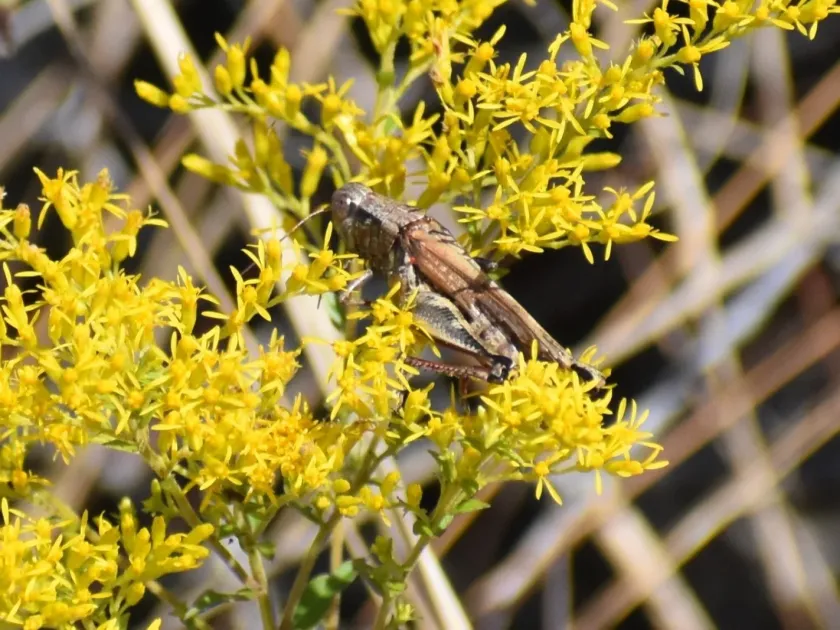
Description
How to identify
The genus Melanoplus belongs to the family Acrididae and is one of the most significant groups of grasshoppers affecting agriculture. These insects are widely distributed and are known for their ability to thrive in various climatic conditions across North America.
Adults exhibit typical grasshopper morphology with powerful hind legs for jumping and well-developed wings for flight. Their coloration is generally earthy, ranging from brownish to olive green, providing excellent camouflage in grasslands and crop fields.
The life cycle involves incomplete metamorphosis: egg, nymph, and adult. Eggs are laid in the soil in late summer or fall, where they remain in diapause through the winter, ensuring survival against cold temperatures.
Nymphs hatch in the spring and undergo several instars. Throughout these stages, they gradually grow, develop wing pads, and begin feeding on vegetation, which causes increasing pressure on young crops as the season progresses.
Identification often involves observing the specific leg structures and the presence of a tubercle on the prosternum, which is a key diagnostic feature for the genus Melanoplus compared to other grasshoppers.
What it damages
Melanoplus species are generalist feeders, meaning they consume a vast range of plant materials. They are serious pests for cereal grains, soybeans, corn, alfalfa, and various vegetable crops.
With their robust chewing mouthparts, they can completely defoliate plants, consume stems, and damage flowers or developing pods. This leads to substantial yield losses, particularly in high-density infestations.
Beyond direct feeding damage, their activity creates wounds on the plant surface. These injuries serve as entry points for bacterial and fungal pathogens, significantly reducing the crop's overall health and shelf life.
In high-density situations, grasshoppers move in groups, often referred to as bands. These groups can clear entire rows of crops in a very short amount of time, leaving only stalks behind.
The economic impact is particularly severe during drought years when the vegetation is already stressed. In such conditions, the grasshopper pressure can be the deciding factor in total crop failure.
When it appears
The activity of Melanoplus is heavily dependent on temperature and moisture levels. Hatching typically occurs in mid-to-late spring, depending on soil temperature at the sites where eggs were laid.
Nymphs are most active during the early summer months. This period is critical for crop development, and the pressure from nymph feeding can stunt the growth of young plants significantly.
Adults emerge in mid-summer and remain active until the first hard frost. During this time, they feed aggressively, mate, and prepare for egg-laying, which constitutes the final stage of their seasonal cycle.
Weather conditions significantly impact population fluctuations. Warm and dry springs favor high survival rates for nymphs, leading to larger populations and greater potential for infestations.
Monitoring efforts should focus on non-crop areas, roadsides, and field edges throughout the growing season to catch early signs of population buildup before they move into the main production fields.
Signs of infestation
Signs of infestation include irregular holes in leaves, which often appear ragged. As feeding continues, the leaf tissue may be entirely consumed, leaving only the primary veins of the plant intact.
Visual observation of the insects is the most common way to identify an infestation. When disturbed, grasshoppers will jump or take short flights, creating a noticeable rustling sound in the field.
Accumulation of fecal pellets (frass) at the base of the plants is a clear indicator of heavy feeding. During hot days, grasshoppers often congregate in shaded areas of the plant or move lower to the ground.
Damaged stems may appear bitten or chewed, which can weaken the plant and cause it to lodge. In extreme cases, young plants may be entirely severed at the stem base.
Field scouting is essential; agronomists use sweep nets or direct visual counts per square meter to determine if the population density exceeds the economic threshold for intervention.
Control measures
Managing Melanoplus requires a combination of preventive and reactive strategies. Fall tillage is highly effective as it disrupts egg beds, exposes eggs to predators, and subjects them to harsh winter conditions.
Good weed management in and around fields is crucial. By eliminating host weeds, farmers can reduce the number of areas suitable for both nymph development and adult egg-laying.
Chemical control is necessary when populations exceed economic thresholds. Insecticides from the pyrethroid and organophosphate groups are commonly used to achieve rapid knockdown of the pest population.
Targeted border treatments are often successful. Treating the edges of fields can prevent migrating bands of grasshoppers from entering the main crop, saving costs on total-field applications.
Biological control, including the preservation of natural predators like birds and specialized insects, is important for sustainable management. Integrated Pest Management (IPM) practices help maintain these natural balance levels.
Taxonomy
- Latin name
- Melanoplus
- Order
- Orthoptera (locusts)
- Family
- Acrididae
- EPPO code
- MENPSP
Discussion
No discussions yet — be the first.