
Brown scale
Melanaspis corticosa
Description
How to identify
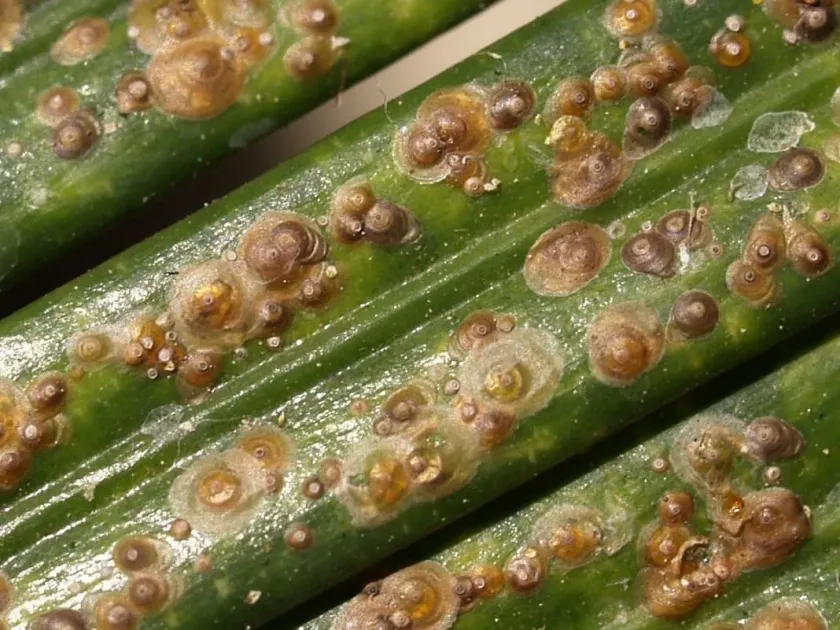
Brown scale (Melanaspis corticosa) belongs to the family Diaspididae, commonly known as armored scale insects. The adult female is protected by a tough, circular or slightly oval scale cover that is typically dark brown or reddish-brown, blending seamlessly with the tree bark.
The insect’s body remains completely covered by this hard shell, which acts as a robust physical barrier against predators and many environmental stressors. This adaptation also makes them highly resistant to standard contact insecticides.
Sexual dimorphism is significant in this species. While females remain sedentary for their entire adult life, the males are winged, albeit short-lived, and serve only to fertilize the females. The most active stage of the pest is the first-instar nymph, known as a "crawler."
These crawlers are minute, light-colored organisms that move across the plant surface to find suitable sites for feeding. Once they settle and begin feeding, they molt and start secreting the waxy substance that forms their signature hard cover.
Given their camouflage and small size, identifying Melanaspis corticosa requires careful inspection of the bark, particularly in cracks, crevices, and branch unions where they are most likely to establish and survive throughout the year.
What it damages
The brown scale primarily infests a variety of woody plants, including fruit-bearing trees and ornamental species. They typically settle on stems, trunks, and branches, using their long, needle-like mouthparts to extract sap directly from the plant’s vascular tissues.
The primary damage is caused by this persistent removal of plant fluids, which leads to a severe loss of nutrients and water. Over time, this systemic depletion results in stunted growth, decreased foliage density, and overall tree decline.
Heavy infestations often result in localized damage to the bark, leading to cracking and necrosis. These damaged areas serve as entry points for secondary pathogens, such as fungi or bacteria, which can further weaken or kill branches.
Trees stressed by scale insect feeding become more susceptible to other environmental factors, such as drought or extreme cold. In many cases, branches infested with scale will show significant dieback during the winter months compared to healthy parts of the tree.
If left unmanaged, particularly on young saplings or weakened trees, brown scale populations can rapidly expand, potentially leading to the death of the entire plant due to the cumulative stress of chronic nutrient loss.
When it appears
The lifecycle of Melanaspis corticosa is heavily regulated by seasonal temperatures. They typically overwinter as second-instar nymphs or fertilized females tucked securely under their armored covers on the bark of the host tree.
As spring approaches and temperatures rise above +10°C, the overwintered individuals resume feeding. This is the time when they prepare for the upcoming reproductive phase, marking the start of the new annual cycle.
The crawler stage usually emerges in late spring or early summer, depending on the climatic conditions of the region. This is the only period during which the pest is mobile and highly vulnerable to management interventions.
Depending on the heat units accumulated throughout the season, this species may complete one or two generations per year. The second generation is often more numerous, which can result in a significant spike in pest pressure toward the end of the summer.
By autumn, the insects complete their cycle and transition into the overwintering state. They reinforce their scale covers to ensure they can survive the harsh conditions of winter, setting the stage for the following year's emergence.
Signs of infestation
The earliest signs of brown scale infestation are the small, raised, dark-colored bumps found on the bark of branches. To the untrained eye, these can be mistaken for natural bark texture or minor lichen growth.
A heavily infested tree will often show a grayish or dull appearance on the bark. In areas where the population density is high, the bark may exhibit slight roughening, or cracks may form where the insects have been feeding continuously.
Foliage symptoms are also common; leaves on the affected branches may show chlorosis (yellowing), wilting, or premature abscission. These symptoms occur because the tree can no longer provide sufficient nutrients to the canopy due to the scale's feeding.
While scale insects do not produce as much honeydew as aphids, ants may still be present on the tree, often serving as a clue to look more closely for the presence of these well-camouflaged pests.
- Raised, dark, hard bumps on twigs and branches.
- Yellowing and premature shedding of leaves.
- Reduced annual growth and branch dieback.
- Dull or cracking bark texture in infested zones.
Control measures
Effective control requires an integrated approach. Late winter or early spring applications of horticultural oils can be very effective, as these substances coat the insects and their armored shells, effectively suffocating them before the growing season starts.
Targeting the crawler stage with systemic insecticides is the most effective way to reduce the population. Because systemic products are absorbed into the plant sap, they remain effective even as the crawlers settle and start to feed.
Cultural practices, such as judicious pruning of the most heavily infested branches, help manage the population density. All pruned material should be destroyed immediately to prevent the potential spread of crawlers to healthy parts of the tree.
Promoting tree health through proper fertilization and irrigation is essential. A vigorous tree is more capable of compensating for the feeding damage caused by scale insects compared to an already stressed or undernourished plant.
In managed orchards, biological control using specialized parasitoid wasps or entomopathogenic fungi can be integrated into the management plan, providing a sustainable way to keep scale populations below economic damage thresholds.
Taxonomy
- Latin name
- Melanaspis corticosa
- Order
- Hemiptera (bugs, aphids, leafhoppers)
- Family
- Diaspididae
- EPPO code
- CHRYCO
Discussion
No discussions yet — be the first.