
Megaselia scalaris
Megaselia scalaris
Description
How to identify
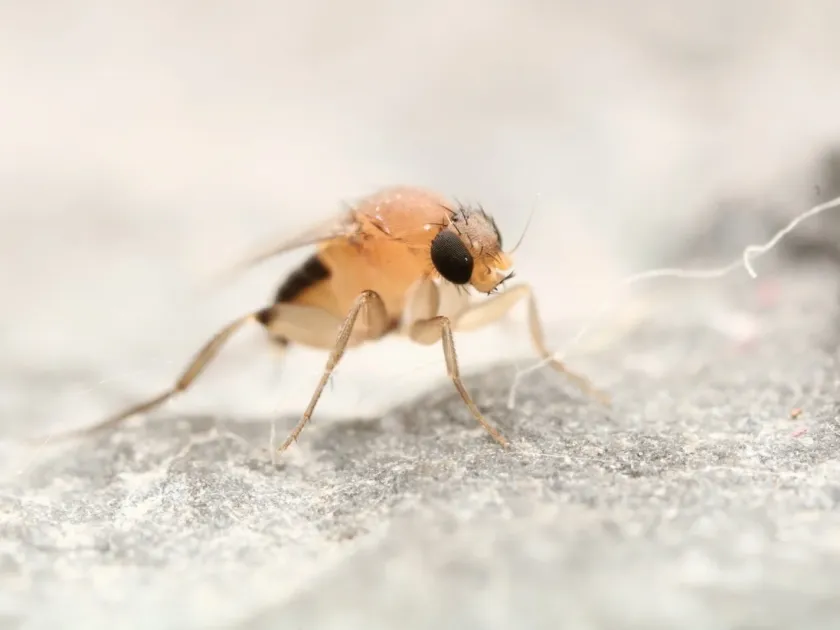
The humpbacked fly, Megaselia scalaris, is a small dipteran insect belonging to the family Phoridae. It earned its name due to the characteristic arched thorax that creates a humped profile.
Adult flies are typically 0.5 to 2 mm long and possess a brownish-black body with transparent, distinctively veined wings. They exhibit a jerky, rapid running behavior, which makes them easy to distinguish from common houseflies.
The larvae are whitish, legless, and grow up to 5 mm in length. They are highly resilient and capable of living in diverse organic materials, including decaying plant matter, fungi, and even biological waste.
The life cycle of the fly is exceptionally fast, often completing in 1–3 weeks depending on the temperature, allowing for rapid generation turnover and high population density.
Due to its high adaptability and ability to infest various types of organic material, it is considered a major nuisance and a significant agricultural pest worldwide.
What it damages
Megaselia scalaris is a highly polyphagous insect that damages a wide range of agricultural crops. It is particularly destructive in greenhouses where it attacks both seeds and developing seedlings.
The larvae burrow into the tissues of living plants, including stems, roots, and fruits of vegetables like cucumbers, tomatoes, and beans, often causing secondary infections that lead to plant death.
In stored produce, the flies lay eggs on fruits and vegetables, and the resulting larvae consume the interior of the product, rendering it unfit for market or human consumption.
Mushroom production facilities are especially vulnerable, as the flies thrive in mushroom compost and can destroy the mycelium or contaminate the harvest with larvae.
The pest is also a major concern for international trade, as it is frequently transported across borders in packaging materials, soil, or contaminated shipments of produce.
Signs of infestation
The most common sign of an infestation is the sighting of small, fast-moving flies hovering around organic waste, soil, or stored vegetables and fruits.
Plants suffering from infestation often show signs of stunted growth, wilting, or yellowing, resulting from the internal damage caused by larval feeding on the root systems.
On fruits and vegetables, you may observe small holes or softened, rotting spots on the surface where the larvae have penetrated to feed on the internal flesh.
In seedbeds, a complete failure of seeds to germinate or the presence of hollowed-out seeds is a hallmark sign that larvae have consumed the embryonic tissues.
In mushroom houses, the presence of tunnels in the mushroom caps or a general degradation of the growing substrate are clear indicators of a humpbacked fly outbreak.
Control measures
Effective management begins with strict sanitation practices, including the removal of all decaying organic matter and debris from greenhouses and storage facilities.
Implementing a rigorous quarantine program is essential to prevent the introduction of the fly via imported soil, organic fertilizers, or infested plant material.
Monitoring should be conducted using sticky traps, which are highly effective for detecting and reducing the population of adult flies within indoor environments.
Chemical control should be used sparingly and only when necessary, focusing on space sprays or substrate treatments approved for specific crops to minimize the risk of resistance.
Biological controls, such as the use of parasitic wasps or specific microbial agents, offer a sustainable alternative for managing populations in sensitive agricultural settings.
Taxonomy
- Latin name
- Megaselia scalaris
- Order
- Diptera (flies)
- Family
- Phoridae
- EPPO code
- MGASSC
Discussion
No discussions yet — be the first.