
Mecostethus
Mecostethus
Description
How to identify
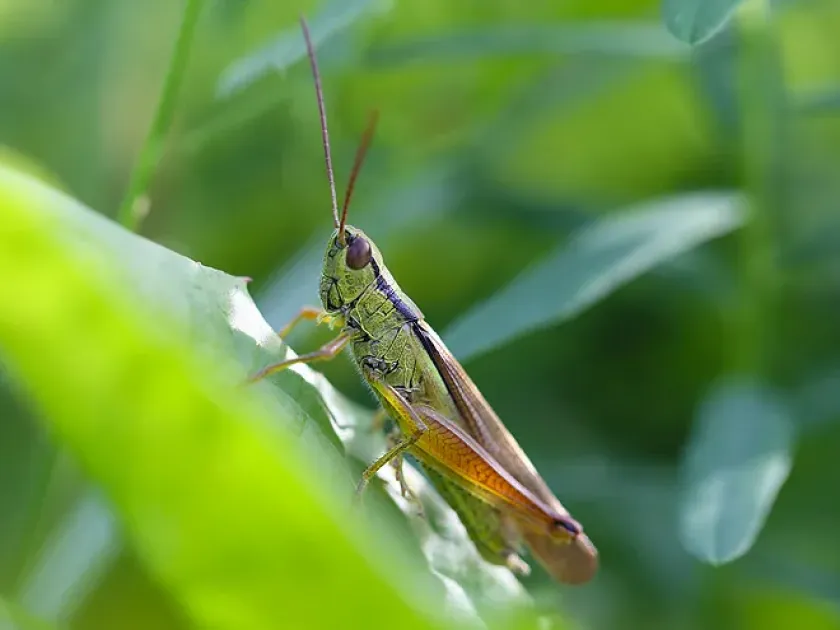
Mecostethus is a genus of grasshoppers belonging to the family Acrididae. These insects are characterized by their relatively slender bodies and long, powerful hind legs, which enable them to perform impressive leaps when disturbed.
The coloration of these grasshoppers typically mimics their natural environment, featuring shades of green, brown, or olive, which provides excellent camouflage among grass blades and cereal stalks.
Adult Mecostethus possess well-developed wings and a distinctively shaped pronotum. Females are usually larger than males and are equipped with an ovipositor used for inserting eggs into moist soil or organic debris.
Unlike migratory locusts, these grasshoppers are generally solitary in nature. However, they can still reach significant population densities in moist habitats, making them a localized but persistent threat to agriculture.
They are highly sensitive to vibrations and movement, making them elusive for manual scouting. Their auditory organs, located on the sides of the first abdominal segment, allow them to detect predators efficiently.
What it damages
Mecostethus primarily feed on various grass species, favoring the soft, succulent foliage of cereal crops such as wheat, barley, and oats, as well as several types of forage grasses.
The damage is caused by the insects rasping away the green leaf tissue, leaving behind ragged edges and skeletonized sections of the leaf blade. This feeding habit significantly reduces the photosynthetic capacity of the plant.
In addition to agricultural crops, they often occupy wild grasses in riparian zones or marshy field borders, which act as primary reservoirs for the population before they spread to main fields.
When infestation levels are high, the feeding can lead to severe defoliation of seedlings, potentially causing stunted growth and significantly impacting final grain yield.
Plants weakened by heavy grasshopper grazing become more susceptible to secondary infections, such as fungal pathogens, which further degrade the overall health of the crop.
When it appears
The life cycle of Mecostethus follows a strict seasonal pattern. The winter is passed in the egg stage, with eggs buried safely in the soil or protected by accumulated plant litter.
During the spring, rising temperatures trigger the hatching process. Nymphs (juvenile stages) emerge and begin feeding on early-season vegetation almost immediately after arrival.
The insects progress through five nymphal instars over the summer. The rate of development is heavily influenced by the presence of adequate soil moisture, which is crucial for their survival.
Adults typically appear in mid-to-late summer, which is the period of peak feeding activity and mating. During this time, the pests are at their most visible and damaging stage.
By late summer and early autumn, the females deposit their eggs in the soil. These eggs remain dormant through the winter, completing the annual cycle of the species.
Signs of infestation
The most evident sign of a Mecostethus infestation is the presence of uneven, shredded leaf edges on cereal plants, often appearing as distinct strips or patches of missing tissue.
Observing jumping insects at field margins is a primary indicator. When disturbed, they typically leap into the canopy or fly short distances, making them easier to spot during scouting.
The presence of frass (small, cylindrical droppings) at the base of the stems or on the soil surface is a reliable sign of their recent feeding activity within a specific area.
Localized browning of the leaves or total leaf loss in patches along the edges of a field often indicates a high concentration of the pest and justifies immediate action.
The characteristic stridulation (sound) produced by males in warm, sunny weather can also signal their presence, providing an auditory clue for agronomists to investigate further.
Control measures
Effective management of Mecostethus requires an integrated pest management (IPM) approach that focuses on habitat modification and chemical interventions when necessary.
- Implement deep autumn plowing to destroy egg pods buried in the soil.
- Maintain weed-free field margins to reduce favorable breeding and overwintering sites.
- Monitor population density regularly to determine if economic thresholds are exceeded.
- Apply targeted insecticides during the early nymphal stages for maximum efficacy.
Chemical control should be applied judiciously, focusing on the edges of the fields where the population usually accumulates before moving into the center of the crop.
Promoting a diverse ecosystem that supports natural predators, such as birds and predatory beetles, can help keep population numbers below the economic injury level naturally.
Taxonomy
- Latin name
- Mecostethus
- Order
- Orthoptera (locusts)
- Family
- Acrididae
- EPPO code
- MCOSSP
Discussion
No discussions yet — be the first.