
Margarodes vredendalensis
Margarodes vredendalensis
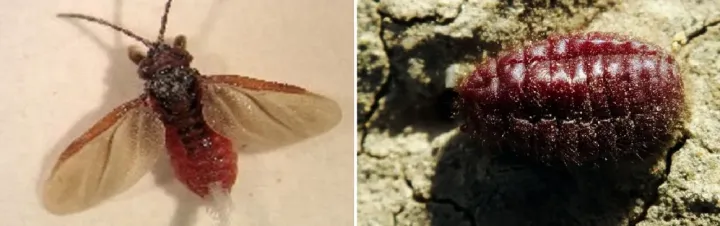
Description
How to identify
Margarodes vredendalensis, commonly referred to as the Vredendal pearl scale, is a soil-dwelling insect belonging to the family Margarodidae. The adult female is characterized by its rounded, pearl-like shape, shielded by a robust, waxy covering.
These insects spend the majority of their life cycle underground, feeding on the roots of host plants. One of their most notable biological features is the formation of a cyst stage, which allows them to withstand extremely harsh environmental conditions for several years.
Due to their subterranean lifestyle, M. vredendalensis individuals are rarely seen on the surface. Identification usually requires specialized soil sampling and the extraction of roots to inspect for the presence of encysted larvae or adults.
The insect belongs to the order Hemiptera. Its unique evolutionary adaptation to a root-feeding existence in arid soils makes it a challenging subject for conventional integrated pest management programs.
The first instar larvae are active and mobile, searching for suitable root systems to initiate feeding. Once a feeding site is established, they remain relatively stationary, developing into the characteristic pearl-like cyst form.
What it damages
The primary host for M. vredendalensis is the grapevine. The insect attaches itself to the root system, extracting phloem sap, which significantly drains the plant's resources throughout the growing season.
Severe infestation leads to noticeable symptoms of vine decline. Infected vines show stunted growth, smaller leaves, and a significant reduction in overall biomass compared to healthy vines in the same block.
Root damage caused by the feeding activity hampers the plant's water and nutrient uptake capabilities. This deficiency becomes particularly evident during heatwaves or periods of high water demand, leading to wilting and reduced vigor.
Persistent feeding creates wounds on the roots, which serve as entry points for various soil-borne fungal and bacterial pathogens. This combination of parasitic damage and secondary infection often leads to the premature death of the vine.
The economic impact of this pest is high, as infestations are often detected only after substantial vine loss. In vineyard blocks with high populations, yield losses can be severe and long-lasting.
Signs of infestation
Field symptoms of M. vredendalensis infestation include patches of weak, declining vines. These spots often grow in size over successive years, displaying chlorosis and a lack of response to typical fertilizer applications.
Visual observation of the root system often reveals the presence of hard, yellow-to-brown, spherical cysts. These cysts are firmly attached to the grapevine roots and are the most diagnostic sign of the pest's presence.
An accumulation of white, waxy, or filamentous secretions may also be observed in the soil surrounding the root zone. These secretions are residues left by the insects as they develop and thrive in the soil matrix.
Reduced crop yield and poor fruit quality in specific zones of the vineyard are strong indirect indicators. If standard agronomic care fails to revitalize a patch of vines, root analysis for scale insects should be conducted.
In advanced cases, the entire vine may die back. Growers should document these patterns, as they often correlate with the spatial distribution of the scale population within the vineyard soil profile.
Control measures
Managing M. vredendalensis is notoriously difficult due to its deep-soil dwelling habit and the protective nature of the cyst stage. Conventional systemic insecticides are often ineffective against the encysted stage.
The most reliable control method is the use of pest-free, certified planting material. Preventing the introduction of infested soil or rootstocks into clean vineyard sites is crucial for long-term management.
Cultural practices, such as deep ripping or soil cultivation, can disrupt the pest population before planting a new vineyard. However, this is rarely a complete solution as many cysts remain at depths unreachable by mechanical implements.
Emerging research focuses on biological control methods, including the application of entomopathogenic fungi. These fungi can parasitize the cysts in the soil, effectively reducing the population density over time.
In cases of confirmed infestation, vineyard management must pivot toward containment. This may involve long fallow periods or replacing susceptible host crops with non-host varieties to starve the remaining population.
Taxonomy
- Latin name
- Margarodes vredendalensis
- Order
- Hemiptera (bugs, aphids, leafhoppers)
- Family
- Margarodidae
- EPPO code
- MARGVR
Discussion
No discussions yet — be the first.