
Margarodes trimeni
Margarodes trimeni
Description
How to identify
Margarodes trimeni, commonly known as a type of ground pearl, belongs to the family Margarodidae within the order Hemiptera. These insects are subterranean pests known for their unique life cycle involving a dormant cyst stage.
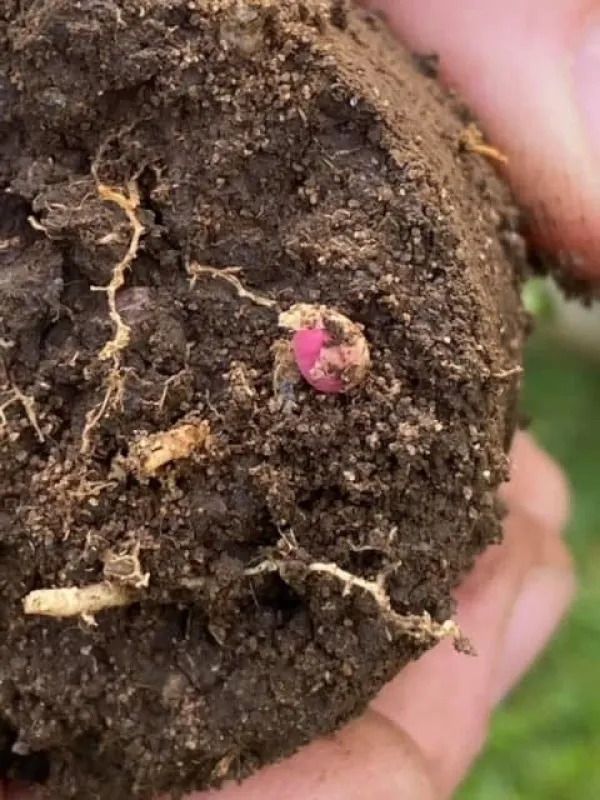
Adult females are globular and resemble small, shiny beads or pearls, which gives them their common name. Their body is covered in a resilient, waxy cuticle that protects them from moisture loss and chemical exposure while in the soil.
The life cycle includes a mobile crawler stage that moves through the soil profile to find suitable host roots. Upon attachment, they secrete a waxy shell and become sedentary for the remainder of their development.
A distinctive trait of this species is its ability to enter a long-term diapause, surviving in the soil as a cyst for years without feeding, waiting for favorable host conditions or environmental triggers.
Sexual reproduction is typical, though some populations may exhibit parthenogenesis. Males are rarely seen, as they are winged and only emerge from the soil to locate sedentary females for mating.
What it damages
The primary hosts of Margarodes trimeni are grapevines, although they can infest other woody perennials. They use their specialized piercing-sucking mouthparts to feed directly on the plant's root sap.
The feeding process causes physical damage to the root system, inhibiting the uptake of water and essential nutrients. This systemic stress results in the decline of vine vigor and general plant health.
Infested roots develop necrotic lesions where the insects have attached. These wounds serve as entry points for various soil-borne pathogens, including fungi and bacteria, which further degrade the root system.
As the population of ground pearls increases, the host plant shows symptoms of starvation and water stress, leading to reduced yields, stunted shoot growth, and berry shriveling.
Severe infestations can result in the complete death of the vine, often occurring in patches within a vineyard, significantly impacting the economic viability of the affected blocks.
Signs of infestation
Early symptoms of an infestation include the yellowing of foliage and a noticeable reduction in the vigor of the vines compared to healthy areas of the vineyard.
The vines may show stunted growth during the active growing season, and they often fail to respond positively to standard irrigation and fertilization practices.
Upon closer inspection of the root zone, small, golden, or brown pearl-like cysts can be found attached firmly to the roots, which is the most reliable sign of the pest's presence.
In advanced cases, the vineyard shows irregular patches of declining or dying vines. These areas tend to enlarge slowly as the population spreads through the soil.
Confirmation can be achieved through soil sampling and root excavation during the growing season when active crawlers or attached cysts are most visible.
Control measures
The most effective strategy is the implementation of strict quarantine procedures to prevent the introduction of infested planting material into clean vineyard soils.
Cultural control methods, such as deep tillage or soil inversion, are sometimes utilized to disrupt the pest's environment, though their overall impact is often limited by the pest's depth in the soil.
Biological control using entomopathogenic fungi or nematodes offers a potential long-term solution for managing ground pearl populations in an environmentally friendly manner.
Chemical control is notoriously difficult due to the subterranean nature of the pest and its protective waxy covering, requiring precise application of systemic soil-applied insecticides.
- Regular monitoring of root zones to detect early infestation.
- Removal and destruction of highly infested vines and their root systems.
- Sanitation protocols for farming equipment to prevent the spread of contaminated soil.
Taxonomy
- Latin name
- Margarodes trimeni
- Order
- Hemiptera (bugs, aphids, leafhoppers)
- Family
- Margarodidae
- EPPO code
- MARGTR
Discussion
No discussions yet — be the first.