
Fox moth
Macrothylacia rubi
Description
How to identify
The Fox moth (Macrothylacia rubi) is a moth species belonging to the Lasiocampidae family within the order Lepidoptera. Adult moths are easily recognized by their rich reddish-brown or ochre coloration, with a wingspan of 60–80 mm.
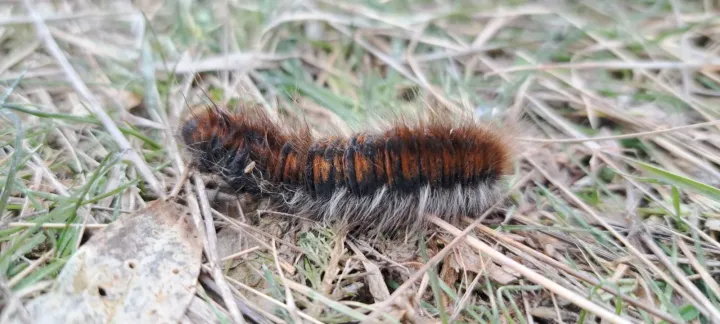
The larvae, known as caterpillars, are covered in dense, reddish-brown hairs. They can reach up to 80 mm in length. These hairs can cause skin irritation or rashes in humans, serving as a defensive mechanism against predators.
The caterpillars have distinct coloration, typically featuring dark segments with vibrant orange or yellow bands. They are primarily nocturnal, often hiding near the base of the plant or in leaf litter during the daytime.
Pupation occurs within a firm, elongated, dark-brown cocoon. These cocoons are often attached to the lower parts of host plant stems or hidden among ground debris to protect the developing pupa.
The life cycle is univoltine, meaning one generation per year. The insect spends the winter in the late larval stage, nestled in the soil or ground cover, making it well-adapted to surviving cold temperatures.
What it damages
The Fox moth is a polyphagous pest, capable of feeding on a wide range of plants, including raspberries, blackberries, strawberries, and various shrubs found in garden environments.
The primary damage is caused by the caterpillars' intensive feeding habit. They possess strong mandibles that allow them to consume leaves rapidly, often stripping foliage down to the midribs.
Defoliation reduces the photosynthetic capacity of the plants, which hinders the accumulation of sugars and weakens the plant's overall vigor. This leads to lower fruit yields and inferior quality.
Severe infestations can lead to significant stress for the host plant, making it more susceptible to secondary infections, such as fungal pathogens or root diseases, especially during periods of drought.
Loss of foliage during the critical late-summer growth phase prevents the plant from preparing sufficiently for winter, potentially resulting in frost damage or winter kill of young shoots.
When it appears
Adult moths typically emerge from late spring through mid-summer. This is the period when mating occurs, followed by the female laying eggs on the leaves of host plants.
Newly hatched larvae appear during the summer months and feed actively. Autumn is a critical stage for the larvae, as they gorge on foliage to build up energy reserves before entering diapause for the winter.
Emergence from winter hibernation occurs in early spring as temperatures rise. The larvae resume feeding briefly before constructing their cocoons for pupation.
The biological calendar of the Fox moth is closely tied to the vegetative cycles of its host plants, which helps growers predict when to monitor for larval presence.
Environmental conditions, particularly humidity and temperature, play a crucial role in the speed of the life cycle, sometimes accelerating or delaying the emergence of the adult moths.
Signs of infestation
The most obvious sign of an infestation is irregular holes in leaves or completely stripped margins, leaving only the primary veins of the leaves visible.
Frass (caterpillar droppings) accumulating on the ground or on lower leaves is a clear indicator that a population of larvae is actively feeding in the canopy.
The presence of dense, spindle-shaped cocoons near the base of the stems or on nearby debris confirms the successful life cycle completion of the moth in that specific area.
Nocturnal sightings of larvae are common when using a flashlight at night, as they venture out from the base of the bushes to feed on the upper foliage.
Reduced vigor of the crop, including stunted growth or late-season wilting, can also serve as an indirect sign of extensive foliage loss due to heavy larval pressure.
Control measures
Cultural control includes the removal of leaf litter and debris from under the bushes, as these areas serve as essential wintering habitats for the larvae and cocoons.
Hand-picking the caterpillars in the evening hours is highly effective in small-scale gardens and does not pose a risk to the surrounding environment or beneficial insects.
Biological control using Bacillus thuringiensis (Bt) sprays is recommended during the early larval stages, as this method is highly selective and safe for most non-target garden inhabitants.
- Maintaining clean cultivation practices to disrupt the life cycle.
- Using light traps to monitor and potentially reduce the population of adult moths.
- Regular inspection of plants during late summer when larval activity peaks.
Chemical control should be considered only as a last resort, using targeted, low-toxicity insecticides applied according to local regulations to ensure safety for pollinators and fruit consumers.
Taxonomy
- Latin name
- Macrothylacia rubi
- Order
- Lepidoptera (butterflies)
- Family
- Lasiocampidae
- EPPO code
- MCRYRU
Discussion
No discussions yet — be the first.