
Macrotermes subhyalinus
Macrotermes subhyalinus
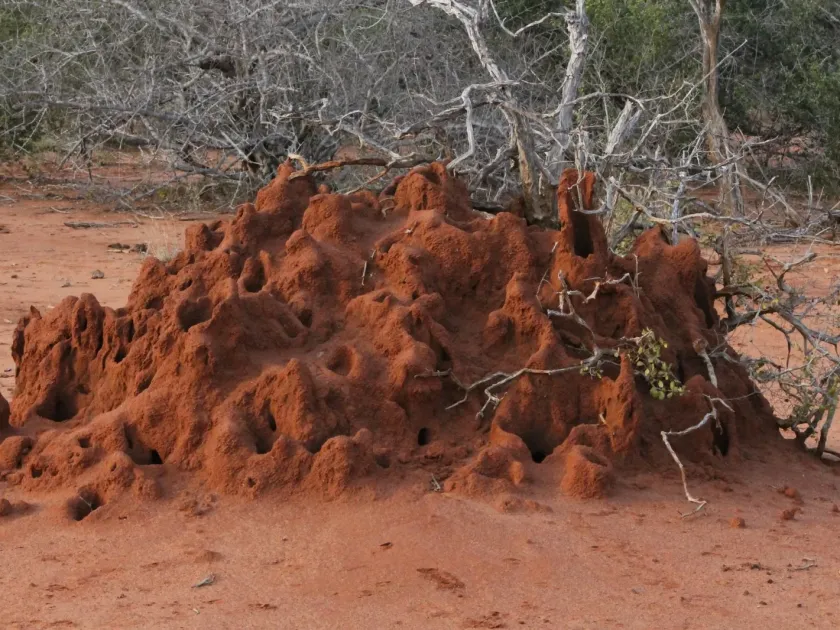
Description
How to identify
Macrotermes subhyalinus is a species of termite belonging to the order Blattodea and the family Termitidae. It is a highly social insect known for constructing large, prominent mound structures in tropical and subtropical landscapes.
The colony consists of several castes, including workers, soldiers, and reproductives. Workers are responsible for foraging and maintaining the fungal gardens, while soldiers protect the colony from predators like ants.
The queen of the colony is specialized for reproduction, capable of laying thousands of eggs per day to sustain the population. Her presence ensures the continuous growth and stability of the termite mound over many years.
The mounds constructed by this species are architectural marvels, featuring complex internal ventilation systems. This structure helps regulate internal temperature and humidity, which is critical for the survival of the fungus they cultivate.
Species identification relies on the morphology of the soldier caste, particularly the shape of their mandibles and head structure, as well as the specific characteristics of their mounds.
What it damages
Macrotermes subhyalinus is a significant agricultural pest capable of damaging a wide variety of crops, including maize, cotton, and sugarcane. They feed on roots, stems, and even the bark of fruit trees.
In addition to living crops, they pose a major threat to structural timber. They can hollow out wooden fence posts, farm utility buildings, and other wooden infrastructure, significantly reducing their lifespan.
By consuming the root systems, these termites cause sudden plant death, which leads to substantial yield losses. The damage is often hidden underground, making it difficult to detect until the plant wilts.
Young plantations and nursery saplings are particularly vulnerable. The loss of these plants to termite damage creates gaps in crop rows, forcing farmers to replant and increasing operational costs.
The destruction of soil structure and the removal of organic matter by these termites can also negatively impact the long-term soil fertility of the affected agricultural land.
When it appears
Termite activity remains consistent throughout the year because the internal environment of the mound is kept stable. However, surface foraging increases significantly after the first rains.
Swarming events, where winged reproductives leave the mound to establish new colonies, typically occur at the beginning of the wet season, when moisture conditions are optimal for survival.
During the peak of the dry season, the termites retreat deeper into the mound or into the soil to escape the heat and desiccation, though they continue to feed on plant matter underground.
Farm management programs should prioritize monitoring during the start of the planting season, as young seedlings are most at risk during their initial growth phase.
Data from long-term observations suggest that termite expansion is more pronounced in areas with high levels of decomposing organic matter in the soil.
Signs of infestation
The most visible sign of an infestation is the presence of earthen tunnels (mud tubes) built along the surfaces of plants, tree trunks, or agricultural structures.
Sudden wilting of healthy-looking crops often indicates that the roots have been severed by subterranean termite activity, leaving the plant unable to take up water.
The presence of large, hardened clay mounds in the field is a clear indicator that a mature colony of Macrotermes subhyalinus is established in the vicinity.
Wood that sounds hollow when tapped or shows galleries filled with soil particles is a definitive sign of termite damage within wooden infrastructure or trees.
Observation of winged termites (alates) during the onset of the rainy season confirms that a reproductive population is active in the surrounding area, indicating a risk of new colonies.
Control measures
Integrated Pest Management (IPM) is the most effective approach. This includes mechanical destruction of mounds and deep tillage to disrupt the underground foraging galleries.
Chemical control involving soil insecticides creates a protective barrier around the root zone, effectively preventing termites from reaching the crop stems and roots.
The use of slow-acting toxic baits allows foraging workers to carry the poison back to the mound, ultimately eliminating the queen and collapsing the entire colony structure.
Cultural practices, such as removing crop residues and avoiding the use of untreated wooden poles in soil, significantly reduce the attractiveness of the field to termites.
- Regular field scouting.
- Application of targeted insecticides.
- Removal of wood debris and dead trees.
- Use of biological control agents like parasitic fungi.
Taxonomy
- Latin name
- Macrotermes subhyalinus
- Family
- Termitidae
- EPPO code
- MACMSU
Discussion
No discussions yet — be the first.