
Natal termite
Macrotermes natalensis
Description
How to identify
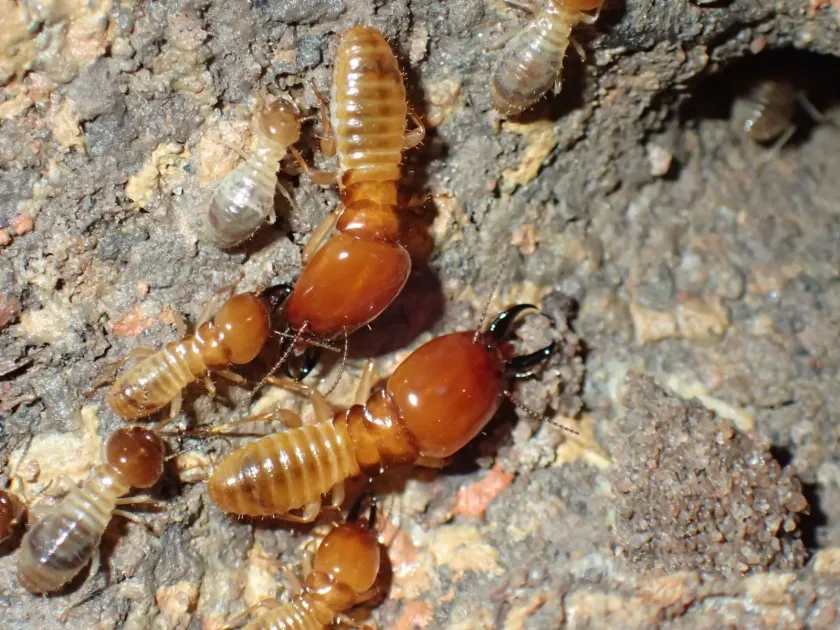
The Natal termite (Macrotermes natalensis) is a prominent social insect species belonging to the family Termitidae. They are known for building large, complex mounds that serve as the center of their colonies, often visible across African landscapes.
Colonies function through a strict caste system, including workers, soldiers, and reproductive individuals. Each caste is physically adapted to perform specific duties, ranging from mound construction and foraging to colony defense and reproduction.
A unique aspect of this species is its symbiotic relationship with Termitomyces fungi. The termites maintain fungal gardens within their mounds, providing a controlled environment for the fungi to grow, which in turn serves as an essential protein source for the colony members.
The life cycle of these termites is highly sensitive to environmental conditions, particularly humidity and temperature. New colony establishment usually follows the onset of rainy seasons, facilitating the swarming of reproductive individuals.
These insects exhibit advanced social behavior, utilizing sophisticated chemical signaling and pheromones to coordinate foraging efforts and colony maintenance across wide areas of land.
What it damages
Natal termites pose a significant threat to various agricultural crops, including maize, sugarcane, cocoa, and coffee. They are particularly aggressive when natural food sources like decaying wood are scarce, causing them to attack living tissues.
In nurseries, they can destroy seedlings by consuming the roots and the base of the stems, leading to rapid plant collapse and failure. This creates major challenges for agricultural reforestation and crop establishment programs.
The damage caused by these pests is both direct and indirect. By tunneling through woody stems and trunks, they weaken the structural integrity of trees, making them susceptible to wind damage, secondary infections, and drought stress.
In sugarcane and other fiber-rich crops, termites penetrate the stalks, significantly reducing yield and quality. The internal excavations lead to the deterioration of the plant tissues and interfere with nutrient transport.
During prolonged dry seasons, the economic impact is often at its peak, as these termites forage extensively for moisture and cellulose, shifting from dead organic matter to healthy, irrigated crops.
Signs of infestation
The presence of earthen tunnels or galleries running along tree trunks, stems, or soil surfaces is the most prominent indicator of an active termite infestation.
Unexpected wilting of crops, even in well-irrigated conditions, strongly suggests that the root system has been compromised by termites. Excavating the soil around such plants will often reveal tunneling or damage to the roots.
Large, cone-shaped termite mounds situated in or near agricultural fields serve as a clear sign of a well-established colony in the vicinity.
Internal damage can often be identified by a hollow sound when tapping on tree trunks, combined with the presence of fine granular frass or mud-filled voids in the wood.
Early-stage infestations may manifest as small, localized patches of destroyed plant tissue where termites are actively foraging under their protective mud covers.
Control measures
Chemical control involving the targeted application of insecticides like fipronil or imidacloprid to the soil is one of the most effective methods to prevent root damage in high-value crops.
Cultural practices, such as removing excess plant debris and dead wood from the field, are essential to eliminate primary feeding sources and force termites to move away from the crop area.
Biological control using entomopathogenic fungi such as Beauveria bassiana or Metarhizium anisopliae can be successfully deployed by introducing spores into the termite's tunnel networks, causing the infection to spread throughout the colony.
Physical destruction of the mound is a traditional method, but it is only effective if the queen chamber is targeted and destroyed, as this causes the immediate breakdown of the colony's social hierarchy.
Integrated Pest Management (IPM) strategies, combining periodic field monitoring, resistant crop varieties, and targeted insecticide applications, provide the best protection against Natal termite infestations in agricultural settings.
Taxonomy
- Latin name
- Macrotermes natalensis
- Family
- Termitidae
- EPPO code
- MACMNA
Discussion
No discussions yet — be the first.