
Macrotermes michaelseni termite
Macrotermes michaelseni
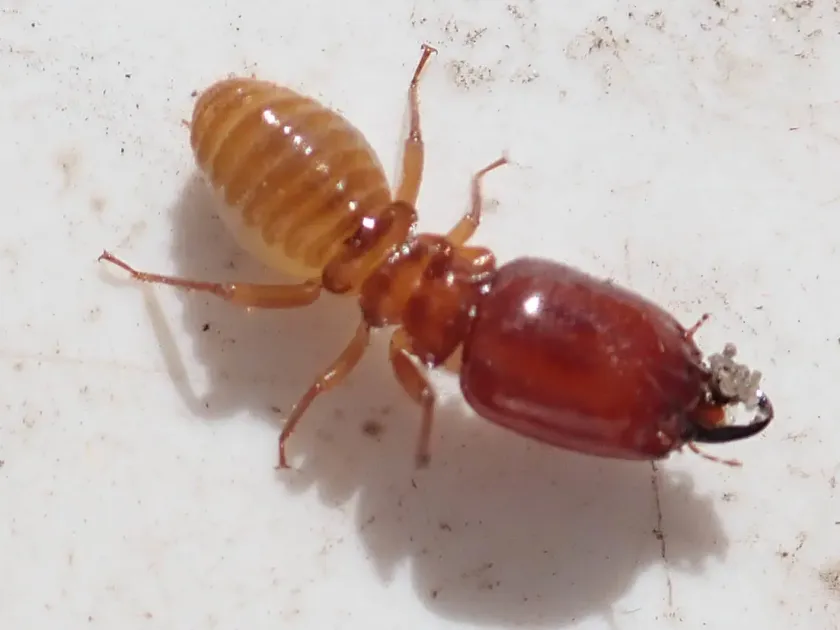
Description
How to identify
Macrotermes michaelseni is a species of social termite belonging to the family Termitidae. These insects are highly organized and live in complex, colony-based structures.
The colony consists of distinct castes: workers, who handle foraging and maintenance; soldiers, with large mandibles for defense; and the royal pair, who manage the population.
These termites are famous for building massive, tall mounds that act as sophisticated ventilation systems to maintain internal humidity and temperature.
This environmental control is essential for their symbiotic relationship with fungi, which they cultivate in internal gardens to break down woody cellulose.
Identifying this species involves examining the mound structure and the specific head shape of the soldier caste members within the colony.
What it damages
These termites are significant agricultural pests that feed on plant cellulose, directly damaging the root systems and stems of various crops.
Major crops prone to infestation include maize, sorghum, millet, and wheat, as well as saplings in forestry and agroforestry projects.
By consuming the roots, the termites disrupt nutrient and water uptake, leading to sudden wilting and the total loss of individual plants.
Beyond live crops, they decompose crop residues and organic mulch, which can deplete soil quality and reduce the efficiency of organic farming.
In arid and semi-arid regions, the cumulative damage from these termites can significantly reduce annual agricultural yields.
When it appears
Activity remains year-round, but foraging intensity spikes dramatically at the onset of the rainy season when soil moisture levels rise.
During extreme dry spells, colonies retreat deeper into the subterranean galleries to avoid heat and moisture loss.
The swarming of alates (reproductive individuals) to establish new colonies typically occurs triggered by initial rainfalls after long dry periods.
The increased moisture facilitates the growth of fungus within the nest, driving the workers to gather fresh organic material more aggressively.
Farmers usually observe the highest level of crop destruction during the early stages of the growing season when young plants are most vulnerable.
Signs of infestation
The presence of large, often conical mounds in or near the field is the primary indicator of a Macrotermes michaelseni colony.
Soil-covered tunnels or runways on stems and trunks indicate that termites are actively foraging for cellulose while protecting themselves from desiccation.
Patches of dead or yellowing crops appearing in circular patterns across a field often correlate with subterranean activity near root zones.
Excavating the soil around the base of damaged plants usually reveals a dense network of tunnels and whitish worker termites.
The internal presence of greyish-brown fungal combs within excavated mound areas is a definitive diagnostic sign of this termite genus.
Control measures
Effective management involves a combination of mechanical disruption of mounds and the targeted use of systemic soil insecticides.
Deep tillage of the soil helps break down surface galleries and mound structures, making it difficult for termites to reach food sources efficiently.
Using bait stations with slow-acting insecticides is a highly effective strategy to eliminate the entire colony, including the queen.
Biological control agents, such as specific strains of Metarhizium fungi, have shown promise in infecting and collapsing termite populations.
- Regular field inspection for termite tunnels
- Use of resistant crop varieties where applicable
- Maintenance of high soil organic matter to act as a distraction
Taxonomy
- Latin name
- Macrotermes michaelseni
- Family
- Termitidae
- EPPO code
- MACMMI
Discussion
No discussions yet — be the first.