
Macrotermes falciger
Macrotermes falciger
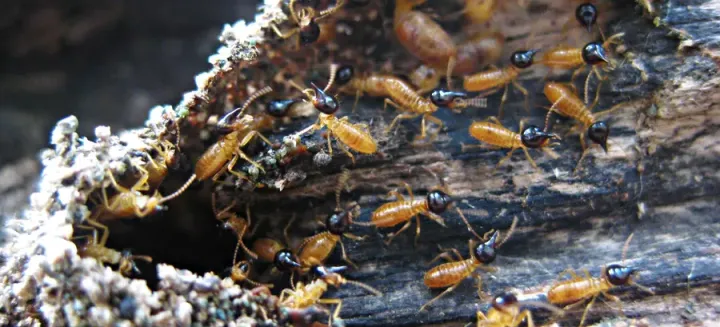
Description
How to identify
Macrotermes falciger is a member of the order Isoptera and the family Termitidae. They are social insects that live in highly organized subterranean or mound-building colonies.
The colony structure is complex, comprising different castes including workers, soldiers, and reproductive individuals with distinct morphological features.
Soldiers are characterized by their oversized, sclerotized heads and powerful mandibles, which are used exclusively for the defense of the colony.
Workers are the primary cause of damage, as they are responsible for foraging, tunnel construction, and feeding other castes within the mound.
The mounds constructed by this species are massive, often acting as micro-climate regulators that protect the colony from extreme external conditions.
What it damages
Macrotermes falciger acts as a major agricultural pest, specifically impacting timber, crops, and various ornamental plant species in tropical regions.
The pest causes significant economic losses by attacking the root systems of crops such as maize, cotton, and sugarcane, leading to rapid wilting.
Termites also cause structural damage by infiltrating wooden fences, agricultural buildings, and harvested produce stored in moist conditions.
By consuming the cambium and inner tissues of young trees, they interrupt the transport of nutrients and water, frequently killing the plant entirely.
In forest plantations, they can destroy entire rows of saplings, requiring intensive replanting efforts and substantial financial investment.
When it appears
The seasonal activity of Macrotermes falciger is heavily dependent on soil moisture levels, which dictate their foraging reach and colony expansion.
The nuptial flight, where alates disperse to establish new colonies, typically coincides with the onset of the rainy season to ensure offspring survival.
During the dry season, the colony retreats to deeper soil layers where the moisture content remains sufficient for the survival of the fungus gardens.
Temperature fluctuations influence the intensity of feeding; higher activity levels are generally observed during warmer, moist periods of the year.
Agricultural cycles often align with termite infestation peaks, as the presence of fresh plant matter provides an abundant food source.
Signs of infestation
The most reliable sign of a Macrotermes falciger infestation is the presence of earthen tunnels or runways on the surface of tree trunks or stems.
Plants showing sudden yellowing and decline without obvious signs of pathogens often harbor termites feeding on their subterranean structures.
- Presence of characteristic mud-filled galleries.
- Hollowed-out stems or roots upon closer inspection.
- Surface mounds appearing in the fields.
- Sudden death of young saplings in clusters.
- Presence of foraging workers under debris or mulch.
If the root zone is excavated, one can often find a network of tunnels and organic matter packed with soil and termite excrement.
Control measures
Integrated pest management (IPM) is essential, starting with the mechanical destruction of mounds to disrupt the colony's central structure.
Soil-applied insecticides, particularly those with systemic action, serve as an effective barrier for protecting sensitive crop roots from foraging termites.
Baiting systems utilizing slow-acting, non-repellent toxins are highly effective as they are carried back by workers to eliminate the queen and brood.
Improving field hygiene by removing stumps and woody residues significantly reduces the available nesting sites and food sources for the pests.
Research into biological agents, such as specific entomopathogenic fungi, offers a sustainable method to suppress termite populations in agricultural lands.
Taxonomy
- Latin name
- Macrotermes falciger
- Family
- Termitidae
- EPPO code
- MACMFA
Discussion
No discussions yet — be the first.