
Macrotermes bellicosus
Macrotermes bellicosus
Description
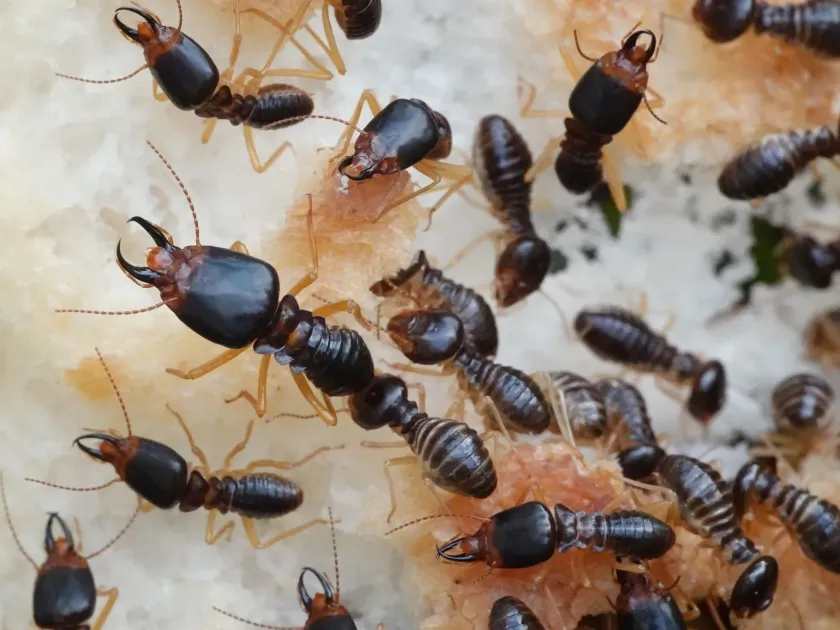
How to identify
Macrotermes bellicosus is a species of fungus-growing termite belonging to the family Termitidae within the order Isoptera.
It is one of the most prominent termite species in sub-Saharan Africa, known for its complex social structure and impressive mound-building capabilities.
The colony consists of several castes, including workers, soldiers, and the reproductive pair, all of which exhibit specific physiological adaptations.
Soldiers are easily identified by their large, sclerotized heads and powerful mandibles, which they use to defend the colony against intruders and predators.
These termites maintain a symbiotic relationship with fungi of the genus Termitomyces, which they cultivate within the mound to process organic matter.
What it damages
This species is considered a major agricultural pest capable of devastating crops such as maize, cassava, millet, and various fruit trees.
By attacking the root systems of young crops, the termites cause rapid wilting, stunted growth, and death, leading to significant yield losses.
In woody plants, they strip the bark and tunnel into the xylem, which destroys the plant's vascular system and leaves it susceptible to environmental stress.
They are particularly destructive during the dry season when alternative food sources in the soil become scarce, forcing them to feed on living vegetation.
Beyond live plants, they cause significant economic loss by destroying harvest residues and stored crops, effectively stripping fields of organic matter.
Signs of infestation
The most visible sign of an infestation is the presence of large, often conical or cathedral-shaped mounds rising above the ground in or near the field.
The appearance of mud-covered runways or galleries along the stems of plants or tree trunks is a definitive indicator of termite foraging activity.
Patches of dead or wilted crops that occur suddenly in a localized area often point to subterranean feeding on roots by colony workers.
Observing the removal of the outer bark layer on trees, revealing earth-filled tunnels underneath, indicates that the termites are colonizing the tree.
Soil excavated into small holes or tunnels around the base of the crop confirms the presence of these pests in the immediate rhizosphere.
Control measures
Targeting the queen inside the central chamber of the mound is the most definitive way to eradicate a localized termite colony permanently.
Applying persistent, targeted soil insecticides around the root zone helps protect valuable crops from initial termite attacks during the planting phase.
Good agricultural practices, such as clearing plant debris and promoting soil disturbance, help discourage the establishment of new colonies in the field.
Slow-acting baiting systems that utilize the termites' natural grooming and feeding behaviors are effective for colony elimination without widespread chemical use.
Biological control research using fungal pathogens specifically lethal to termites offers a promising, environmentally friendly alternative for large-scale management.
Taxonomy
- Latin name
- Macrotermes bellicosus
- Family
- Termitidae
- EPPO code
- MACMBE
Discussion
No discussions yet — be the first.