
Macrotermes
Macrotermes
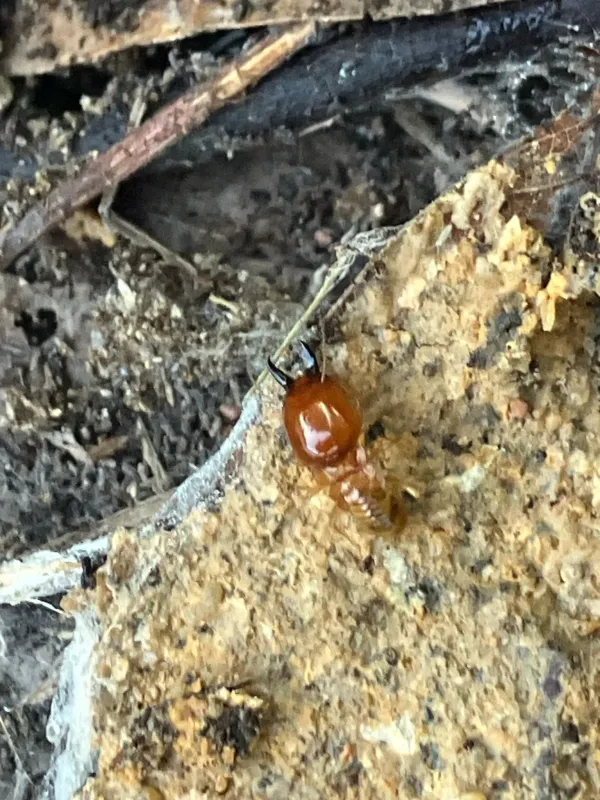
Description
How to identify
The genus Macrotermes belongs to the order Isoptera and the family Termitidae. These are large, highly complex social insects known for building monumental mounds that regulate internal temperatures.
The colony structure is strictly hierarchical, consisting of a king and queen, soldiers with powerful mandibles for defense, and workers who perform all foraging and maintenance tasks.
These termites are easily identified by their caste-based appearance, where soldiers are often larger and have prominent heads, and workers are smaller and pale in color.
Their life cycle includes incomplete metamorphosis. A unique biological feature is the obligate symbiosis with Termitomyces fungi, which they cultivate in specialized chambers inside the mound.
They are highly adaptive insects that can thrive in various soil types, provided there is enough cellulosic material available for their survival and fungal growth.
What it damages
Macrotermes species are major agricultural pests, particularly in tropical regions where they cause significant economic loss to both plantation and food crops.
They are notorious for attacking woody plants such as coffee, cocoa, tea, and various orchard trees, often stripping the bark and penetrating deep into the roots.
Row crops like sugarcane, maize, and cassava are frequently damaged when termites chew through stems and root systems, leading to rapid wilting and plant death.
The pest's activities result in poor crop stand establishment, reduced yields, and the loss of entire orchards if infestations are not controlled in time.
Additionally, by consuming organic matter and disrupting soil structure, they can create micro-conditions that further stress growing plants.
Signs of infestation
The most evident sign is the presence of large, hardened earthen mounds (termite mounds) within or near the fields, serving as the central hub for the colony.
Trees and crops often feature visible earthen galleries or tunnels on their stems, which termites build to travel protected from predators and ultraviolet radiation.
Unexpected wilting of plants, despite adequate irrigation, is a strong indicator that the root system is being undermined or consumed by termites.
The discovery of hollowed-out bark or subterranean cavities at the base of trees confirms the presence of active foraging workers.
Large swarms of winged reproductive termites appearing at the start of the rainy season indicate an established colony nearby.
Control measures
Effective management begins with thorough soil cultivation, which disrupts termite galleries and makes the environment less favorable for colony stability.
Proper sanitation, including the removal of dead wood and crop debris from the field, is essential to reduce available food sources.
Chemical control involving soil-applied insecticides is frequently used to treat the root zone or planting holes during the establishment of young trees.
Baiting systems with slow-acting toxicants are highly effective, as foragers carry the poison back to the nest, eventually eliminating the entire colony.
Integrated Pest Management (IPM) practices, including the use of entomopathogenic fungi like Metarhizium, offer a sustainable and targeted approach to reducing populations.
Taxonomy
- Latin name
- Macrotermes
- Family
- Termitidae
- EPPO code
- MACMSP
Discussion
No discussions yet — be the first.