
Macrogastra plicatula
Macrogastra plicatula
Description
How to identify
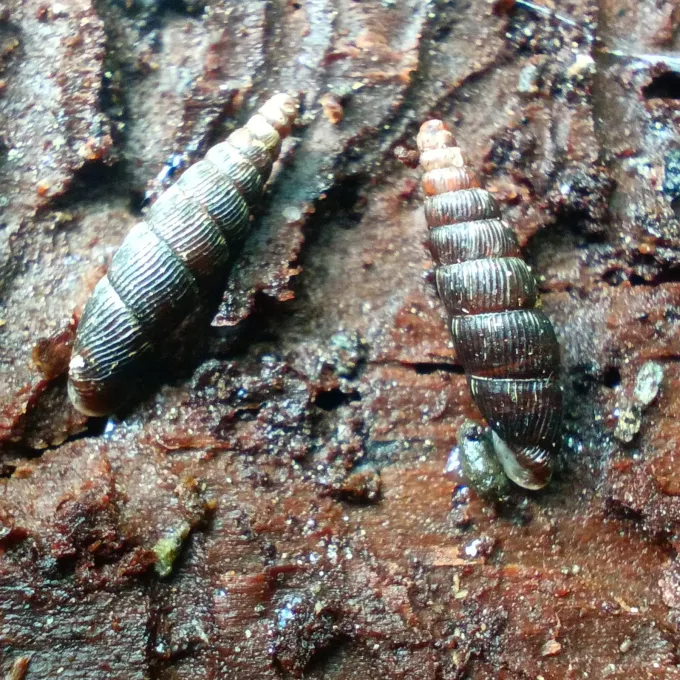
Macrogastra plicatula is a species of land snail belonging to the family Clausiliidae, commonly known as door snails. It is characterized by a spindle-shaped, elongated shell with distinct ribs and a brownish coloration.
Adult specimens typically measure between 12 and 15 mm in length. The shell has up to 12 whorls and is equipped with a specialized internal mechanism called a clausilium, allowing the snail to seal its aperture securely.
These mollusks are nocturnal or prefer highly shaded, moist environments. Their dark body color provides excellent camouflage when they are resting on tree bark or amidst leaf litter.
Unlike common garden slugs, this species possesses a hard, protective shell that allows it to survive in narrow crevices, such as deep cracks in bark or rocky gaps, protecting it from dehydration.
Taxonomically, the species is classified under the order Stylommatophora. Understanding its morphological traits is essential for agricultural professionals to distinguish it from more damaging invasive species.
What it damages
The damage caused by Macrogastra plicatula involves feeding on soft plant tissues, such as young shoots, leaves, and flower buds, particularly in humid or densely planted areas.
While their primary diet consists of fungi, lichens, and decaying organic matter, they can switch to fresh vegetation when population densities are high, leaving irregular holes in foliage.
In nurseries and forest plantations, these snails are problematic as they create entry points for various bacterial and fungal pathogens, potentially weakening young saplings.
Beyond foliage damage, they can occasionally impact the soft, thin bark of young ornamental trees, which can interfere with the overall health and vigor of the specimen.
Although they are not considered a primary agricultural pest in large-scale farming, their presence in garden settings can significantly mar the aesthetic quality of ornamental plants.
When it appears
The activity of these mollusks is highly dependent on humidity levels and ambient temperature. Peak activity is typically observed during the spring and summer, particularly following rainfall.
As autumn approaches and temperatures drop, Macrogastra plicatula begins seeking sheltered sites for hibernation, often choosing bark fissures, deep layers of mulch, or stone crevices.
Reproduction occurs throughout the warmer months. As hermaphrodites, these snails can rapidly increase their population density if provided with a consistently moist and sheltered habitat.
During prolonged summer droughts, they enter an aestivation state. By tightly closing their shell aperture, they reduce moisture loss and remain inactive until favorable weather returns.
For monitoring, agricultural specialists recommend inspecting the lower sections of tree trunks and the base of ornamental plants early in the morning or during overcast, rainy conditions.
Signs of infestation
The most reliable sign of a snail infestation is the presence of dried, silvery mucus trails found on leaves, tree bark, or soil surfaces, which glisten under direct light.
Visible feeding damage, manifesting as irregular small holes or ragged edges on the leaves, indicates active browsing by gastropods in the area.
During garden inspections, look for clusters of snails in cracks, tree hollows, or behind loose bark, which serve as their daytime hiding spots in the garden landscape.
Secondary signs include localized rot or dark discoloration on plant tissues near the feeding sites, suggesting that the snail's presence has facilitated microbial infection.
Spotted adult specimens on the exterior of plants during damp weather are clear indicators that the population has reached levels necessitating active management.
Control measures
The most effective cultural control is maintaining high sanitary standards in the garden by regularly removing dead leaves, weeds, and organic debris where snails hide.
Regularly loosening the soil around trees and shrubs disrupts the mollusks' habitat and reduces the moisture of the surface soil, making it less hospitable for them.
Physical barriers, such as coarse gravel mulch or copper-based tapes/bands on tree trunks, can effectively block the movement of snails toward vulnerable foliage.
If population numbers warrant chemical intervention, use iron phosphate-based molluscicides. These are generally regarded as safe for beneficial garden wildlife and pets.
- Conduct regular garden sanitation.
- Improve air circulation within plantings.
- Foster habitats for natural predators like toads, hedgehogs, and birds.
- Use physical barriers to prevent snail migration.
Taxonomy
- Latin name
- Macrogastra plicatula
- Order
- Molluscs
- Family
- Clausiliidae
- EPPO code
- MKGASP
Discussion
No discussions yet — be the first.