
Cochlodina laminata
Cochlodina laminata
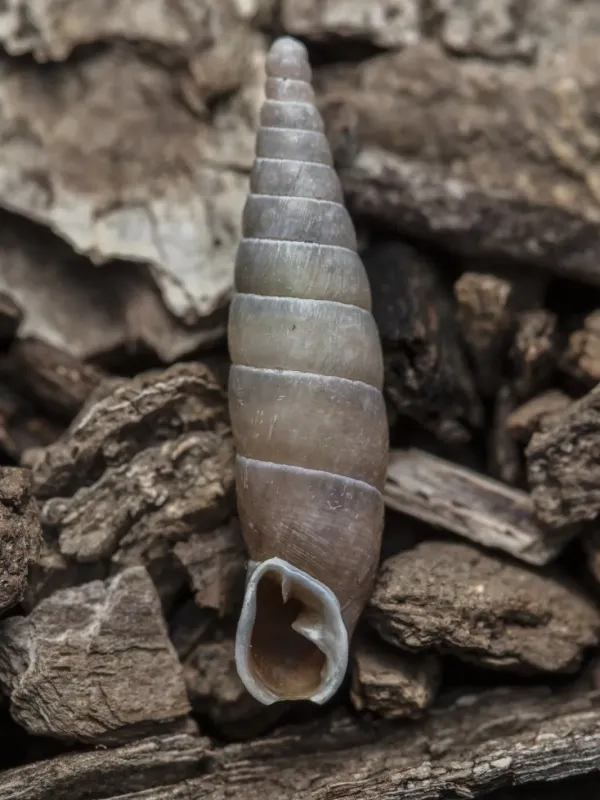
Description
How to identify
Cochlodina laminata is a small, terrestrial pulmonate snail belonging to the family Clausiliidae. Its shell is distinctively elongated and spindle-shaped, typically measuring between 15 and 17 mm in length, and is characterized by numerous closely spaced whorls.
The shell color varies from a light yellowish-brown to a deep dark brown, often displaying a glossy surface. A key diagnostic feature of this species is the presence of a 'clausilium', a complex internal spiral barrier located within the aperture that allows the snail to seal its shell tightly under unfavorable conditions.
This species favors damp, shaded environments and is frequently encountered in the leaf litter of deciduous forests, on decaying wood, mossy rocks, and the bark of old trees. In agricultural settings, they migrate toward the root zones of plants where a stable microclimate is maintained.
The snail's anatomy is typical for gastropods, showing high sensitivity to fluctuations in humidity. As moisture levels drop, the snail's activity decreases significantly, and it retreats into deep protective niches to survive dry spells.
Unlike many other snail species, this one maintains a very cryptic lifestyle, which often masks its presence on a site until a significant population density is achieved.
What it damages
Cochlodina laminata acts as a phytophage with a broad diet, causing notable damage to cultivated plants near forested areas or in damp, unmaintained garden corners. Vegetables, ornamental plants, and young tree seedlings are at the highest risk.
The snail feeds on soft plant tissues, preferring seedlings, young foliage, and the epidermis of stems. Damage to young plant starts often leads to total plant loss due to the destruction of the growth point.
In gardens, these snails can damage berries and fruits that are in contact with the soil, rendering them unsuitable for harvest or consumption. There have also been reports of bark damage on young ornamental shrubs during periods of high population density.
Beyond direct tissue consumption, snails serve as vectors for fungal and bacterial spores, which easily infect the damaged plant tissue, leading to secondary rots that further complicate the health of the crop.
Damage is most severe during periods of high rainfall, which facilitates increased snail mobility and feeding activity, while plant defenses may be temporarily compromised by excessive soil moisture.
When it appears
The activity levels of Cochlodina laminata are heavily reliant on hydrothermal factors, specifically air humidity and ambient temperatures. They thrive best in conditions featuring moderate temperatures combined with regular precipitation.
Spring activity begins as soon as soil temperatures reach approximately 8–10 degrees Celsius, a period that coincides with the emergence of many garden seedlings. During this time, they are most aggressive in their feeding habits.
Summer activity is intermittent and highly dependent on rainfall levels. During drought, the snails enter an aestivation state, hiding deep within damp bark, leaf litter, or under cool, shaded garden features to conserve moisture.
Autumn marks a second peak in activity as the snails prepare for overwintering and focus on reproduction. During this phase, they migrate toward moist overwintering sites, such as compost piles and the dense foliage surrounding perennial plant roots.
Overwintering occurs in soil crevices, beneath thick layers of organic debris, or within decaying logs, where temperatures remain stable enough to protect the snails from freezing conditions.
Signs of infestation
The primary diagnostic sign of a Cochlodina laminata infestation is the presence of dried, silvery mucus trails left on leaves, stems, and moist soil, typically visible in the early morning or evening hours.
Damage manifests as irregular holes or edge-eating patterns on leaves, leaving only the tougher veins intact, which can create a skeletonized appearance. These patterns are characteristic of generalist mollusc feeding.
Seeing the snails themselves near damaged foliage or at the base of the plant during or shortly after rain is a clear indicator of their activity. During the day, they must be sought in dark, humid hiding spots.
- Dried or fresh mucus trails on plant stalks.
- Mechanical tissue loss on fruits and young green shoots.
- Dark, granular snail droppings present near feeding sites.
- Mass aggregations of individuals under wooden boards, stones, or thick mulch.
If these signs are observed, a thorough inspection of the shaded and damp parts of the plot is necessary to assess the scale of the population.
Control measures
Effective management of Cochlodina laminata requires an integrated approach that combines cultural practices, physical trapping, and targeted control measures to suppress population surges.
The most important cultural step is modifying the habitat to reduce excess humidity: prioritize weeding, thin out dense plantings to improve air circulation, and avoid the use of thick mulch near vulnerable seedlings, which provides a daytime refuge.
Physical trapping is highly effective; placing containers with beer or damp rags/boards across the garden creates attractive daytime shelters. Collected snails can then be easily removed and disposed of mechanically.
For high-value plants, create physical barriers around the base using irritant materials such as wood ash, hydrated lime, coarse sand, or crushed eggshells to discourage the snails from crossing to the plant stems.
In cases of severe infestation, use molluscicides based on iron phosphate. These products are generally considered safer for pets, birds, and beneficial insects compared to traditional metaldehyde-based baits.
Taxonomy
- Latin name
- Cochlodina laminata
- Order
- Molluscs
- Family
- Clausiliidae
- EPPO code
- KOHDLA
Discussion
No discussions yet — be the first.