
Clausilia bidentata
Clausilia bidentata
Description
How to identify
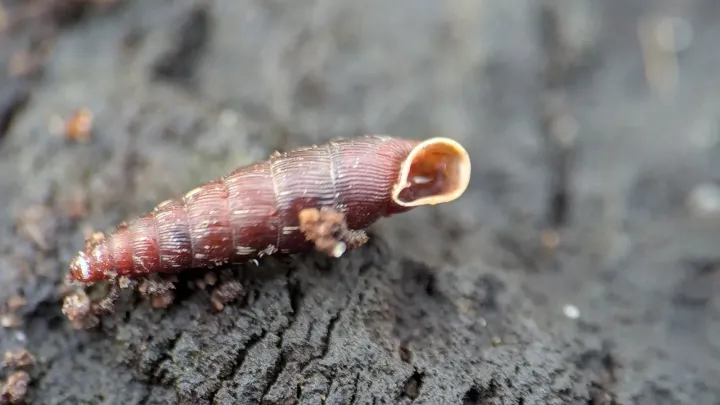
Clausilia bidentata is a small terrestrial pulmonate gastropod belonging to the Clausiliidae family. Its shell is distinctively spindle-shaped, usually measuring 10–12 mm in length and about 3 mm in width, making it a compact garden dweller.
The shell features a fine transverse striation and a brown or horny coloration, which provides excellent camouflage against bark, stones, and decaying leaf litter.
A key biological feature is the presence of a clausilium, a specialized, movable flap within the aperture that allows the snail to seal its shell tightly to prevent desiccation during dry spells.
Due to its slender, tower-like shape, it is often overlooked compared to larger, more conspicuous garden snails or slugs, yet it can form significant populations in hidden areas.
Positive identification requires observing the aperture under magnification; it exhibits two clear, tooth-like folds on the interior wall, which confirms the species identity.
What it damages
While this snail primarily feeds on decaying organic matter, fungi, and lichens, it can shift its diet to young, tender plant tissues when environmental conditions favor population spikes.
The primary damage occurs when snails scrape the epidermis of young leaves and soft stems, causing unsightly scarring and weakening the plant's structural integrity.
Nursery plants and seedlings are particularly vulnerable, as the damage to their delicate outer tissues often creates openings for secondary fungal and bacterial infections.
In ornamental gardens, heavy infestation can ruin the aesthetic value of foliage, leading to yellowing or localized necrotic spots where the snail has been feeding.
The snail does not discriminate heavily between plant species, making it a potential generalist pest in moist, shaded environments where it finds both shelter and food sources.
When it appears
Clausilia bidentata activity is heavily dependent on moisture levels, with peak activity occurring during the rainy periods of spring and autumn.
During the heat of midsummer, these snails enter a state of aestivation, retreating into cracks in wood, deep within mulch, or under dense ground cover to avoid dehydration.
Reproduction takes place throughout the warmer months, with eggs typically laid in damp soil or beneath organic debris, ensuring the next generation is well-protected.
The snails are strictly nocturnal or crepuscular, emerging only when the humidity is high enough to allow for movement without excessive water loss through their skin.
As winter approaches, the snails seek sheltered hibernation sites, often aggregating in large numbers within rotting wood, wall crevices, or layers of leaf litter to survive cold temperatures.
Signs of infestation
The most reliable sign of a Clausilia bidentata infestation is the presence of shimmering, dried slime trails left on plant stems and the undersides of leaves.
Feeding marks appear as irregular, pale, or brownish scrapes on the surface of tender leaves or shoots, which distinguish them from the clean-cut holes left by insects.
Direct observation is most successful at night; shining a torch on host plants after a rain shower often reveals groups of these snails grazing on the foliage.
The accumulation of empty shells near the base of the plant or within the top layer of soil is a strong indicator of a high local population density.
General lack of plant vigor and the presence of slow-growing, stunted shoots in shaded areas of the garden should prompt a search for these mollusks.
Control measures
Cultural control is the first line of defense; removing debris, dead leaves, and rotting wood eliminates the preferred daytime hiding spots of the snails.
Creating physical barriers, such as using abrasive surfaces like crushed eggshells, gravel, or wood ash around sensitive plants, can deter snails from reaching the foliage.
Encouraging biodiversity by attracting natural predators like hedgehogs, frogs, and ground beetles can help keep snail populations under natural biological control.
In cases of severe infestation, targeted application of metaldehyde-based molluscicides can be effective, though they should be applied cautiously to protect non-target wildlife.
- Regular soil cultivation to disrupt breeding sites.
- Setting up yeast or beer traps to capture and monitor snails.
- Manual collection and removal during evening or early morning hours.
Taxonomy
- Latin name
- Clausilia bidentata
- Order
- Molluscs
- Family
- Clausiliidae
- EPPO code
- CLULBI
Discussion
No discussions yet — be the first.