
Loxa stink bug
Loxa
Description
How to identify
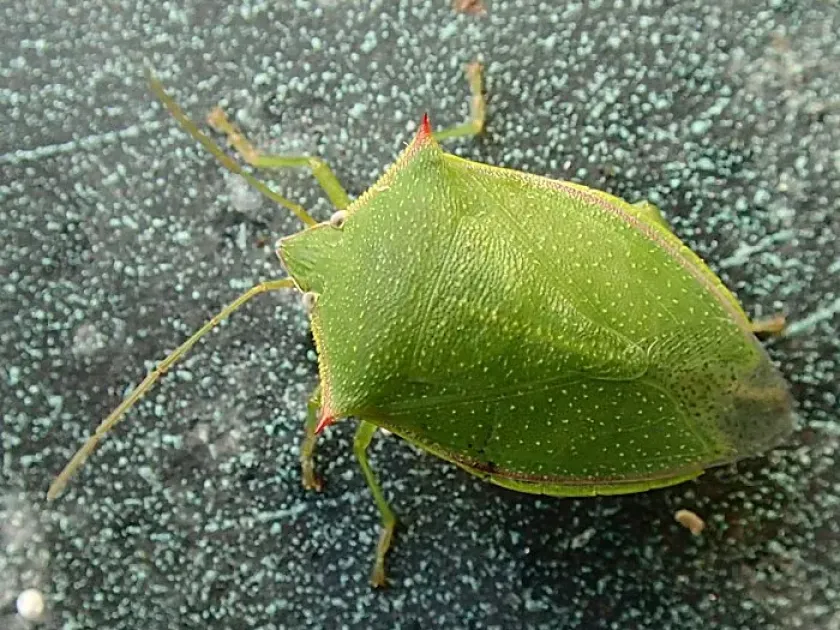
Bugs of the genus Loxa belong to the Pentatomidae family, commonly known as stink bugs. These insects are medium-sized and possess a characteristic shield-shaped body, which allows them to blend seamlessly into the surrounding foliage.
They are typically green or yellowish-green, providing excellent camouflage on plant leaves. A distinguishing feature of the Loxa genus is the elongated corners of the pronotum and a specific piercing-sucking mouthpart structure.
Their life cycle consists of the egg stage, five nymphal instars, and the adult stage. Females typically lay eggs in clusters on the undersides of leaves, attaching them firmly to the surface.
Young nymphs often stay in groups, gradually dispersing throughout the plant as they develop. Externally, they differ from adults by the absence of fully developed wings and less pronounced pronotal corners.
The activity of these insects is directly dependent on temperature; optimal development occurs in regions with warm and humid climates, where they are capable of producing several generations per season.
What it damages
These pests specialize in feeding on the sap of various agricultural crops. Both grain and vegetable crops, as well as fruit-bearing plants, are at risk, making them significant threats to diverse agroecosystems.
The primary damage occurs when they use their proboscis to pierce plant tissues and extract sap from young shoots, leaves, buds, or developing fruits. This causes severe disruption to plant metabolism and physiological processes.
Damage to the reproductive organs often leads to the abscission of flowers and fruitlets, which drastically reduces total yield. Furthermore, necrotic spots and deformations can form on fruits, lowering their market quality.
Secondary infections, including pathogenic fungi and bacteria, can enter the puncture wounds, causing tissue decay. This often leads to significant crop losses even when the absolute number of insects is relatively low.
The pest poses the greatest threat during the fruit formation and grain filling periods, when plants are most vulnerable to the loss of moisture and nutrients through the numerous micro-injuries caused by the bugs.
Signs of infestation
The first sign of an infestation is the presence of the bugs themselves or their egg masses on the underside of leaves. Careful inspection of the fields during early morning hours helps to detect adults on the tops of shoots.
Damaged leaves exhibit small light-colored dots, which are puncture marks that may eventually merge into yellowish spots, leading to premature yellowing and drying of entire leaf sections.
In young fruits, the characteristic sign is the appearance of small depressions and subsequent shape deformation. In grains, one might notice shriveled, underdeveloped kernels, indicating that the contents were extracted during the milky stage.
The presence of excrement in the form of tiny dark specks on leaves can also serve as an indirect indicator of pest activity. Under mass reproduction, plants begin to lag in growth and show signs of general weakness.
A specific pungent odor, released by the bug's scent glands when threatened, often reveals their presence in the crop, even if the insects themselves remain difficult to spot among the dense vegetation.
Control measures
Prevention begins with strict weed control, as weeds serve as reservoirs for the pest during the off-season and at the beginning of the growing cycle. Timely destruction of weeds around field borders significantly reduces pest density.
Biological control includes preserving and attracting natural enemies, such as entomophages and parasitic wasps, which feed on the eggs and nymphs of stink bugs, keeping the population below the economic threshold.
If the economic injury level is exceeded, chemical control measures are applied. It is recommended to use systemic or contact-stomach insecticides that are effective against Hemiptera insects.
It is crucial to rotate products with different active ingredients to prevent the development of resistance in the pest population. Applications must be carried out strictly according to the label, observing pre-harvest intervals.
Monitoring population levels using pheromone traps or visual counts on control plots allows for informed decisions regarding the necessity of spraying, thereby minimizing the ecological impact on the agroecosystem.
Taxonomy
- Latin name
- Loxa
- Order
- Hemiptera (bugs, aphids, leafhoppers)
- Family
- Pentatomidae
- EPPO code
- LXAXSP
Discussion
No discussions yet — be the first.