
Booklouse
Liposcelis divinatoria
Description
How to identify
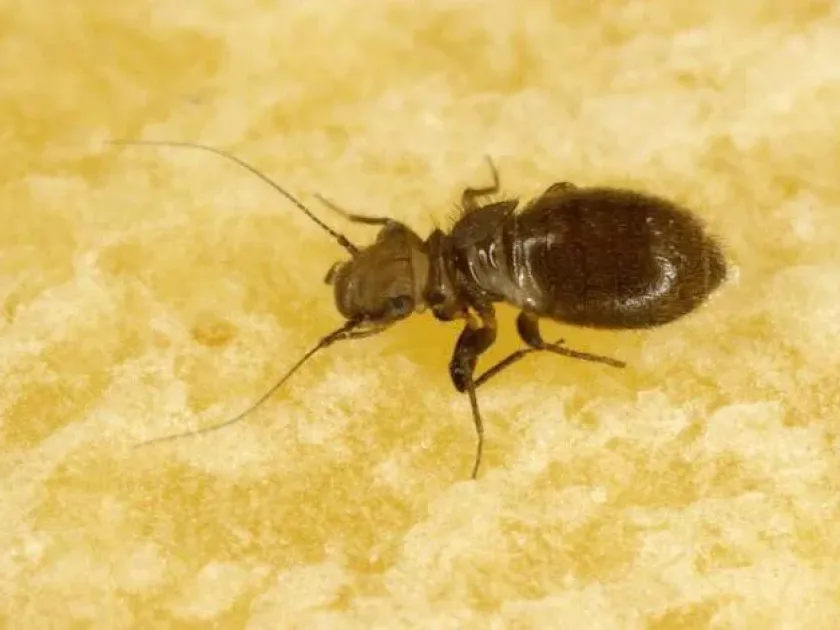
The booklouse (Liposcelis divinatoria) belongs to the order Psocoptera, family Liposcelididae. These are tiny, wingless insects, typically ranging from 1 to 2 mm in length, with a body color varying from pale yellow to light brown.
Their bodies are soft and flattened, allowing them to hide in narrow crevices of storage facilities or within grain masses. They are highly mobile and shy away from direct light, preferring humid and undisturbed environments.
Booklice undergo incomplete metamorphosis. Eggs are laid individually or in small clusters on surfaces where their food source, microscopic mold or fungi, is readily available.
Because they lack wings, their movement between storage units is usually passive, often facilitated by contaminated grain bags or agricultural equipment moving between warehouses.
Under optimal conditions (temperatures around 25°C and high humidity), a generation can develop in just a few weeks, leading to a rapid buildup of the insect population.
What it damages
As a stored product pest, the booklouse primarily affects warehouses, granaries, and botanical collections. Their diet consists almost exclusively of micro-fungi and mold spores.
In agriculture, they can damage stored grain and seed stocks. While they do not consume the interior of healthy seeds, they feed on the fungi growing on the grain surface, which can damage the germ and reduce viability.
Infestation by booklice is considered a sanitary issue, as their presence contaminates the product with their bodies, excrement, and molted skins, rendering the batch unfit for certain quality standards.
They also cause damage to books, herbarium sheets, and wooden storage materials by consuming the mold that develops on these surfaces due to damp conditions.
Massive infestations often lead to the degradation of the stored grain's quality, contributing to a musty smell and potential heating within the stored mass.
When it appears
Booklice can remain active throughout the year as long as environmental conditions in the storage facility are favorable, particularly regarding moisture and temperature.
Populations tend to spike during warmer and more humid months when the moisture content of stored products is likely to increase, favoring fungal growth.
In winter, their development slows down in unheated buildings, but the insect can survive cold periods by sheltering in deep layers of grain or crevices where temperatures are slightly higher.
The peak presence of the pest is often correlated with the post-harvest period, especially if the crop is stored with higher moisture levels than recommended.
Constant monitoring is required because these insects can establish permanent colonies in the hidden structure of a warehouse if moisture control is neglected.
Signs of infestation
The most reliable sign of a booklouse infestation is the visual detection of numerous tiny, fast-moving insects on surfaces near the grain or on bags.
A fine, dust-like deposit on the surface of stored grain or shelving is a significant indicator of a high population density, consisting of insect waste and shed skins.
The presence of a musty or damp odor in a warehouse typically indicates fungal activity, which serves as a major attractant and food source for the booklouse.
Small, irregular surface scars on seed coats or paper materials indicate the feeding activity of these pests as they scrape away mold and surface matter.
- Visual sighting of tiny pale insects.
- Musty smell emanating from grain stocks.
- Dusty appearance on the grain surface.
- Decrease in seed germination rates.
- Discovery of insect remains in cleaning equipment.
Control measures
The most effective strategy is the rigorous maintenance of dry conditions (less than 60% relative humidity), as it prevents the fungal growth that is essential for the insect's diet.
Good warehouse hygiene is critical: remove grain dust, spillages, and debris regularly to eliminate potential food sources and hiding spots for the pests.
Ensure proper aeration of the storage facility to prevent condensation on walls and floors, which can create localized damp areas suitable for mold growth.
If an infestation is already present, fumigation with authorized insecticides can be effective, provided that the treatment is applied according to strict safety regulations.
Regular inspection and moisture testing of grain batches upon arrival at the warehouse are essential to prevent the introduction of the pest into clean storage environments.
Taxonomy
- Latin name
- Liposcelis divinatoria
- Family
- Liposcelididae
- EPPO code
- LIPODI
Discussion
No discussions yet — be the first.