
Guinea fowl louse
Lipeurus numidae
Description
How to identify
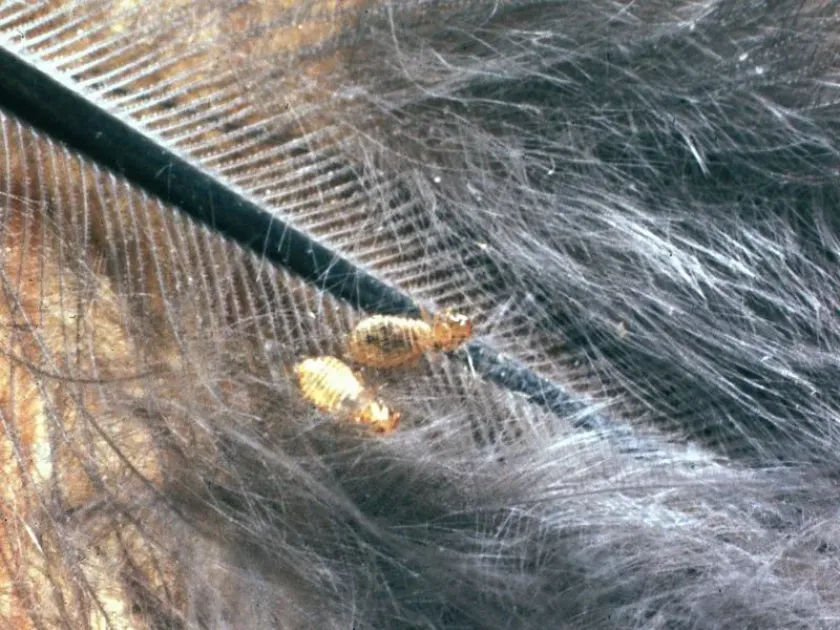
The Guinea fowl louse (Lipeurus numidae) is a small insect belonging to the order Mallophaga and the family Philopteridae. This wingless parasite has a flattened body perfectly adapted for rapid movement between the feather barbs of its host.
Physically, the pest has an elongated body, yellowish-brown in color, with dark stripes along the edges of the abdominal segments. The parasite's mouthparts are of the chewing type, perfectly adapted for scraping off the epidermis and feeding on parts of the bird's feathers.
The insect's life cycle occurs entirely on the host's body, making it an obligate parasite. The pest's eggs, known as nits, are oval-shaped and attached by a secretion to the base of the feathers in the downy area.
Development follows a process of incomplete metamorphosis, including the egg stage, three larval instars, and the adult stage. All biological activity, including mating and egg-laying, takes place directly within the plumage of the guinea fowl.
It can be distinguished from other louse species by the specific shape of its head capsule and unique setae on the abdominal segments, which allow it to anchor securely to the guinea fowl's feathers.
What it damages
The primary target is the domestic guinea fowl, though the parasite can affect other types of poultry kept in mixed flocks. The pest feeds on dead skin scales, feather debris, and blood that may seep from skin abrasions.
The greatest damage is caused to young birds, whose skin barrier defenses are not yet fully developed. Intense reproduction of lice can lead to thousands of parasites on a single individual, causing severe cases of mallophagosis.
The damage caused by the pest leads to a loss of feather integrity, reducing the thermal insulation of the bird's plumage. As a result, the birds expend more energy on thermoregulation and suffer from stunted growth.
Prolonged infestation leads to secondary skin infections due to constant irritation and scratching. The damaged skin becomes an entry point for bacterial and fungal pathogens.
Economic losses are driven by reduced growth rates in young birds, poor plumage quality, and decreased egg production in adult flocks due to persistent stress and physiological exhaustion.
Signs of infestation
The first sign of infestation is restless behavior: guinea fowl constantly groom themselves, peck at their feathers, and exhibit signs of severe itching. A decrease in appetite and general lethargy in the flock are often observed.
Visual inspection of the plumage, especially around the wings and the vent area, often reveals clusters of the insects themselves. Whitish deposits, known as nits, are clearly visible at the base of the feather shafts.
In advanced cases, bald patches, thinning feathers, and brittleness are noticeable. The feathers often appear "eaten" at the edges, which is a specific trace of the louse's chewing mouthparts.
The skin may show inflamed patches covered with small crusts or scratch marks. The bird appears unkempt, and its feathers lose their shine and elasticity, becoming dull and ruffled.
In mass infestations, pronounced anemia of the mucous membranes is observed, caused by chronic exhaustion and the constant irritating effect of the parasites on the bird's epidermis.
Control measures
The foundation of control is strict adherence to veterinary and sanitary standards in poultry keeping. Regular mechanical cleaning of the housing and disinfection of surfaces with insecticidal agents can significantly reduce the pest population.
To treat infested birds, modern insecticidal and acaricidal agents are used in the form of sprays, powders, or solutions. It is crucial to repeat the treatment twice, with a 10–14 day interval, to kill new generations of parasites that hatch from the nits.
It is recommended to provide access to sand-ash baths mixed with sulfur-based preparations or other safe insecticides. This allows birds to naturally clean their plumage of adult lice.
When managing a flock, quarantine rules for new birds entering the farm must be followed. Mandatory inspection and preventive treatment help prevent the spread of the infestation throughout the facility.
- Regular monitoring of the plumage condition.
- Isolation of infested individuals.
- Disinfection of bedding and equipment.
- Use of certified veterinary preparations.
Taxonomy
- Latin name
- Lipeurus numidae
- Family
- Philopteridae
- EPPO code
- LIPENU
Discussion
No discussions yet — be the first.