
Feather louse
Lipeurus
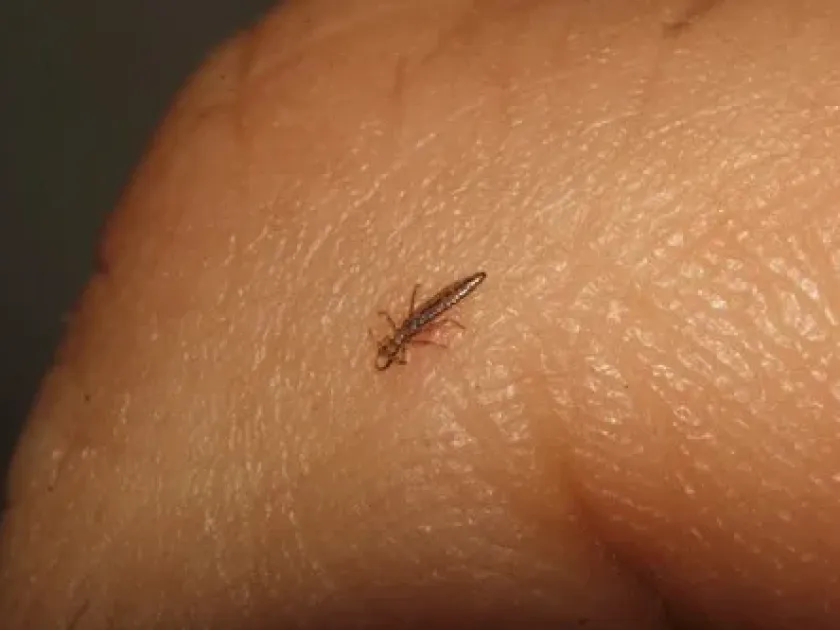
Description
How to identify
The genus Lipeurus belongs to the order Phthiraptera (suborder Ischnocera), family Philopteridae. These are small, wingless insects with a flattened body, typically ranging from 1.5 to 3 mm in length.
Feather lice possess well-developed chewing mouthparts that are specifically adapted for scraping the epidermis and feeding on feather barbules and debris.
The head of the pest is large, wider than the thorax, and often features a characteristic pattern or spots. The antennae are short and concealed in grooves on the sides of the head.
The insect's legs are equipped with claws, allowing them to firmly grip the feather shafts and move efficiently across the host's body.
The color of these lice ranges from pale yellow to brown, which provides camouflage against the feathers of the host bird in their natural environment.
What it damages
This pest mainly affects domestic poultry, including chickens, turkeys, ducks, and geese, as well as many wild bird species living on the ground.
Feather lice are obligate parasites that spend their entire lifecycle directly on the host, feeding on down, feathers, and skin particles.
The presence of parasites leads to structural damage to the plumage, causing ragged or "eaten" areas on the feathers, especially the primary and tail feathers.
In cases of heavy infestation, feather lice cause severe itching, forcing the bird to constantly preen, pluck its own feathers, and become extremely agitated.
Affected birds lose weight, egg production drops, and young birds may show stunted growth, resulting in significant economic losses for the poultry farmer.
When it appears
Infestation can occur year-round, but peak activity and reproduction of feather lice often coincide with colder months when birds are housed in confined, crowded conditions.
The lifecycle of the pest is rapid: females lay eggs (nits) directly on the feather barbs, anchoring them with a specialized secretion.
Larvae hatch from the eggs, resembling adults but smaller, and pass through three nymphal stages before maturing into adult insects.
Under optimal environmental conditions, the full lifecycle of a Lipeurus species from egg to adult can take approximately three to four weeks.
High stocking density in poorly ventilated poultry houses significantly facilitates the rapid spread of lice between birds through direct contact.
Signs of infestation
The primary sign of infestation is the physical presence of lice, which can be found by carefully examining the base of the feathers, especially under the wings and around the vent.
Visible damage to feathers, such as holes or notched vanes, appears as if the feathers were clipped, resulting from the pest's feeding activity and mechanical wear.
Restless behavior, frequent flapping, excessive preening, or attempts to peck at their own body or neighboring birds indicate a heavy parasitic load.
During visual inspection, one can observe clusters of nits attached to the base of the down, appearing as small white or dark granular deposits.
- Thinning or missing plumage on the neck, breast, and back.
- Loss of appetite and noticeable lethargy in birds.
- Specific notched damage on flight feathers.
Control measures
The main method of control is the regular application of appropriate insecticidal products, such as sprays, powders, or dips, directly on the birds.
Sanitizing the environment is equally important: poultry houses should be cleared of birds and thoroughly treated with authorized disinfectants and insecticides.
Strict hygiene practices, including frequent changing of bedding and keeping the environment dry, significantly reduce the chances of mass reproduction of feather lice.
It is crucial to prevent contact between domestic poultry and wild birds, which often act as natural reservoirs and vectors for this ectoparasite.
Providing birds with access to sand and ash baths allows them to naturally groom themselves and effectively manage the population of adult lice.
Taxonomy
- Latin name
- Lipeurus
- Family
- Philopteridae
- EPPO code
- LIPESP
Discussion
No discussions yet — be the first.