
Goat sucking louse
Linognathus stenopsis
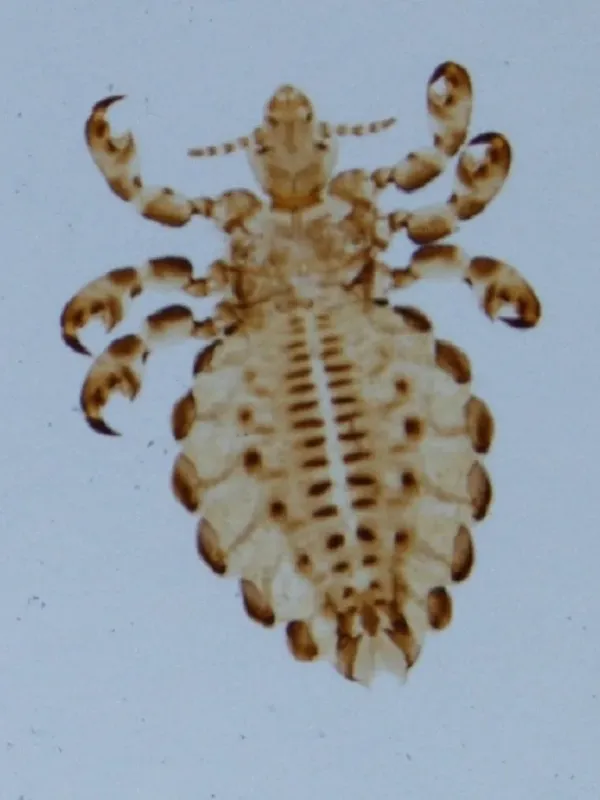
Description
How to identify
The goat sucking louse Linognathus stenopsis is a specialized ectoparasite belonging to the family Linognathidae. It is a blood-feeding insect that spends its entire life cycle on the host animal.
Adult lice are approximately 2 mm long with a narrow head designed for piercing the skin of goats. They lack wings and have specialized claws on their legs for gripping hair fibers securely.
The insects are generally light yellow to dark brown, allowing them to blend with the goat's skin and coat color. They are distinct from chewing lice due to their piercing mouthparts.
Development involves incomplete metamorphosis. Females deposit eggs, known as nits, which are cemented firmly to the hair shafts close to the skin surface.
The biological cycle is strictly host-dependent, and the louse cannot survive for long periods off the animal, making direct contact the primary transmission route.
What it damages
The primary damage caused by Linognathus stenopsis is mechanical injury and blood loss. Constant feeding by large colonies leads to anemia, especially in kids and weakened individuals.
The intense pruritus (itching) caused by louse saliva leads to constant scratching, resulting in skin excoriation, dermatitis, and localized hair loss (alopecia).
Persistent irritation causes goats to stop feeding and resting properly, which results in significant weight loss and decreased milk production in dairy breeds.
The damaged skin and open wounds are prone to secondary bacterial or fungal infections, which further complicate the health status of the affected herd.
Infestation also negatively impacts the quality of the goat's coat, leading to decreased value of raw fiber products in industries where goat hair is harvested.
When it appears
While the parasite can be present throughout the year, the infestation levels typically peak during the winter and early spring months.
Housing conditions during the winter, where animals are kept in closer quarters, facilitate the rapid spread of lice from one individual to another.
The thicker winter coat of the goat provides a perfect protected microclimate with stable humidity and temperature, favoring the reproduction of the louse.
In warmer seasons, when goats are put out to pasture, the increased exposure to sunlight and better ventilation often leads to a decline in louse populations.
However, poor management and lack of hygiene can allow louse populations to remain high even in warmer months, especially in confined or unsanitary conditions.
Signs of infestation
The most visible sign of infestation is abnormal behavior, where goats spend significant time rubbing against fences, walls, or stable fixtures to relieve itching.
Close inspection of the coat, particularly around the neck, shoulders, and along the spine, reveals clusters of nits attached to the base of the hair fibers.
Examination of the skin often shows raw patches, redness, and scabs from self-inflicted scratching by the animal.
Young kids may show lethargy, pale mucous membranes, and stunted growth, which are clear indicators of a severe infestation causing significant blood loss.
Overall herd health may appear degraded, with animals having a rough, unkempt coat and general signs of stress or discomfort during feeding times.
Control measures
Effective control requires the application of registered insecticides, such as pour-on formulations, sprays, or systemic injections suitable for goats.
A second application is critical, usually 10 to 14 days after the first, to eliminate nymphs that have emerged from eggs not affected by the initial treatment.
The environment must also be treated; cleaning stables and disinfecting bedding are essential steps to kill any lice that have dropped off the animals.
- Isolate new animals and quarantine them before introducing them to the main herd.
- Maintain high standards of animal nutrition to ensure a strong immune system.
- Perform routine check-ups of the herd, especially during the stabling season.
Taxonomy
- Latin name
- Linognathus stenopsis
- Family
- Linognathidae
- EPPO code
- LINOST
Discussion
No discussions yet — be the first.