
Linognathus
Linognathus
Description
How to identify
Linognathus is a genus of wingless insects belonging to the family Linognathidae within the order Phthiraptera. Known commonly as sucking lice, these are obligate ectoparasites that exclusively inhabit the skin and hair of mammals.
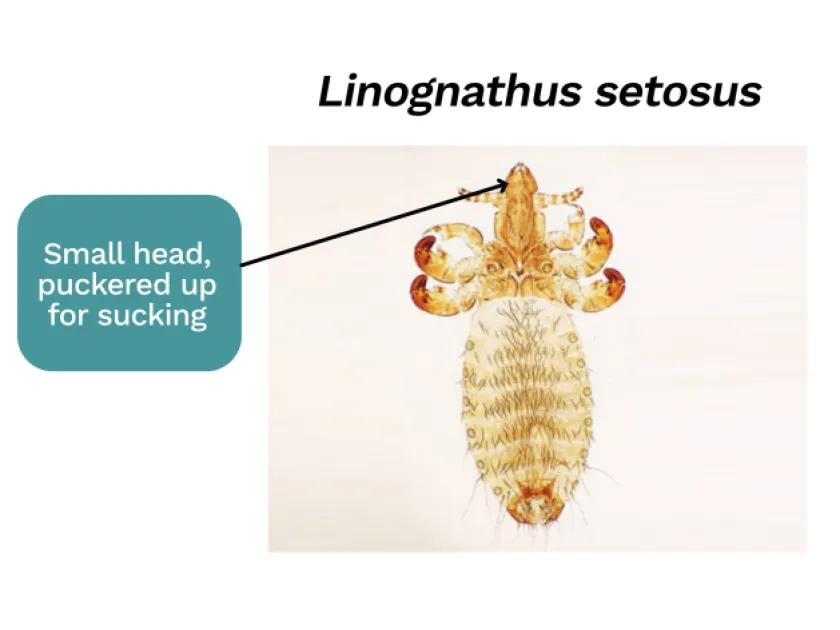
The morphology of Linognathus is adapted for a parasitic life in dense hair. They feature a dorsoventrally flattened body, an absence of eyes, and a specialized piercing-sucking mouthpart designed to feed on the host's blood.
These lice have strong, hook-like claws on their legs, allowing them to cling securely to the hairs of the host. They are typically small, ranging from 1 to 3 millimeters, and exhibit a pale yellowish to brownish color.
The entire life cycle occurs on the host animal. Females lay eggs (nits), cementing them firmly to the hair shaft. Development includes the egg stage, three nymphal instars, and the adult stage.
Due to their high host specificity, different species within the genus Linognathus have adapted to parasitize specific animals, such as cattle, sheep, or goats, making them significant veterinary pests.
What it damages
Linognathus causes a condition known as linognathosis, which results in significant economic losses in the livestock industry. The most common species, Linognathus vituli, is a primary concern for cattle producers.
The primary damage is caused by the lice piercing the skin to feed on blood. This results in intense itching and chronic irritation, forcing the animals to scratch, rub, and lick themselves incessantly.
Mechanical damage to the skin from scratching often leads to secondary bacterial infections, dermatitis, and patches of hair loss. These lesions cause stress and disrupt the animal's natural grazing or feeding patterns.
In cases of heavy infestation, the cumulative blood loss leads to anemia, particularly in calves and young stock. Anemic animals show stunted growth, reduced weight gain, and lower overall immunity to other diseases.
The reduced physical condition of the herd leads to lower milk production, poor quality of hair and hide, and increased expenditure on veterinary care and medication.
When it appears
Infestation by Linognathus is typically most severe during the winter months, when livestock are kept in confined indoor housing. The high density of animals in these environments facilitates the rapid spread of the parasites.
Winter conditions, characterized by long, dense hair coats, provide the perfect microclimate for louse reproduction. Lack of sunlight and steady temperatures inside barns allow for continuous multiplication of the population.
While the problem may be less noticeable in summer, the parasite burden often persists on carrier animals. If not controlled properly, the population can quickly rebound as soon as conditions become favorable again.
Nutritional stress during the late winter and early spring months makes the herd more susceptible to successful colonization by these parasites.
Proper management of the indoor environment, including humidity control and ventilation, is critical to limiting the seasonal peak of these infestations.
Signs of infestation
The earliest signs of Linognathus infestation are behavioral changes in the livestock. Animals become restless and show constant attempts to scratch or rub against walls, feeders, and fences.
Visual inspection of the skin, particularly around the neck, shoulders, brisket, and tail base, reveals patches of damaged skin, crusts, and areas where hair has been rubbed off.
- Excessive scratching and rubbing against structures.
- Visible patches of hair loss (alopecia) and broken hair.
- Presence of eggs (nits) attached to hair near the skin level.
- Pale mucous membranes indicating anemia in young animals.
- General unthriftiness and loss of body condition.
Control measures
Effective control of Linognathus involves the application of appropriate insecticides, such as synthetic pyrethroids, macrocyclic lactones, or organophosphates. These are available as pour-on solutions, sprays, or powders.
Treatment should be applied to the entire herd to eliminate the parasite completely, as untreated animals act as reservoirs for re-infestation. Strict adherence to withdrawal periods for milk and meat is mandatory.
Facility sanitation is equally important. Cleaning and disinfecting housing areas, bedding, and grooming equipment helps kill lice and eggs that have fallen off the host.
Good herd management practices, such as maintaining animal health and nutrition, help bolster the natural immunity of the livestock and reduce their attractiveness to parasites.
New arrivals to the farm should always be quarantined and treated for ectoparasites before being introduced to the main herd to prevent the spread of infestation.
Taxonomy
- Latin name
- Linognathus
- Family
- Linognathidae
- EPPO code
- LINOSP
Discussion
No discussions yet — be the first.