
Dog louse
Linognathus setosus
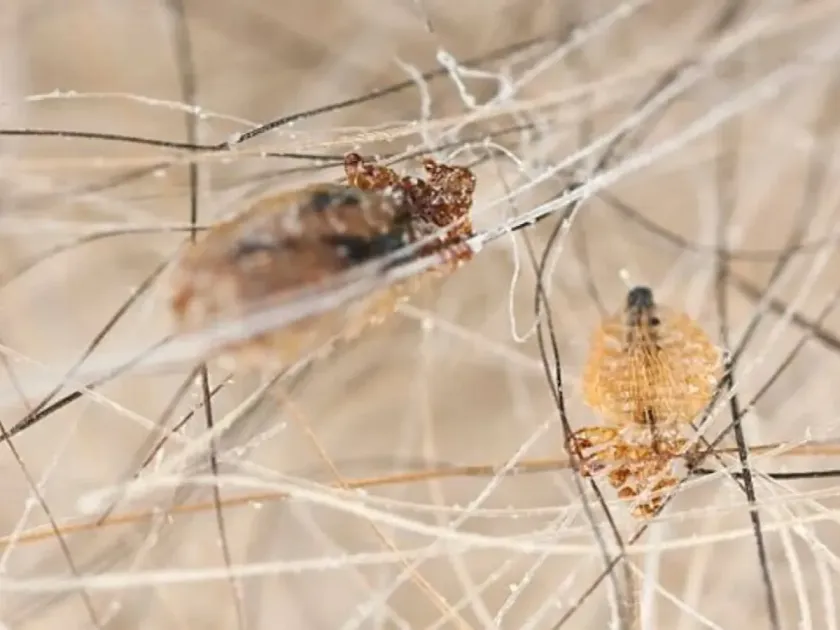
Description
How to identify
The dog louse (Linognathus setosus) is a wingless insect belonging to the order Phthiraptera. It is a specialized parasite that exclusively affects canids, particularly domestic dogs.
Adult lice are approximately 1.5–2 mm long, yellowish-brown in color, and have a flattened body that allows them to move efficiently through the dense hair coat of their host.
They possess a piercing-sucking mouthpart designed for feeding on host blood. Their head is narrower than the thorax, which is a distinguishing feature of this species.
The life cycle involves eggs (nits), three nymphal stages, and the adult stage. All stages of development occur entirely on the host's body, as they cannot survive for long in the external environment.
Nits are firmly attached to the hair shaft with a strong glue-like substance. They are small, whitish-oval, and can often be detected on dark coats.
What it damages
It is crucial to clarify that Linognathus setosus is a host-specific parasite of animals and is not an agricultural pest; it does not damage crops, plants, or gardening materials.
The damage caused by this parasite is purely veterinary. Infestation leads to pediculosis, a condition characterized by intense itching and skin irritation due to the insect's biting activity.
Persistent scratching often results in excoriations, dermatitis, and bacterial secondary infections. The dog may become restless, suffer from sleep deprivation, and experience significant stress.
In cases of severe infestation, particularly in young or malnourished puppies, the parasite can cause anemia due to excessive blood loss.
The overall quality of the dog's hair coat deteriorates significantly, appearing matted, dull, and thin. If untreated, the condition significantly impacts the animal's well-being.
When it appears
The dog louse is a permanent parasite, meaning its activity is not dictated by weather seasons. It relies on the stable environment provided by the dog's coat and body heat.
However, infestations are more common in colder months, as dogs are often kept in closer proximity in poorly ventilated and crowded indoor environments.
The microclimate near the skin surface remains constant throughout the year, allowing the parasite to reproduce and complete its life cycle continuously regardless of the season.
During the warmer months, if the animal has less contact with other dogs, the spread of the parasite might slow down, but the risk remains persistent if not managed.
Transmission occurs primarily through direct physical contact between animals or via contaminated grooming tools and bedding materials.
Signs of infestation
The most prominent sign of infestation is persistent itching. The dog will frequently scratch, bite, or rub against objects, leading to hair loss and inflamed skin patches.
Upon inspection, one may find nits attached to the base of the hair shafts, especially around the ears, neck, shoulders, and the base of the tail.
The skin may appear red and irritated with crusts, scabs, or small wounds caused by the lice biting and the subsequent mechanical damage from scratching.
In heavily infested dogs, the coat may lose its luster and become matted. A characteristic sour or unpleasant odor may also be associated with the infected skin.
A veterinarian can confirm the presence of lice by examining hair samples or skin scrapings under a microscope to distinguish them from other skin-related issues.
Control measures
Control is achieved using approved veterinary insecticides, such as spot-on treatments, medicated shampoos, or sprays specifically formulated for canine use.
Effective management requires treating the affected animal alongside thorough cleaning and disinfection of its bedding, collars, and grooming tools to eliminate nits and lice in the environment.
All dogs in the household or kennel should be treated simultaneously to prevent re-infestation, even if they show no visible signs of the parasite.
- Application of veterinary-grade anti-parasitic agents (e.g., fipronil, permethrin, or selamectin).
- Regular combing with a fine-toothed louse comb to remove debris and eggs.
- Maintaining high hygiene standards in areas where pets rest.
Agricultural pesticides or chemicals intended for plant protection must never be used on animals, as they are toxic and potentially fatal to pets.
Taxonomy
- Latin name
- Linognathus setosus
- Family
- Linognathidae
- EPPO code
- LINOSE
Discussion
No discussions yet — be the first.