
Leucopis fly
Leucopis pemphigae
Description
How to identify
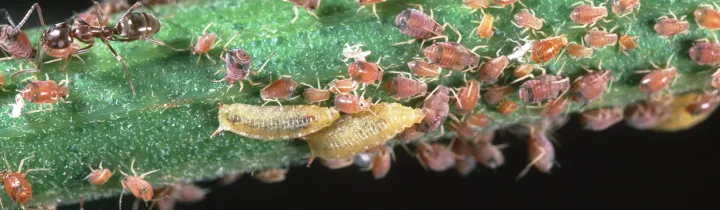
The Leucopis fly, including the species Leucopis pemphigae, belongs to the Chamaemyiidae family within the order Diptera. These small flies are easily recognized by their metallic or silvery-grey bodies and characteristic greenish eyes.
Adults typically measure between 2 and 4 mm in length. Their morphology is highly specialized, allowing them to thrive in environments occupied by dense colonies of aphids and coccids.
The larvae are specialized predators. They are shaped to navigate through aphid colonies or move within leaf galls created by their prey, making them effective biocontrol agents.
Scientific identification often requires microscopic examination of the male genitalia due to the extreme similarity between different species within the Leucopis genus.
Recognizing these flies is vital for any integrated pest management strategy, as they represent a natural defense mechanism in many agricultural ecosystems.
What it damages
It is crucial to clarify that the Leucopis fly is not a crop pest. On the contrary, it is a highly beneficial insect that serves as a natural predator of aphids and scale insects.
These flies do not cause damage to plants. Instead, they mitigate the damage caused by aphids, which are responsible for leaf curling, stunting, and the formation of harmful galls on woody crops.
By consuming aphids, the larvae of Leucopis pemphigae significantly reduce the populations of these pests, preventing severe damage to the plant's health and productivity.
Mistaking these flies for pests and applying unnecessary pesticides can lead to a decline in their population, resulting in uncontrolled outbreaks of aphids that they would otherwise keep in check.
Therefore, their presence should be considered a positive indicator of an active and balanced ecological community in the field or orchard.
When it appears
The lifecycle of the Leucopis fly is perfectly synchronized with the development of its aphid hosts, ensuring that larvae are present exactly when their food source is most abundant.
Adults are most active during the spring and summer months. They emerge when temperatures rise and aphids begin to colonize young, succulent plant tissues.
Females lay their eggs in close proximity to aphid colonies. This ensures that the newly hatched larvae have immediate access to their prey, which is essential for their rapid development.
Depending on the climatic conditions and species, these flies can complete multiple generations in a single growing season, providing continuous pressure on pest populations.
Overwintering typically occurs in the pupal stage, buried in the soil or protected under bark and plant debris, where they remain dormant until the next spring.
Signs of infestation
One of the most reliable signs of their presence is the discovery of empty or partially cleared galls on leaves, where aphids once thrived.
Closer observation may reveal the shed skins of Leucopis larvae, which remain within the gall after the larvae have finished feeding and are ready to pupate.
A noticeable decline in the health and density of aphid colonies, even when they seem otherwise undisturbed, is a strong indicator of predator activity.
Presence of small, greyish flies hovering around infested tree branches during the peak of the aphid reproductive season indicates the active egg-laying phase.
The absence of live aphids inside a gall, despite it showing external signs of infestation, usually confirms that a natural predator has successfully cleared the area.
Control measures
To encourage the presence of Leucopis flies, it is essential to move away from heavy reliance on broad-spectrum chemical insecticides.
Integrated Pest Management (IPM) practices should be employed, utilizing selective pesticides that target specific pests while leaving beneficial predators unharmed.
Maintaining floral strips and cover crops around orchards provides adults with nectar and pollen, significantly increasing their lifespan and reproductive success.
Monitoring programs should be established to identify the presence of these beneficial insects before making decisions about spray schedules in orchards or plantations.
By protecting the Leucopis fly, growers can achieve a more sustainable and cost-effective approach to managing aphid populations in their agricultural operations.
Taxonomy
- Latin name
- Leucopis pemphigae
- Order
- Diptera (flies)
- Family
- Chamaemyiidae
- EPPO code
- LEUSPE
Discussion
No discussions yet — be the first.