
Leucopis americana
Leucopis americana
Description
How to identify
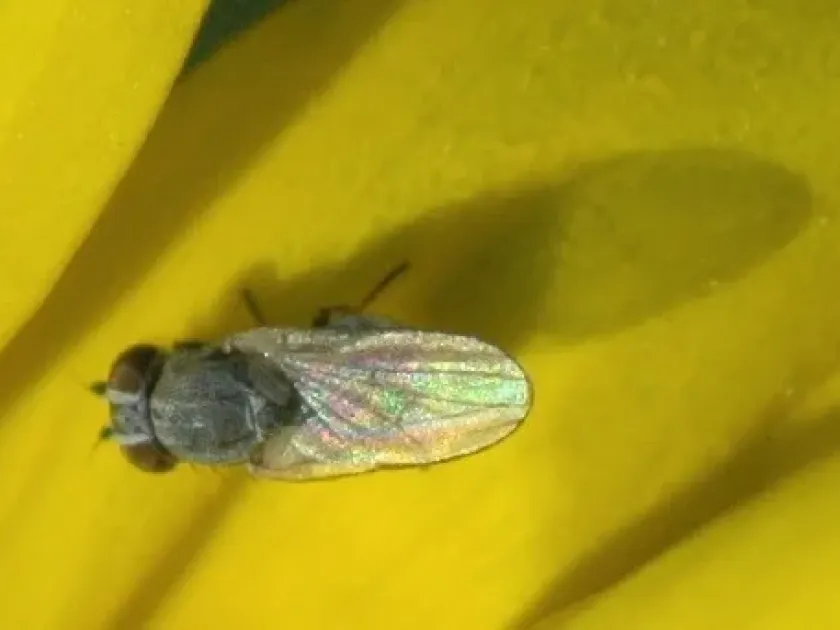
Leucopis americana is a small fly species belonging to the family Chamaemyiidae, commonly known as silver flies, known for their metallic or dusty gray appearance.
The larvae of this species are specialized predators that play a crucial role in regulating populations of small, sap-sucking insects on various conifer species.
Adult flies are typically small and inconspicuous, often found resting on the needles or bark of host trees where they search for prey to lay their eggs.
The life cycle encompasses four distinct stages: egg, larva, pupa, and adult, with larvae being the primary stage responsible for consuming prey.
Scientific identification usually involves examining the morphology of the male genitalia and specific characteristics of the wing venation under a microscope.
What it damages
This insect is considered a beneficial organism rather than a pest, as it actively consumes harmful insects such as adelgids, aphids, and scale insects.
By preying on these species, Leucopis americana prevents significant damage to needles, shoots, and overall tree vigor in pine, spruce, and fir plantations.
Their presence reduces the likelihood of sooty mold formation, which typically develops on the honeydew excreted by sap-sucking pests.
The ecological impact of this species is highly positive, as it contributes to natural mortality rates of pests without the need for synthetic chemicals.
In forest nurseries and orchards, this predatory fly acts as a natural biological control agent, enhancing the health and growth potential of the conifers.
When it appears
Adult activity typically begins in the early spring, aligning with the emergence of their host prey as temperatures rise above freezing.
The peak feeding activity of larvae occurs during late spring and summer, matching the high reproductive cycles of aphids and adelgids.
Multiple generations may occur throughout the growing season, provided there is a constant supply of prey available for the developing larvae.
As autumn progresses, the insects prepare for overwintering, typically spending the cold season in a pupal stage protected by tree bark or debris.
Local weather patterns, such as temperature stability and humidity levels, significantly dictate the success rate of each generation within the ecosystem.
Signs of infestation
Signs of Leucopis americana presence include finding larval stages embedded within dense clusters of aphid or adelgid populations.
One can identify their impact by observing the thinning or clearing of pest colonies and the presence of mummified or hollowed-out insect remains.
Small, whitish, or brownish pupal cocoons found attached to the bark or near bud scales provide evidence of successful development.
A reduction in the sticky honeydew residue on the needles of the infested tree is a strong indicator of successful predatory activity.
During field surveys, careful inspection of infested branches with a hand lens will often reveal the larvae actively hunting among the prey.
Control measures
Conservation is the primary management strategy, as these flies are essential for natural pest suppression in coniferous ecosystems.
To protect this beneficial population, avoid broad-spectrum insecticides that could cause indiscriminate mortality of both pests and predators.
If chemical intervention is necessary, opt for selective systemic or biological products that demonstrate minimal impact on beneficial insect fauna.
Implementing integrated pest management (IPM) practices allows these predators to reach sufficient densities, often eliminating the need for further action.
Maintaining diverse forest landscapes and avoiding complete chemical sterilization of nursery areas are key to sustaining their population over the long term.
Taxonomy
- Latin name
- Leucopis americana
- Order
- Diptera (flies)
- Family
- Chamaemyiidae
- EPPO code
- LEUSAM
Discussion
No discussions yet — be the first.