
Chamaemyia
Chamaemyia
Description
How to identify
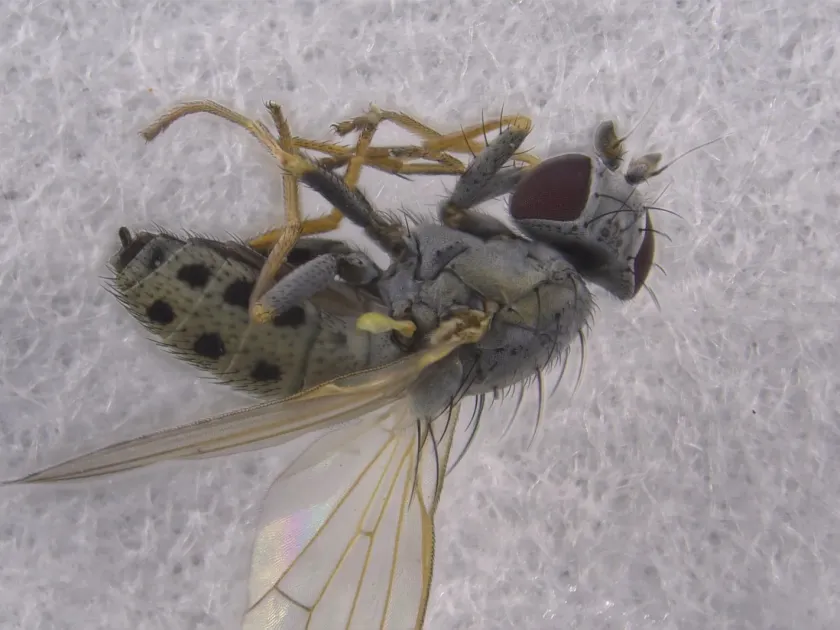
The genus Chamaemyia belongs to the family Chamaemyiidae, commonly known as silver flies. These small dipteran insects are characterized by a dense grey or silvery pruinescence covering their body, which gives them a distinct appearance.
Identification at the species level is complex and often requires detailed examination of wing venation, head bristles, and male genitalia. These morphological traits are essential for differentiating between various species within the genus.
Larvae are legless and maggot-like, typically found in hidden environments. While many species within the Chamaemyiidae family are beneficial predators that feed on aphids or scale insects, the economic significance of the genus Chamaemyia can vary depending on the host plant interaction.
The life cycle follows complete metamorphosis, progressing through egg, larval stages, pupa, and adult. The pupal stage occurs within a puparium, which protects the insect during its transformation in soil or organic debris.
Distinguishing between predatory species and those potentially harmful to crops is crucial for integrated pest management (IPM) to ensure that beneficial populations are preserved rather than eradicated.
What it damages
Some species of Chamaemyia can cause damage to cereal crops by infesting the grain heads. The larvae penetrate the florets and feed on the developing kernels, directly impacting the yield quantity and quality.
Infested grains often become shriveled, stunted, or completely destroyed. This damage reduces the overall weight of the harvested crop and negatively affects the market value of the grain due to poor development.
In addition to direct feeding, the physical damage to the grain provides entry points for secondary pathogens, such as fungi and bacteria, which can lead to further decay and spoilage of the wheat or barley heads.
Wheat, barley, and rye are primary targets for such infestation. Damage is frequently observed in field margins that are adjacent to wild grasslands or forest buffer zones where the insects naturally reside.
The economic impact of these infestations varies based on the population density of the larvae during the grain-filling stage of the cereal crops.
When it appears
The flight period for adults typically occurs in late spring and early summer. This timing aligns with the cereal crops' boot and heading stages, providing optimal conditions for oviposition.
Environmental factors, particularly temperature and humidity, play a significant role in the duration of the life cycle. Warm weather generally accelerates the development of eggs and larval instars.
Overwintering usually takes place in the pupal stage within the soil or crop stubble. Therefore, agricultural practices that disturb the soil after harvest are effective in reducing the next generation's population.
Environmental fluctuations can lead to high mortality rates for young larvae, while irrigated fields may provide a more stable environment for their survival and development.
Monitoring the adult population using yellow sticky traps or sweep netting during the pre-heading stage is essential for predicting potential outbreak risks.
Signs of infestation
The most common signs of infestation include the premature yellowing or drying of individual spikelets within the ear. A detailed inspection of the heads often reveals missing or damaged grain kernels.
The presence of larvae inside the grain head is sometimes accompanied by waste products, which can support the growth of sooty mold, giving the infested heads a dirty or blackened appearance.
Adult flies can often be spotted on the leaves and grain heads during the early morning hours when they are less mobile and easier to observe without disturbing them.
Damage often manifests in patches rather than uniformly across the field, allowing farmers to identify and treat specific infested areas.
- damaged or shriveled grains;
- presence of maggots inside the florets;
- premature ripening or bleaching of spikelets;
- evidence of secondary fungal growth on grain heads.
Control measures
Cultural control measures, including crop rotation and deep autumn plowing, are foundational strategies. These practices bury overwintering pupae and disrupt the pest's life cycle effectively.
Chemical control should be implemented only when infestation thresholds are exceeded. Insecticides belonging to pyrethroid or organophosphate groups are commonly used, applied at the critical phase before larvae enter the grain head.
It is vital to prioritize the use of selective insecticides to minimize the impact on non-target species and beneficial predators that inhabit the field ecosystem.
Integrated pest management strategies should emphasize regular scouting to determine the timing of applications, ensuring that chemicals are applied when they are most effective against the larval stage.
Biological control, by maintaining a healthy population of natural enemies, remains the most sustainable approach for long-term management of cereal-damaging fly species.
Taxonomy
- Latin name
- Chamaemyia
- Order
- Diptera (flies)
- Family
- Chamaemyiidae
- EPPO code
- CHMISP
Discussion
No discussions yet — be the first.