
Silver fly
Leucopis
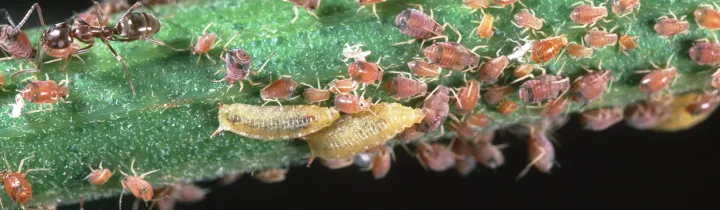
Description
How to identify
The silver fly (genus Leucopis) belongs to the family Chamaemyiidae within the order Diptera. Adult flies are characterized by their small size and a distinct greyish or silvery body covered in fine pruinescence.
These insects are often overlooked due to their modest appearance, yet they play a complex role in agricultural ecosystems, often acting as predators of other pests.
Morphologically, they possess large compound eyes and a specialized mouthpart adapted for feeding on small droplets of honeydew or prey fluids.
Larvae are typically spindle-shaped, ranging from pale yellow to white. They are known for their ability to hide efficiently within colonies of their prey.
Precise identification of Leucopis species usually requires professional entomological assessment due to the morphological similarity between different species within the genus.
What it damages
While many Leucopis species are beneficial predators that consume aphids and scale insects, their impact is largely considered positive in agricultural practice.
However, excessive presence can lead to secondary damage, such as the accumulation of excretions on leaf surfaces, which promotes the growth of sooty mold.
Direct damage to the plant tissue is rare, as the larvae focus their predatory behavior on the pests that actually consume the plant nutrients.
Crops affected indirectly include fruit trees, cereals, and various ornamental plants that are highly susceptible to aphid infestations.
Economic damage is generally negligible unless the balance between the predator and the pest is disturbed, leading to secondary fungal issues.
When it appears
Adult activity of the silver fly typically begins in early spring as temperatures rise above 10-12 degrees Celsius.
The population peak usually aligns with the warm summer months, coinciding with the rapid reproduction of aphid populations in the fields.
Depending on regional climatic conditions, the silver fly can complete several generations throughout the growing season.
Overwintering occurs in the puparium stage, usually located in plant debris, under tree bark, or within the top layer of soil.
Their life cycle is highly dependent on environmental humidity and the availability of host prey, which dictates the intensity of the infestation in any given year.
Signs of infestation
Signs of presence include the sighting of small, pale larvae moving among aphid colonies, actively feeding on their host insects.
The appearance of sticky honeydew on the leaves, followed by dark fungal stains, is a hallmark of high pest activity associated with these flies.
Stunted growth or curling of young shoots often occurs when the primary pest load (aphids) exceeds the predatory capacity of the silver fly population.
Monitoring using yellow sticky traps is an effective way to detect the presence of adult flies in agricultural orchards or greenhouses.
Finding empty larval skins within aphid colonies is a direct indicator of successful predation by the silver fly larvae.
Control measures
Since the silver fly is frequently a beneficial predator, integrated pest management (IPM) strategies should prioritize preserving their populations.
Broad-spectrum insecticides should be avoided to prevent the destruction of these valuable natural enemies of crop-damaging aphids.
When chemical intervention is necessary for primary pests, selective pesticides should be applied to minimize the impact on the Leucopis populations.
Cultural practices, such as maintaining hedgerows and fostering biodiversity, support the presence of these beneficial insects in the field.
- Avoid preventative broad-spectrum insecticide spraying.
- Encourage natural predators by providing diverse habitats.
- Monitor aphid populations to determine the need for intervention.
Taxonomy
- Latin name
- Leucopis
- Order
- Diptera (flies)
- Family
- Chamaemyiidae
- EPPO code
- LEUSSP
Discussion
No discussions yet — be the first.