
Leucopis annulipes
Leucopis annulipes
Description
How to identify
Leucopis annulipes belongs to the family Chamaemyiidae, a group of flies known for their close association with scale insects and aphids in various ecosystems.
Adult flies are typically small, with a greyish body and distinctively ringed legs, which allows for identification under a stereomicroscope.
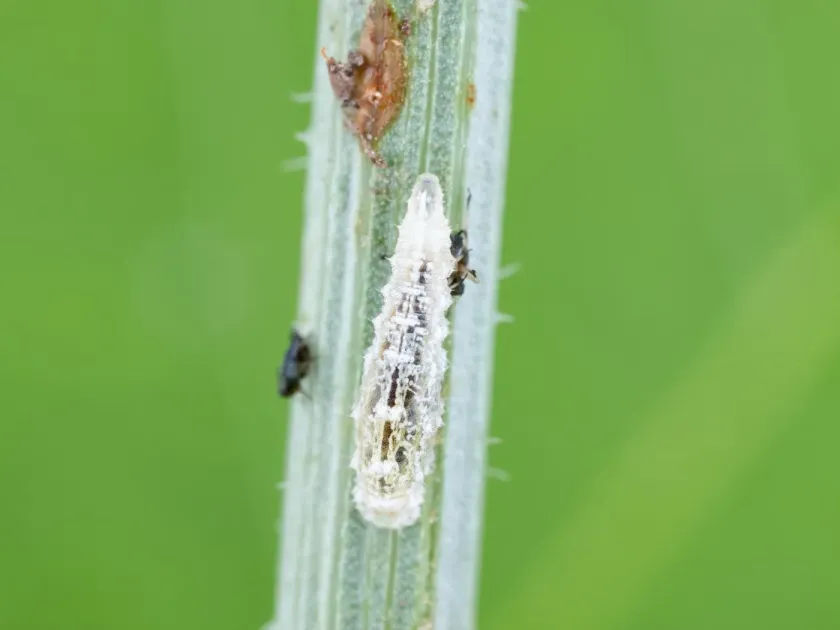
The larvae are specialized, often legless and slug-like in appearance, optimized for navigating dense colonies of sap-sucking pests.
The life cycle encompasses four distinct stages: egg, larva, pupa, and adult, with the pupal stage occurring in protected environments.
Accurate species identification is crucial for field monitoring, as it distinguishes this species from other beneficial or harmful dipterans.
What it damages
While often regarded as a beneficial predator, Leucopis annulipes can cause concern in specialized crops if their prey populations are essential for other processes.
Direct damage to plant tissues may occur when larval feeding sites become necrotic, providing entry points for various bacterial and fungal pathogens.
The presence of high numbers of these insects can lead to stunted plant growth and reduced photosynthetic activity in heavily infested leaves.
Host plants may show signs of yellowing or drooping, particularly in young stages where the plant is more sensitive to external biological stress.
Economic damage is usually indirect, stemming from the disruption of the natural balance between predatory and herbivorous insect populations.
When it appears
Adult emergence typically begins in late spring, following the first period of sustained warm temperatures suitable for insect activity.
Population density often peaks during mid-summer, correlating directly with the availability of preferred aphid or scale prey species.
Multiple generations may occur annually, especially in regions with mild winters and extended growing seasons, allowing for rapid colonization.
Overwintering occurs in the soil or protected crevices of plant debris, where the insect remains dormant until the return of favorable conditions.
Agronomists should schedule field scouting from early spring to late autumn to monitor seasonal trends in population growth.
Signs of infestation
The primary sign of infestation is the presence of small, whitish larvae integrated within prey colonies on the underside of leaves.
Visible surface damage often manifests as minor leaf curling or spots where the plant tissue has been compromised by insect activity.
Plant vigor reduction and sudden leaf discoloration in localized areas serve as secondary indicators of potential insect stress.
- Presence of pupae hidden near leaf veins
- Evidence of discarded aphid skins in larval feeding areas
- Adult flies clustering on terminal shoots
- Localized necrosis near aphid colonies
Detailed field inspections using magnifying tools are recommended whenever suspicious damage patterns appear on crop leaves.
Control measures
Integrated Pest Management (IPM) strategies should prioritize the conservation of natural habitats to support existing populations of biological controllers.
Avoiding broad-spectrum insecticides is essential, as these can decimate local populations of Leucopis annulipes and other beneficial species.
Cultural practices, including clean field borders and weed management, significantly reduce the alternate host sites for potential pests.
When intervention is necessary, selective biopesticides that target only harmful insects should be the first choice for the producer.
Maintaining strong plant health through proper fertilization and irrigation reduces the susceptibility of crops to any insect-related damage.
Taxonomy
- Latin name
- Leucopis annulipes
- Order
- Diptera (flies)
- Family
- Chamaemyiidae
- EPPO code
- LEUSAN
Discussion
No discussions yet — be the first.