
Leucopis major
Leucopis major
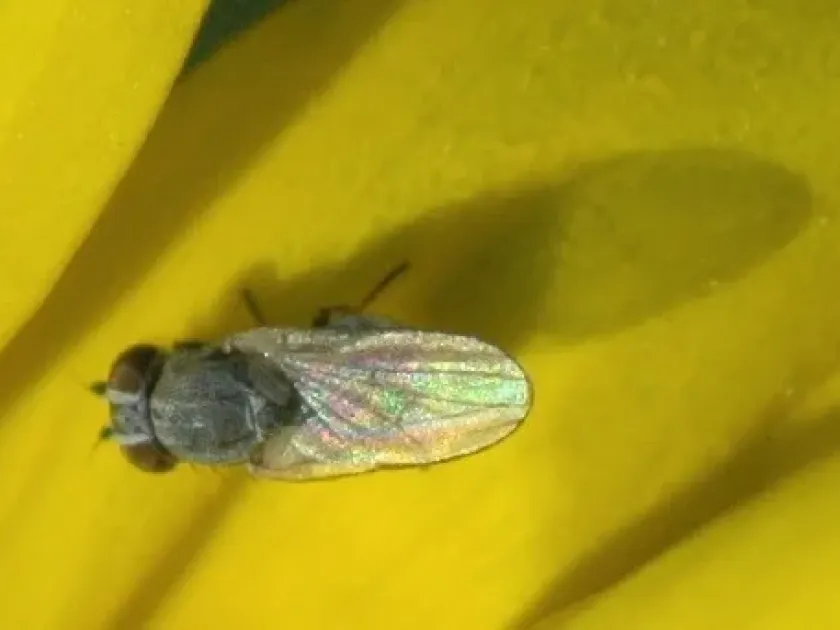
Description
How to identify
Leucopis major is a species of fly belonging to the family Chamaemyiidae (silver flies) within the order Diptera. These small insects are notable for their unique biological interaction with various plant species.
The adults are typically characterized by a dusty, silvery-grey coating on their bodies, which is a hallmark of the Chamaemyiidae family. Their head structure and sensory organs are highly adapted for navigation within dense plant foliage.
The larvae are generally elongated and pale, often camouflaged by their environment. They possess specialized mouthparts suitable for feeding on plant tissues or within insect colonies found on host crops.
Taxonomically, it is important to distinguish this species from other Leucopis flies, as some relatives are predatory and provide beneficial biocontrol, whereas this specific species can act as a pest.
The lifecycle follows a complete metamorphosis pattern: egg, larva, pupa, and adult. Each stage is influenced by environmental conditions, particularly humidity and temperature, which dictate the speed of population growth.
What it damages
This species is considered a pest that affects a variety of crops, primarily by feeding on the sap and vegetative tissues of host plants. This feeding activity weakens the plant's structural integrity.
The larvae damage plant cells, which disrupts the normal translocation of nutrients and water. This leads to stunted growth and reduced photosynthetic capacity in affected crops.
Younger leaves and shoots are particularly vulnerable, often showing signs of distortion or necrotic tissue where the larvae have fed extensively. This decreases the overall market quality of the harvest.
Large-scale infestations can cause severe yield losses. Plants weakened by Leucopis major often become more susceptible to secondary infections by various fungal and bacterial pathogens.
The economic impact of this pest is felt not only through direct damage but also through the increased labor and input costs required to mitigate its spread across fields.
When it appears
The activity of Leucopis major generally begins in the spring, coinciding with the rise in ambient temperatures that triggers the emergence of adults and the hatching of larvae.
Peak population density is usually observed during the summer months when crop growth is most vigorous. During this time, the pest rapidly multiplies and colonizes new host plants.
The number of generations per season is determined by the specific climatic conditions of the region. Warmer, humid environments facilitate faster development and more overlapping generations.
As autumn approaches and temperatures drop, the pest prepares for hibernation. They usually seek shelter in the soil or within crop residues left on the field after harvesting.
Effective monitoring begins in late spring, using visual observation or yellow sticky cards to detect early signs of pest pressure and prevent explosive population growth.
Signs of infestation
The primary sign of infestation is leaf discoloration, appearing as yellowish or pale spots on the foliage. Over time, these spots can expand and become necrotic, leading to leaf curling.
Small, pale larvae can often be found hidden in leaf axils or along the stems. Their presence is sometimes betrayed by the accumulation of excrement, which can attract sooty mold.
Stunted plant growth is a common indicator. Infested plants typically appear smaller and less healthy than unaffected ones, with a visible delay in their overall development cycle.
The presence of sooty mold on the leaves often serves as a secondary indicator, as it thrives on the sugary secretions associated with heavy insect infestations.
In cases of significant damage, premature leaf fall or loss of blossoms may occur, which is a clear warning sign of high pest pressure requiring immediate management intervention.
Control measures
Managing Leucopis major requires an integrated pest management (IPM) approach that balances chemical interventions with ecological and cultural practices.
Cultural practices include deep plowing after harvest to bury pupae and eliminate overwintering sites, as well as rigorous weed control to reduce alternative host plants around the field.
Biological control involves supporting populations of natural enemies, such as lady beetles and lacewings, which can help regulate pest numbers naturally in and around the field margins.
Chemical control should be employed only when monitoring indicates that the population has exceeded the economic injury level, utilizing selective insecticides to minimize impact on non-target species.
- Implement strict crop rotation to disrupt the pest's lifecycle.
- Regularly monitor fields using traps for early detection.
- Use systemic insecticides for severe outbreaks, adhering to safety guidelines.
- Ensure optimal plant nutrition to help crops withstand and recover from pest feeding.
Taxonomy
- Latin name
- Leucopis major
- Order
- Diptera (flies)
- Family
- Chamaemyiidae
- EPPO code
- LEUSMJ
Discussion
No discussions yet — be the first.