
Franklin's gull
Leucophaeus pipixcan
Description
How to identify
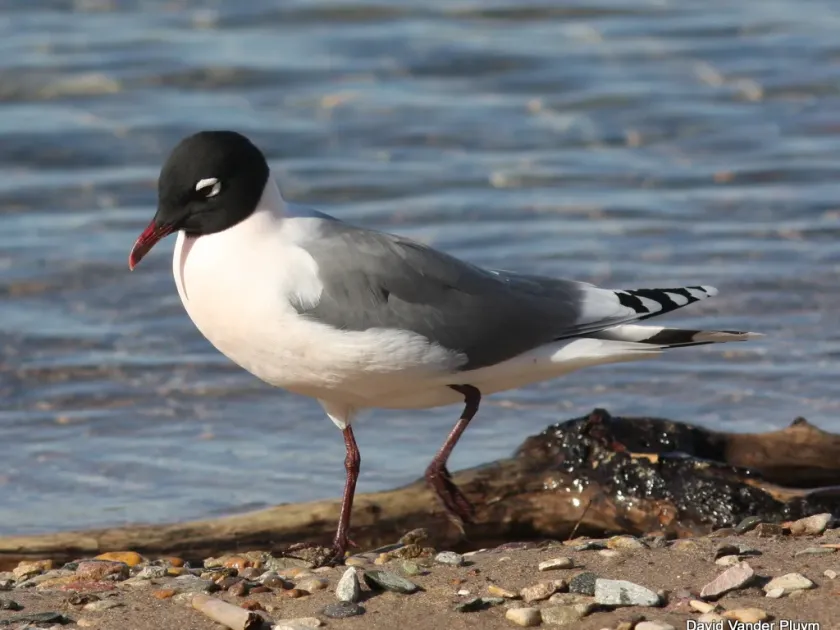
Franklin's gull (Leucophaeus pipixcan) is a small migratory gull that often descends upon agricultural fields in large numbers. Adults are recognized by their dark grey wings, white underparts, and a distinctive black hood that appears during the breeding season.
This species is highly social and often forms massive flocks that can occupy farmland for several days or weeks during migration. Their ability to switch between aquatic and terrestrial food sources makes them frequent visitors to arable land.
When in flight, Franklin's gulls display a unique pattern of white and black on their wings, which helps in identifying them from a distance. They are often seen following farm equipment while soil is being turned, which is when they find abundant food.
Behavioral observations show that these birds are opportunistic feeders. They adapt quickly to changes in landscape and human presence, often ignoring traditional scarecrows after a short period of exposure.
Understanding their migration patterns is essential for farmers. These birds are not permanent residents but seasonal visitors, and their arrival often corresponds with the most vulnerable stages of crop development.
What it damages
The primary economic impact of Franklin's gull on agriculture is the destruction of newly planted grain seeds. They possess a keen ability to locate and dig up seeds of wheat, barley, and corn shortly after sowing, leading to severe germination failures.
Beyond seed consumption, the birds cause mechanical damage to emerging seedlings. Large flocks trampling through a field can crush delicate stalks, reducing plant density and causing significant unevenness in crop emergence.
Their presence on fields results in excessive soil and crop contamination from droppings. This waste can introduce harmful bacteria to the soil surface, potentially impacting the health of the young crop in the affected areas.
In addition to grain, they can damage vegetable crops by probing the soil with their bills. This not only destroys the crop but also disrupts the soil structure, which can hinder the growth of surrounding healthy plants.
The damage is cumulative; as more birds join the flock, the rate of seed consumption increases exponentially. This necessitates costly reseeding processes, which disrupts planting schedules and increases overall production inputs.
When it appears
The threat from Franklin's gull is highest during the spring planting season. As farmers place seeds into the ground, the exposed grains become an easy target for these migratory birds, creating a critical window for crop loss.
During the post-harvest period in late summer and autumn, flocks often revisit fields to forage on waste grain. While this is less damaging than the destruction of seedlings, it can still affect soil preparation efforts for winter crops.
Migration timing can be influenced by weather patterns. Unusually warm springs may extend their stay in certain regions, prolonging the window of risk for young, vulnerable crops that have just begun to emerge.
Farmers should be particularly vigilant during the early growth stages of cereal crops. This is the period when the combination of food availability and bird activity poses the greatest risk to the final yield.
Ornithological data suggests that migratory peaks are consistent but can shift slightly year to year. Monitoring local sightings is a key component of an effective integrated pest management strategy.
Signs of infestation
The most immediate sign of infestation is the sight of large white-and-grey flocks covering sections of a field. These congregations are often highly visible and noisy, especially shortly after seeding operations.
A closer inspection of the soil reveals small holes or pockmarks where seeds have been pulled out. If you observe empty seed hulls lying on the soil surface, it is a clear indicator that gulls are actively foraging in that area.
Damaged seedlings are another telltale sign. You may see flattened areas where the flock has been feeding, with broken stems and missing leaf tissue indicating mechanical trampling and probing by the birds.
Dense accumulations of bird droppings on a specific part of the field suggest that the gulls are using that area as a primary feeding ground. These "hotspots" of activity should be prioritized for immediate protection.
A sudden decrease in the expected plant stand density in specific patches of the field confirms the birds are removing established seeds or very young sprouts. Rapidly spreading empty zones require immediate intervention.
Control measures
To deter these gulls, a combination of acoustic and visual deterrents is recommended. Gas cannons and sonic devices that broadcast predator calls are effective, though they must be relocated frequently to prevent birds from habituating to the noise.
Agricultural techniques such as deeper seeding help protect the grain from being easily accessed by gulls. When seeds are planted at the recommended depth, the time and effort required for the birds to reach them increases, making the field less attractive.
Reflective devices, including specialized tapes and spinning mirrors, create a visual disturbance that makes the field appear hostile to the birds. Rotating these tools across the field helps maintain their effectiveness over a longer period.
Minimizing open soil after planting is an excellent preventative measure. Rapid germination and early canopy closure are the best defenses, as they naturally limit the availability of seeds and the birds' desire to land.
Integrated management is essential. Using a single method is rarely sufficient; farmers should employ a shifting strategy of deterrents and timing adjustments to successfully minimize the damage caused by Franklin's gulls.
Taxonomy
- Latin name
- Leucophaeus pipixcan
- Family
- Laridae
- EPPO code
- LARUFR
Discussion
No discussions yet — be the first.