
Common gull
Larus canus
Description
How to identify
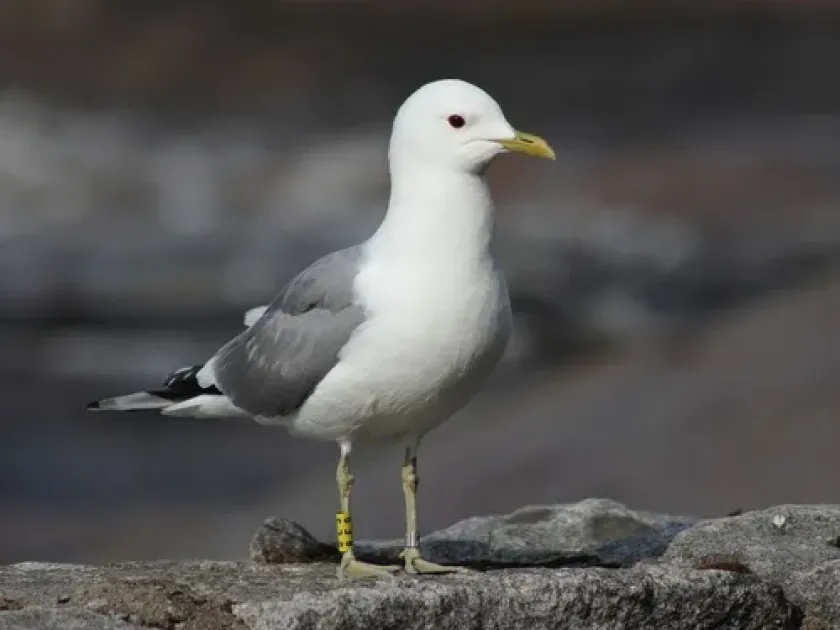
The common gull (Larus canus), belonging to the order Charadriiformes and the family Laridae, is a medium-sized gull characterized by its white plumage and grey wings with black tips.
Adult birds possess a distinct yellow bill without the red spots found on larger species, along with greenish-yellow legs, making them relatively easy to identify in the field.
These birds are highly social and often gather in large flocks, especially when foraging on agricultural land during the migration and post-breeding seasons.
The biological cycle of the species is linked to water bodies for breeding, but their adaptability allows them to utilize agricultural landscapes as primary feeding stations.
They are opportunistic feeders, often following tractors and farming machinery to access freshly exposed soil and seeds, which makes them a noticeable presence on farms.
What it damages
The common gull causes significant damage to a variety of crops, including cereals (wheat, barley), vegetables, and potatoes, particularly during the sowing and sprouting phases.
By consuming freshly sown seeds directly from the soil, these birds can cause severe yield losses, often leading to the need for costly reseeding of large areas.
Beyond seed consumption, the birds cause physical damage to young plants by trampling on seedlings, which compacts the soil and impairs plant development.
Fecal contamination by large flocks can negatively impact the phytosanitary conditions of the crop, potentially introducing pathogens or reducing the quality of the harvested produce.
The level of harm is particularly high during wet weather, as the soft ground allows gulls to easily extract seeds that are otherwise difficult to reach.
When it appears
The greatest risk period for crops is early spring, during the main sowing season, when tillage operations expose the soil and make seeds highly accessible to birds.
During the autumn, the activity of gulls increases again during the sowing of winter crops, as they congregate on freshly tilled fields to feed.
Weather patterns play a critical role in bird activity, with wet and overcast days leading to higher bird pressure on agricultural fields compared to dry conditions.
The post-breeding period (late summer) sees an increase in population numbers on farms as juvenile birds join the flocks to seek reliable food sources.
Migration periods (March–April and September–October) bring influxes of transit populations, significantly increasing the risk of sudden and intense bird damage.
Signs of infestation
Key signs of gull activity include characteristic holes in the soil along seed rows, where birds have systematically removed the planting material.
Presence of large amounts of guano on the soil surface and leaves indicates that the field has been used as a consistent feeding ground by a flock.
Thinning crops with visible footprints on the soil surface are clear indicators that birds have damaged the sprouting plants.
High levels of noise and alarm calls from flocks hovering over fields during farming operations are strong indicators of bird pressure.
Observation of birds following farming machinery is an immediate warning that the field is being targeted for foraging, necessitating early intervention.
Control measures
Bioacoustic deterrents, which broadcast distress calls or predatory sounds, are highly effective at discouraging gulls from settling on agricultural land.
Visual deterrents such as predator kites, scarecrows, and reflective materials can provide effective short-term relief if used in rotating configurations.
Proper agronomic practices, such as ensuring seeds are buried at the correct depth, significantly reduce the accessibility of seeds to foraging birds.
Regular field monitoring is essential to detect bird presence early, allowing for the deployment of deterrent measures before significant economic damage occurs.
An integrated pest management approach, combining sound, visual, and physical deterrents, is the most successful way to prevent habituation and protect crops.
Taxonomy
- Latin name
- Larus canus
- Family
- Laridae
- EPPO code
- LARUCA
Discussion
No discussions yet — be the first.