
Black-tailed gull
Larus crassirostris
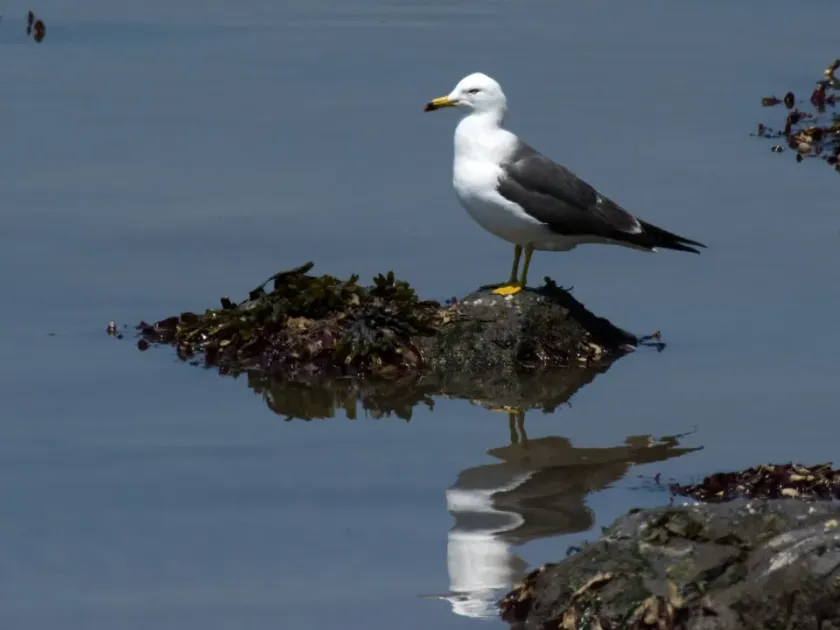
Description
How to identify
The black-tailed gull (Larus crassirostris) is a species within the family Laridae, order Charadriiformes. It is a medium-sized gull easily identified by its distinctive black tail and yellow bill with a red spot.
Adults reach approximately 45 to 50 cm in length with a wingspan exceeding one meter, making them highly visible when foraging in open agricultural landscapes.
Juvenile birds exhibit mottled brownish plumage, which transitions into the mature pattern over several years, a factor that can sometimes complicate field identification for non-specialists.
The species exhibits colonial behavior, often congregating in large numbers. This social structure means that when they target a field, the impact is usually concentrated and severe.
Due to their high adaptability, these gulls have increasingly utilized coastal agricultural lands as reliable food sources, often overlapping with intensive farming zones.
What it damages
The black-tailed gull is categorized as an agricultural pest primarily due to the destruction of young seedlings during the critical early stages of crop development.
They target germinating seeds of corn, sunflower, and various vegetables by pulling out sprouts or digging up the seeds from the soil, causing significant thinning of crop stands.
During the ripening stage, gulls cause damage to fruit crops and vegetables by pecking at produce, which lowers market quality and creates entry points for fungal pathogens.
In fields equipped with drip irrigation systems, these birds frequently damage polyethylene pipes and films, seeking water or insects, leading to high maintenance costs.
Heavy trampling by large flocks foraging in muddy or newly plowed fields causes soil compaction and mechanical damage to young, tender plants.
When it appears
Spring sowing is the period of highest risk, as open soil and easily accessible seeds attract large groups of gulls to the fields in search of quick meals.
During the summer months, as gulls tend to their chicks, they extend their foraging range, frequently visiting agricultural fields located further from the coast.
Autumn brings renewed pressure during harvest operations, as gulls congregate to feed on spilled grains or agricultural waste left behind in the fields.
While migratory patterns dictate their presence, many populations in temperate regions remain active year-round, posing a constant potential threat to farmers.
Daily activity is characterized by morning and evening feeding flights between roosting sites and agricultural areas, which requires consistent monitoring by farmers.
Signs of infestation
The first sign of infestation is the discovery of abundant bird footprints on freshly tilled soil, coupled with small holes where seeds have been dug up.
Presence of bird droppings on foliage and soil surfaces indicates that the field has been identified as a reliable feeding ground by a local gull colony.
Inconsistent plant emergence, where large patches of seeds or young plants are missing, serves as a clear indicator of avian foraging activity.
Damage to irrigation equipment and shredded protective covers are classic signs of gull presence in high-tech agricultural operations.
Visual observation of flocks frequenting the area or rising from the field upon the approach of equipment is a definitive sign that intervention is necessary.
Control measures
Visual deterrents, including predator decoys, reflecting ribbons, and kinetic scarecrows, are effective initial tools to discourage gulls from landing in sensitive areas.
Acoustic deterrents that broadcast recorded distress calls or predator sounds can significantly reduce the attractiveness of fields by inducing a flight response.
For high-value vegetable or fruit crops, the installation of physical barrier netting is the most reliable method for preventing avian access to the harvest.
Agronomic practices, such as ensuring proper planting depth and immediate soil compaction after sowing, help mask the seeds and reduce their visibility to pests.
Maintaining cleanliness around fields and disposing of organic waste promptly eliminates supplemental food sources, discouraging gulls from frequenting the farm.
Taxonomy
- Latin name
- Larus crassirostris
- Family
- Laridae
- EPPO code
- LARUCR
Discussion
No discussions yet — be the first.