
Ide
Leuciscus melanotus
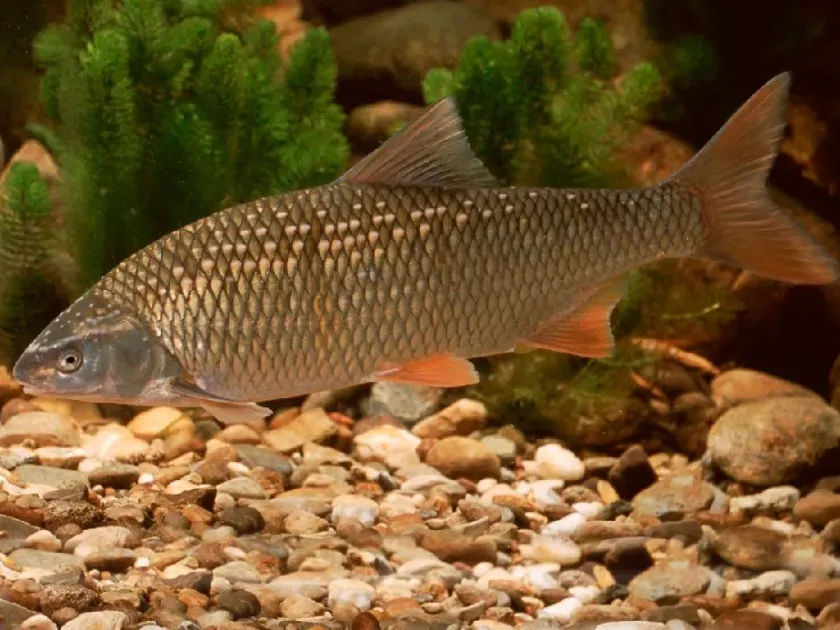
Description
How to identify
The ide (scientific name Leuciscus idus, formerly Leuciscus melanotus) is a freshwater fish belonging to the family Cyprinidae. It is a robust, thick-bodied fish with relatively small scales and a distinct appearance.
Adult ides typically have a dark grey or greenish back, with silvery sides and a white belly. A key identifying feature is the presence of reddish or orange-tinted fins, which become more vivid in mature specimens.
These fish typically reach lengths between 30 and 50 cm, though some individuals may grow larger. They are known for their schooling behavior, preferring slow-moving rivers, deep lakes, and ponds with moderate water flow.
The life cycle of the ide involves spring spawning migrations. When water temperatures rise, they seek out flooded meadows or areas with dense aquatic vegetation to attach their adhesive eggs.
Biological resilience is a hallmark of the species, allowing it to adapt to various water conditions. They are active swimmers and occupy multiple strata of the water column depending on the season and prey availability.
What it damages
The ide is not a pest to agricultural crops as it is strictly an aquatic species. Its presence is strictly confined to rivers, lakes, and aquaculture ponds, where it plays a role in the local food chain.
As an omnivorous fish, the ide feeds on a variety of benthic and pelagic organisms, including aquatic insect larvae, mollusks, small crustaceans, and occasionally plant matter found within the water.
In irrigation reservoirs, the ide contributes to the natural regulation of aquatic invertebrate populations, which helps maintain the biological quality of the water used for crop irrigation.
There is no direct agricultural damage associated with the ide. Any impact on agriculture is purely indirect through its role in the ecosystem or its potential impact on fisheries management in controlled water bodies.
Control measures are generally unnecessary and are only applied in commercial fish farms where the presence of wild ide might compete with high-value stocked fish for limited feed resources.
Taxonomy
- Latin name
- Leuciscus melanotus
- Family
- Cyprinidae
- EPPO code
- LECIIM
Discussion
No discussions yet — be the first.